

How to Involve Youth in the Horse Industry

Jacob Butler CJF, Awcf Butler Professional Farrier School LLC
The most reliable way to bring young people into the horse industry is through established youth organizations—the United States Pony Clubs, open to youth under 21, teach both riding skills and the basic care of horses, while 4-H counts 6.5 million members ages 5 to 21 in 90,000 clubs nationwide learning by doing. Early hands-on responsibility matters just as much: children who care for their own horses at home or through riding camps learn responsibility, and the industry’s future depends on motivated youth taught by caring, dedicated, and knowledgeable teachers.
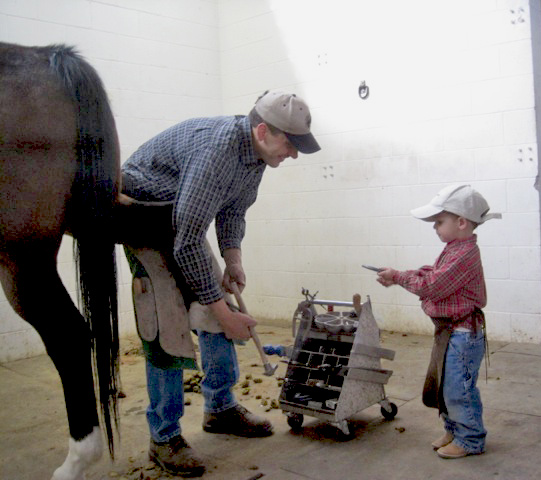
From a very early age I grew up around horses. Both of my parents helped spark that interest as we had horses throughout my childhood. During many summers, we had a “riding camp” where we learned how to take care of our own horses. My siblings and I learned responsibility this way. My interest continues to grow as I train others to take care of horses brought to our Butler Professional Farrier School. I will be forever grateful for experiences that I have had that helped shape my desire and interest.
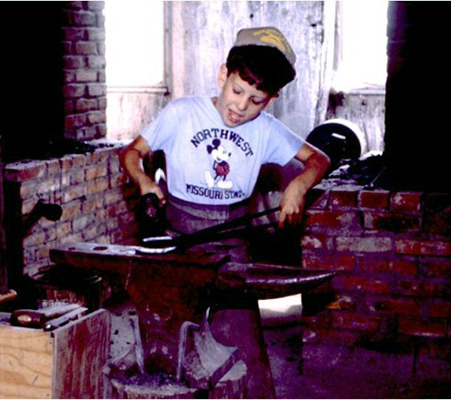
My motivation to want to be a farrier started as I would follow my Dad, Doug
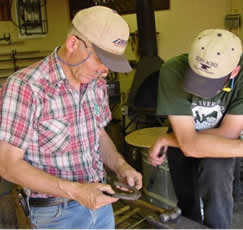
Butler, around as he shod horses. I enjoy the different aspects and skill areas of being a farrier. I appreciate all my Dad did to fuel my desire toward learning and becoming a professional farrier. It is interesting to see how things have come full circle as my own children begin to show interest and discover different aspects of horses for the first time.
The future of our horse industry depends upon motivated youth to carry it forward. It has always been this way. Two years ago, Dr. Butler was asked to speak on methods of teaching Horse Foot Care at the American Youth Horse Council Symposium in Hartford, Connecticut. This group brings together those interested in reaching youth with trusted information emphasizing humane horse care.
Many youth organizations were represented. Their Horse Industry Handbook has an entire section on “Horse Foot Care” written by Dr. Doug Butler. The American Youth Council encourages high standards. The Pony Club, originally started in Great Britain in 1929, is the world’s largest junior equestrian organization. They have 50 ,000 members in the UK and over 100,000 members in 27 countries. The word ‘pony’ was used to indicate the youthful age of members, not the size of their animals.
The United States Pony Clubs, Inc. (USPC) is for youth under 21. It was established in 1954 in Virginia and was patterned after the British Pony Clubs. By 1984, it had grown to 380 clubs in 47 states and nearly 11,000 members. Many of the top international riders have come up through the levels from D to A riders in Pony Club. Club members are not only taught riding skills, but also learn everything about the basic care of horses. They learn that to be a happy horse owner, the horse must be happy as well. Oral, written, and practical tests are a part of every club’s activities.
According to Rufus Weston, a USPC past president: “It is the objective of pony club to instill in every Pony Clubber a love of horses and an ability to care for and enjoy horses for the rest of his life and through this contribute to his development as a well rounded, self-disciplined and responsible citizen. If we have done these things, we will have done a good job.”
The Land Grant College Act was passed in 1862. The Hatch Act, signed by President Grover Cleveland, March 2, 1887, established an Agricultural Extension Service. This opened the door for the beginning of 4-H in America. In 1890 the Land Grant Colleges joined the system. In New York State it was helped along with the passing of the Experiment Station Extension bill in 1894 by the Legislature. In 1914 the Smith-Lever Act provided funds for a national system for rural adult vocational education at Land Grant Colleges. Eventually funds were provided for youth education in agriculture.
4-H has become one of the most successful programs for youth development. Starting in about 1902 in the Midwest, the numbers involved have steadily grown. For example, in 1995 in New York State over 500,000 youth participated. Currently , nationwide, there are 6.5 Million 4-H club members from ages 5 to 21 [in some states youth must be 8 or over] in 90,000 clubs and 540,000 leaders. The 4 H’s stand for Head, Heart, Hands, and Health. Their motto is “To make the best better” and their slogan is “Learn by doing.” My older children are learning much in 4-H. I have enjoyed participating and teaching in 4-H camps and forums designed for youth in our region.
Dr. Harold Willman went to Cornell University in 1929 from a farm in Pennsylvania. He prepared 4-H materials for all species during his long career before he retired in 1965. In 1981, a foundation was started that bears Willman’s name for 4-H youth development.
4-H Clubs originally involved gardening and all farm animals including heavy or draft horses. Dr. Willman made possible the organization of the first light horse 4-H Club in the United States. It was organized in March of 1952 in the home of Karl and Mollie Butler in Ithaca, New York. It was called “The Hackin’ Horse Club.” There were 62 youth present – 60 girls and 2 boys. Doug Butler was one of those boys. His sister Linda was elected president and Sue McElwee was elected secretary. Many of those present went on to careers in the horse industry. Mollie Butler and Elsie Williams were the first leaders.
4-Hers are taught by their leaders the principles of horsemanship and especially horse care. It is never too early to learn to take good care of our equine friends. We salute the sacrifice and good work of dedicated youth leaders. They believe in character development of our most precious resource – youth.
In 1991, Clint Brock and Catherine Brown won the National 4-H Horse Method Competition held in Denver, Colorado using Dr. Butler’s publication Horse Foot Care as a resource for their award-winning presentation. Veterinarian Dr. Guy Rowland of Georgetown, Texas, was their 4-H advisor.
Our company, Doug Butler Enterprises, Inc., has produced a new book called Essential Principles of Horseshoeing for those desiring more information on horse foot care. This is what Dr. Betsy Greene, at the University of New Hampshire, said after receiving her copy of Essential Principles of Horseshoeing: I could use the book immediately to help students understand what the answers needed to be for the upcoming test in my ‘Intro to Equine Studies course.’ The book is useful, applicable in showing good examples and good pictures of the different types of structures and shapes. This book has a lot of useful information beyond just, I want to be a farrier.
Veterinarians have found the Essentials book helpful in encouraging owner education and teaching a practical approach to solving soundness issues. Farriers have used the book to illustrate to clients procedures available to help horses perform their best. The book helps horse owners understand how farriers and veterinarians can help their horse stay sound or return to soundness.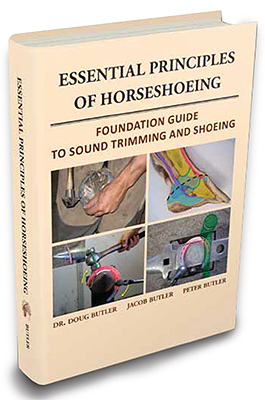
The Internet can be a source of useful information. It also can be a source of useless and even dangerous information. A strong background in horse care principles is necessary to make good use of much of the information available online today. And of course infohorse.com can be a great resource to learn about horses.
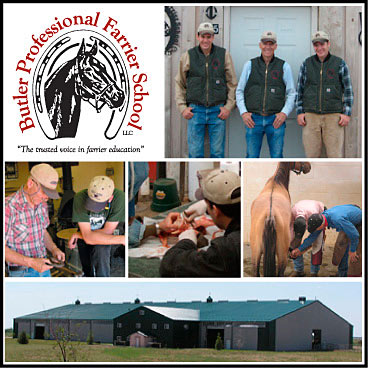
The future of our horse industry depends upon motivated youth who are taught by caring, dedicated and knowledgeable teachers. An ideal source for horse-oriented youth to learn from is the trusted voice in farrier education – Doug Butler Enterprises. Recommended as the “most affordable horseshoeing school,” Butler Professional Farrier School can help you develop a financially rewarding career as you help horses perform at their best. You can get more information on line to begin the fascinating and rewarding career of a farrier at.butlerprofessionalfarrierschool.com. I have found my farrier career to be most interesting and soul satisfying.
Jacob Butler is a Certified Journeyman Farrier and an Associate of the Worshipful Company of Farriers. He is the Director and an instructor at Butler Professional Farrier School, LLC, located near Chadron, NE. For more information visit his website at butlerprofessionalfarrierschool.com, call (308)665-1510 or email him at [email protected].