

How to Build a Relationship With Your Horse
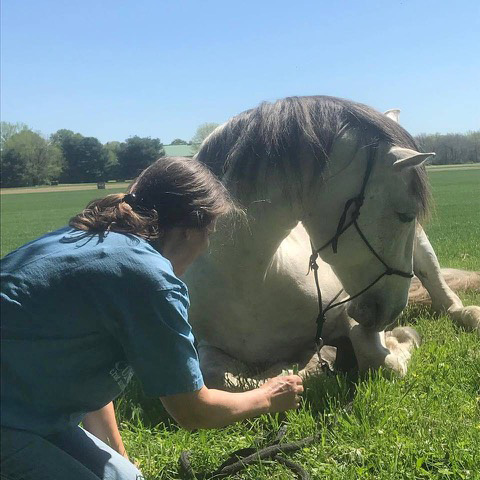
5 Shifts to a Deep and Unbreakable Bond with Your Horse Even if that seems impossible now. Article from MaryAnn Brewer
Bonding with a horse begins with thinking like a really good herd member—in the wild, horses pair bond with one or two trusted companions, and since you are the constant in your horse’s life, the goal is for him to form that same kind of bond with you. Who you’re being matters more than what you’re doing: horses read emotions instantly, so honest, congruent behavior builds trust where pretended calm breeds skepticism. The relationship can’t be hired out or transferred—you have to build it yourself, working through personal principles like “be careful of me and I’ll be careful of you” rather than rigid rules.
As an educated horseman, meaning I went to horsemanship school, I learned many techniques and rules about what to do with horses. It was what I learned after Horsemanship School that changed my world. It’s the Relationship that’s keeping everyone safe!
Shift #1 Think Differently – Think like a really good herd member.
Shift #2 Be, Don’t Do – The doing is part of it but who we’re being while we’re doing makes all the difference in the outcome
Shift #3 Walk the middle Path – I call this the secret weapon and it makes us more herd-like.
Shift #4 Throw out the rules – Work through principles instead, and principles are personal to you.
Shift #5 Invest in mentoring – Find/create like-minded people. Peer pressure keeps the horse-world stuck in the ideas of dominance, hierarchy and showing them who’s boss.
Let’s go a bit deeper
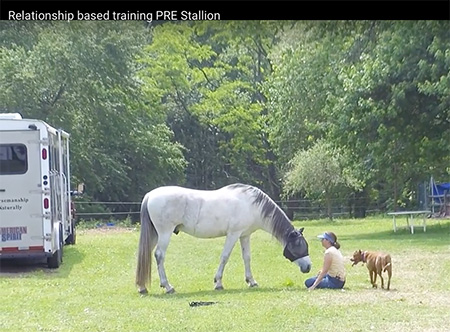
Shift #1 Think Differently – Think like a really good herd member. To do this we need to learn what a really good herd member is! It’s hard (but not impossible) to see this in domesticated herds where there always seems to be competition for limited resources.
Limited resources can be: hay piles - food - water - grass - minerals turn out or when it’s time to bring them in (schedules) shelter gates friends – often when mares and gelding are turned out together enough friends, the right friends you!
When we observe this competition it looks like a hierarchy of who eats first and who moves whose feet. Many of us have tried to get horse #4 on the dominance scale out of the pasture only to have much trouble at the gate. This behavior is only caused by the ideas of what’s happens when the people come to get the horses, the gate becomes a limited resource.
Horses are masters of knowing what happens before what happens actually happens.
If we’re going to change this, we need to start to think differently about how we keep, manage and interact with our horses.
In the wild, horses pair bond. This is an important and fundamental principle of herd life. You have one or two buddies that you stick with through thick and thin and this is based on want to. It’s a complete choice.
In domesticated herds, horses are forced together based on the human wants wishes and needs. This rarely lasts a lifetime, so even if horses find a buddy at this new place, it’s highly likely they’ll be moved to a new barn in a year or two or three.
And let’s be clear about this. If a horse lives at a boarding facility, it’s the horse that lives there 24/7, not the human owner. He’s the one who lives in the environment and is navigating his way through the complex social life of being a horse.
You become the constant in his life. We want him to pair bond with you like he would with his own kind. While this won’t be the same, we can use the same principles to create this kind of relationship with our horses/all horses.
With this special place in your horse’s life, there come special responsibilities! And this is where we move onto shift #2 Be, don’t do.
Shift #2 Be, Don’t do.
This is where learning who you’re being is far more important than what you do. To get to a clear constant and count-on -able place of being, imagine you live in the time of royalty and titles and before you enter your horse’s pasture, your announcer goes before you and decries to the public (your horse) WHO YOU ARE.
Who do you want your horse to know you to be? Who can your horse count on you to be when things go badly when things are great when you’re mad, sad, happy, disappointed, rushed, pressured, hurt?
My Words
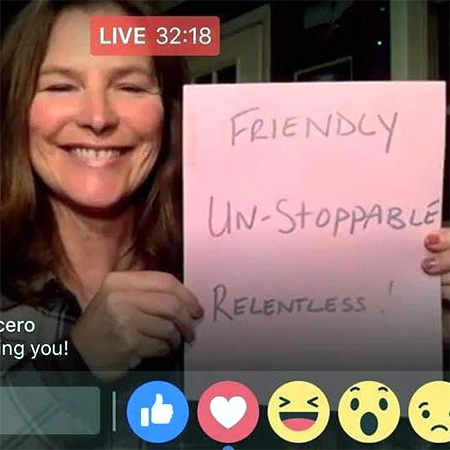
These were my words when I first declared them but they have evolved as I really considered and re-considered them over time. The thing is, your words need to accurately represent you, not the person you think would be perfect but what’s really behind how you think. For example, let’s say you worry about everything, instead of calling you a worry wort, who your horse can count on you to be is someone who pays attention, perhaps observant. Being observant is a valuable part of being a really good herd member.
For me – Friendly has remained as my top adjective describing who all horses can count on me to be. Un-Stoppable speaks to the fact that I will take whatever time it takes and it’s usually on the horse’s time. Relentless speaks to my unwavering commitment to my principles in all situations. I’m not going to resort to predatory, forcing or unfriendly behavior.
There is no place to hide emotions or agendas when in the company of horses. So when they say, “keep your emotions out of your horsemanship” that is simply impossible. Right? If you’re mad and pretending to be calm and happy, that is completely incongruent. Your body will betray you to your horse. And being the keen prey animal that he is, he’ll know something’s not right and be skeptical or more extreme behaviors will manifest. Your horse may become un-catchable or agitated or violent toward other horses, especially if they’ve not learned how to truly be in a two way street of communication with a person.
You may have inherited these behaviors from the people who influenced your horse before you. You can fix this by getting really clear about who you want your horse to know you to be and by not giving yourself permission to be anyone else!
If you’re mad, be mad, if you’re sad, be sad, being honest in your emotions may not be the most attractive thing to your horse but at least you will be congruent and honest.
Then observe how your behavior affects your horse. This is a great motivator to work on your emotional fitness. Becoming a thoughtful and keen observer instead of someone who simply reacts will change your life.
Shift #3 Walk the Middle Path.
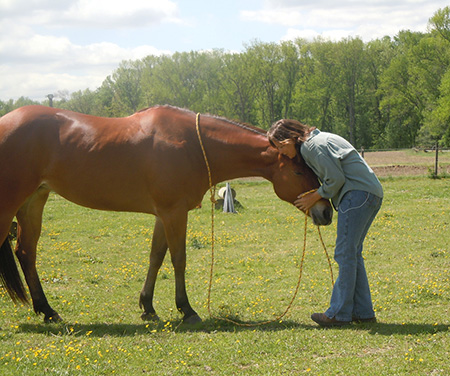
Clarity is what gets you here. The willingness to speak with your horse in plain truths and then allow the conversation to be had, in each moment. This is a two-way street. If you’ve already made shift #1 and #2, this will be a natural progression.
Be a big-hearted-bad-ass. You are a mighty horse owner with broad shoulders! And you are going to use the superpower of positive emotion.
Many people avoid unpleasantness with their horses. This avoiding behavior usually happens over time as you learn what your horse likes and doesn’t like.
This is where life with a horse shrinks. I’m sure you know someone who only rides in the indoor arena when it’s not windy out. They do this for very real reasons. These reasons piled up one day at a time.
Here’s where I like to say, an ounce of prevention is worth a pound of cure. It’s just too late when things get this far down the rabbit hole to prevent. So, we start wherever we are being friendly, honest and clear with our horses. We use our clean observations to see what’s really happening and we don’t throw ourselves or our horses over into the abyss of panic and confusion. We go slow, stopping often to take each moment as it comes until we’re walking out the door and eventually down the trail on a windy day.
This will take whatever time it takes, and usually coincides with how long the problem has been present. If you work on a thing every day in a row for 7 days, you’ll get there quicker than if you work on a thing once every 7 days.
Here’s what we don’t do,
Hire someone to do it for us – relationships don’t transfer. It’s your horse, your relationship, you need to build it and, you really are the best one for the job. Hire a trainer to make us do it – just like our horse’s emotions, we need to care for our emotions, honoring our thresholds and our horse’s thresholds. Hire a trainer to make our horses do it. No good learning takes place if it’s forced. Bad experiences build on one another just like good ones do. Shift #4 Throw out the Rules and work through principles.
And I do mean all of the rules. Here’s an example;
“Never let your horse turn his butt toward you, it’s disrespectful.” I see horses every day in my pasture grazing butt to butt. Are they disrespecting one another, is that dangerous behavior?
Here’s another “Your horse always needs to walk behind, you need to be the leader.” The truth is, in natural herds, pair -bonded horses will mosey or even travel side by side, changing positions often.
Naturally, you’ll find what works for you and your horse. Rules limit what’s possible. Principles are over-arching concepts. Here’s a principle of mine:
“Be careful of me and I’ll be careful of you.” This principle is found in our groundwork, husbandry like cleaning feet, saddling, mounting, riding, grazing time, walking together.
“Don’t pull on me and I won’t pull on you” I fully expect horses in my company to be in communication, considering me in their actions, just like I’m doing with them. This is a two-way street of communication.
Operating through principles is what creates a thinking and feeling relationship, not just one on automatic pilot full of conditioned responses.
Have you noticed; when horses get frightened, they all come together or run away together? Because they know there is safety in the herd. When you become a really good herd member, you will be a safe space with your horse.
Shift #5 Find the Right Mentor
Mentors or coaches, support your learning. You transfer that learning to your horsemanship and life.
A coach will help you with ways to think about things. A trainer in weekly lessons is more like following the GPS, turn by turn, you just do what you’re told. Both ways will get you there it’s just that the coach will help you; so you get there even when the GPS stops working. Imagine, never consulting another youtube video again!
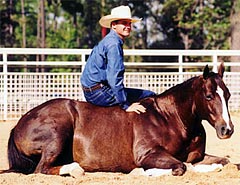
In today’s internet age, you can choose a mentor from anywhere in the world as long as they can teach you remotely. This way of learning can be very effective if you do the work. It can often be more effective than learning while you’re actually in the company of your own horse because you can incorporate the whole lesson into your subconscious mind from the comfort of your own home instead of trying to learn a new concept while with your horse. And, if you’ve incorporated clean observation skills, you’ll become your own problem solver in no time! Here's an example of #RelationshipBasedHorsemanship
If you want help, I'm here for you! Find a time on my calendar here and we'll see if we are a fit to work online together. Enjoy this completely free 45 minute webinar called 5 Simple Shifts to a Deep and Unbreakable Bond with Your Horse - Think Like a Really Good Herd Member! -- Love, MaryAnn Changing Lives, One Relationship at a Time.