

The Business of Shoeing Horses
Running a successful farrier business comes down to three strategies: invest and save for the future, know your costs by keeping accurate records, and spend the most time with your best clients—the A customers who value your work and believe in you. Market positioning matters just as much: how people feel about you, and the place they put you in their minds, determines whether they think of you first for horse foot care. Farrier educator Doug Butler compiled these principles in his award-winning book Six-Figure Shoeing.
©2013 Doug Butler PhD, CJF, Fwcf In today's economic climate, positioning becomes more important than ever. How people feel about you and the place people put you in their minds is your market position.
I believe three most important business strategies for farriers are:
1 Invest and save for the future
2 Know your costs by keeping accurate records
3) Choose to spend the most time with your best clients. I call these A customers. These are the people who value your work and who you enjoy working for. They believe in you and believe only you are most desirable and qualified to work on their horses.
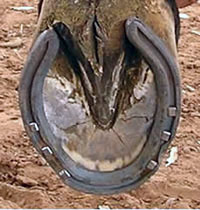
I feel a deep sense of satisfaction when I can help other people get pleasure from their horses. The most rewarding aspect of show horse shoeing is sharing the exhilaration felt by trainers and owners when a horse wins that otherwise might not have. I feel good when I do this work. Sure it's easy to overdo it and get sore, but I feel my best when I'm active and working with one of God's noblest creatures, the horse.
The biggest positive change I’ve seen in the farrier industry since I began my career in the early 1960’s is the open communication among farriers. This is primarily due to the clinics associations have organized for their members and farrier suppliers have presented for their customers. When I started, there were few schools and everything was a secret. There were few books, and they were mostly in the rare book section of a college library. Very few of the older experienced farriers would help younger beginning farriers. They were afraid of giving away business that was diminishing along with horse numbers.
This improvement has not been without its downside. The Internet and multi-media have not only been great educational tools, but they have also increased the speed that harmful faddish ideas can be spread to horse owners as well as farriers. Yet, at the same time there is more opportunity now for learning sound business and shoeing principles than there has ever been. It is up to you to make informed choices and develop yourself. You must recognize that you are the business! Today things are different. Many students have not even been inside a library. They depend solely on the Internet to get information. And, there are so many choices!
In today's economic climate, positioning becomes more important than ever. How people feel about you and the place people put you in their minds is your market position. Some of this feeling comes from the category you operate under or the label you place on yourself. Some comes from your credentials and experience. But most important is the result (concept or outcome) that comes from dealing with you. Position is based upon impressions or perceptions and once your position is established, it is difficult to change.
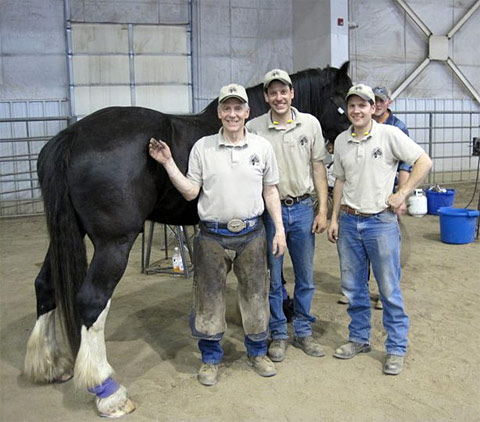
So, how do people feel about you? How do you feel about yourself? Are they (you) impressed by your background, credentials, and experience? When they think of horse care, specifically horse foot care, do they think of you first? What can you do to make this happen?
Most horse owners are affluent (wealthy) to some degree. Fifty percent of America’s wealth is owned by three percent of the people. Self-employed people make up less than 20% of American workers but are 66% of them are millionaires. What are the characteristics of affluent people? Typically America’s affluent: (according to Thomas Stanley and William Danko in their New York
Times best selling book The Millionaire Next Door: 1. Love their animals – horses, dogs, and cats. 2. Believe in traditional family values. Live frugally, modestly. 3. Believe that wealth is what you accumulate, not what you spend. 4. Are married to the same person – who is often more frugal than they are. 5. They don’t appreciate the parading of riches. 6. They are suspicious of any immoral and unwise behavior.
7. Have an undergraduate college degree. (However, the relationship between education and wealth accumulation is negative.) 8. Own a small independent business. 9. Have a life style of hard work, discipline, sacrifice and thrift. 10. Have sound investment habits in real estate and securities. 11. Are perceived as a threat to the average person‘s way of life. (Tax the rich!). 12. Are fiercely independent.
To be accepted by these people you need to be in sync with their values. They like to do business with people who remind them of themselves when they started. They want to do business with those who respect them and who they feel they can trust. Trust is a big issue with these people. How can you establish trust with people and make them A customers?
Consistency is huge. They want you to honor your word. They want to be understood and be respected and recognized for what they have done. They are hypersensitive to being conned. They resent slang, sloppy dress, talking down, rudeness, failure to clearly explain. They reward ingenuity, drive, persistence and salesmanship. They are turned off by disrespect. The feeling one gets from the experience of being with you is meaningful and therefore valuable to them. When talking price, explain the expensive scenario first, then the middle, then the least expensive. They will usually go for the middle.
Wealthy people allocate their time and energy and money efficiently to build wealth. They like to buy things that are done for them without hassle or stress. They want life made easy, time saved, and not to be ripped off. They demand professionalism and competence. They are looking for the best opportunity rather than the lowest price. They expect to compensate well professionals who work well with them as long as they get what they want. They rely heavily on referral from friends and other professionals.
According to Dan Kennedy in order to make yourself magnetic among the affluent: 1. Develop, display, and convey a profound position of expertise, show good judgment, understanding, professionalism and competence. 2. Be a trustworthy advisor that can be approached and relied upon. 3. Make normal burdens and inconveniences go away. Relieve them of the hassles and distresses of life. 4. Give them acceptance, approval, and applause.
Become an advocate of achievement and influence. Take a position that counters criticism. 5. It takes more time to directly connect with the affluent customers. You will take more time to do what others won't. Seek to connect on an emotional level. 6. They want access where others can not go. They want to be in. They want what they can't have. They expect sincere thanks from those who work for them. 7.
Present yourself as an entrepreneur dealing with the same frustrations, challenges, hopes and dreams that they are. Discuss these things with them.
The affluent are less affected by a down economy. They are fiercely independent. They have prepared for stressful conditions by hard work, planning, perseverance and life-style self-discipline. They are financially independent and could maintain their current life-style for many years. I seriously doubt things are going to turn around soon. I'm old enough to remember how long it took to get over the financial policies of the late 1970’s.
Now is the time to plan ahead. Organize your business. Develop systems for doing things. Stay closer to home and charge when you don’t. Make at least some of your shoes and all of their modifications. Live frugally. Invest rather than spend. Work toward building your Net Worth (Value of your property). Your expected Net Worth is your age times your pretax net income from all sources except inheritances divided by ten. To be well positioned you should be worth at least twice the level of net worth expected.
Encourage people to maintain horses with trims and not shoeing for a while, rather than get out of the horse business. Improve your presentation, cards, grooming, clothing, and memorize speeches. Give incentives for referral. You must become more and improve yourself to improve your business.
The most important thing I learned about the shoeing business when I first started was how much I didn’t know about business. Besides learning from several accomplished farriers, who were also competent businessmen, I began to read business books and apply them to shoeing. Eventually, I compiled the material and wrote the book Six-Figure Shoeing. It received the “Best How-To” book award from the Colorado Independent Publisher’s Association in 2002. I have received many testimonial letters from farriers who have been helped by the book.
For the latest book, Essential Principles of Horseshoeing, from Doug Butler Enterprises, Inc.,
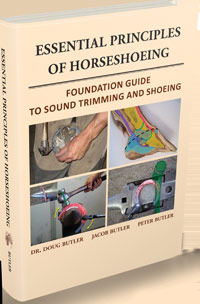
It will help you: 'See and create balance when trimming a horse’s foot 'Keep you and your horse safe when doing farrier work 'Understand the structure and function of the horse’s foot 'Use farrier and forging tools to accurately shoe a horse 'Recognize common problems with horse foot conformation 'Work safely and competently to alter shoes hot or cold 'Select and apply pads when necessary to protect the foot 'Effectively communicate with farriers, veterinarians, and other horsemen, so you can feel confident knowing your horse is always receiving the best care 'Develop your inner eye for detail to evaluate farrier work … to help you quickly spot the good farriers from the bad 'Succeed with people and create a healthy life/work balance as a professional farrier 'Make a hard job easier by increasing your knowledge and efficiency in the area of proper hoof care 'Get a great start transforming your passion of working with horses into a lucrative business
All we can say is that it's a must-have addition to any horse owner's personal library! The new Essential Principles of Horseshoeing is our newest resource that allows you to learn at your own pace at your own place. It pays to go by the book! When you are ready for the hands-on experience of a farrier school, you will make the best use of your time and get the most out of it. An additional benefit will be evident if and when you decide to take the voluntary AFA Farrier Certification exams. It pays to go buy the book!
Thank you for making us your trusted expert in farrier education and we consider it an absolute privilege and honor to serve you and your horse. Doug Butler PhD, CJF, Fwcf