
Paramount Cubing produces alfalfa hay cubes, protein cubes and baled forage that give horse owners a cleaner, more consistent and easier-to-store alternative to loose hay. From farms in Utah and Nevada, the company supplies individual horse owners, equestrian facilities, feed stores and bulk distributors with farm-direct forage backed by more than 50 years of production experience.
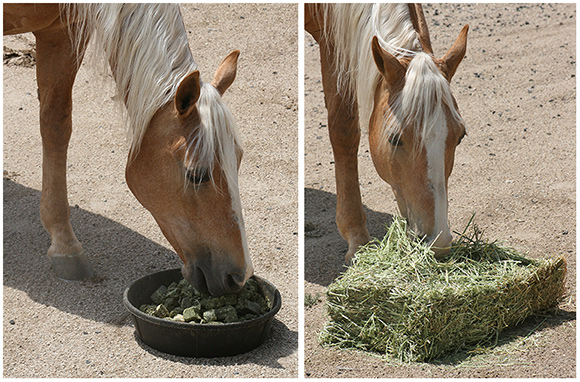
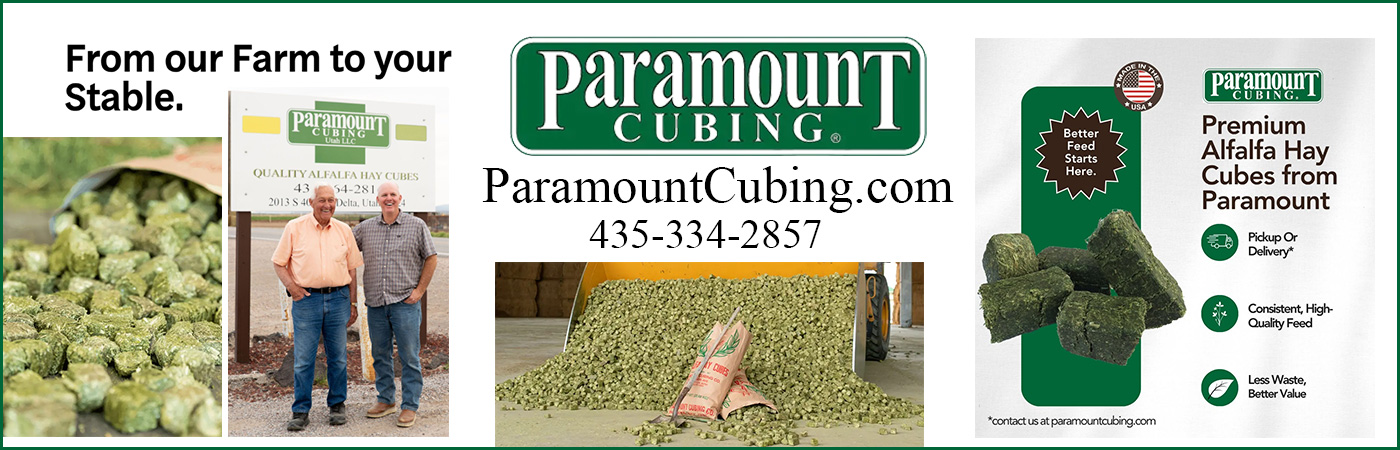
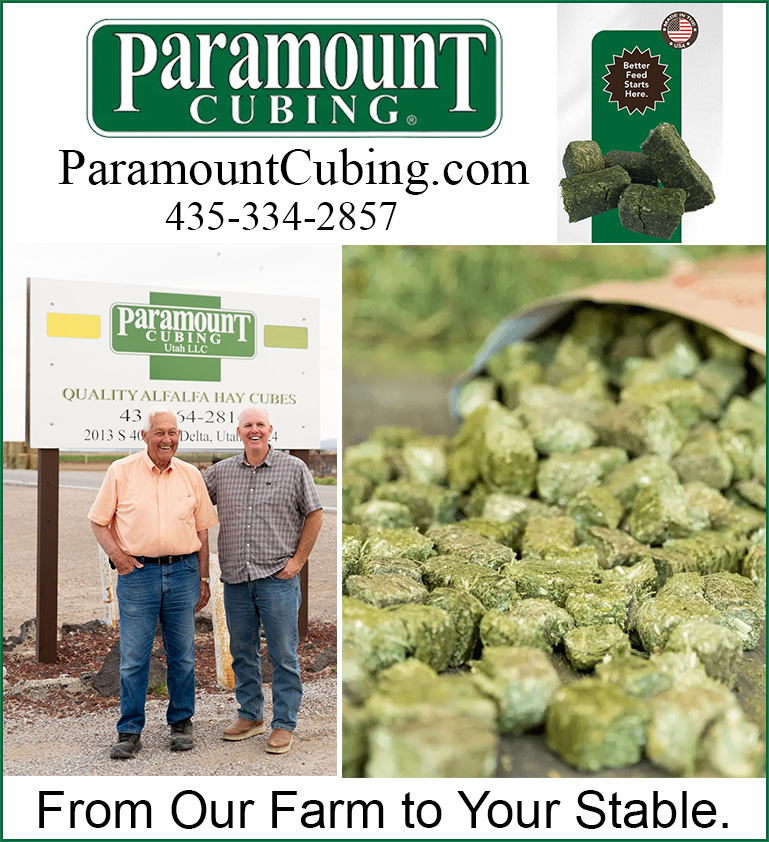
Paramount Cubing’s principal horse-feed offering is Premium Alfalfa Hay Cubes made with 100% alfalfa. Compressing forage into uniform cubes makes it easier for owners and barn employees to weigh, portion, transport and store a horse’s daily forage. The compact form also reduces the loose leaves, stems and scattered hay that can accumulate around feeders, stalls and feed rooms.
The company also produces Preferred Protein Cubes, made with 50% alfalfa and 50% wheat straw hay. This blend gives customers another forage option when they do not require a cube made entirely from alfalfa. Horse owners should match any forage choice and feeding quantity to the individual horse’s age, workload, body condition and complete diet.
Paramount Cubing’s additional forage products include 3 String Alfalfa Bales. Its dealer information also describes Alfalfa, Oat, Grass, Orchard and Timothy forage offered in baled, chopped, pelleted or cubed forms. Product availability can vary by location, order size and dealer, so buyers should confirm the exact forage and format available in their area.
Loose hay can be difficult to measure consistently because flakes vary according to bale size, cutting, moisture, compression and storage conditions. Alfalfa hay cubes provide a more uniform format that can be weighed rather than estimated by the flake. This helps barn managers create a repeatable feeding routine and recognize more quickly when a horse’s ration has changed.
Compressed cubes can also reduce forage waste. Loose hay may be pulled from feeders, stepped on, mixed into bedding or left behind as coarse stems. Cubes remain more contained during storage, measuring and feeding, allowing more of the purchased forage to reach the horse rather than the feed-room floor or manure pile.
For facilities feeding several horses, this consistency can simplify written feed instructions and employee training. A measured quantity is easier to reproduce from one feeding shift to another than a loosely defined number of flakes. The result is a practical forage system that supports dependable routines without making daily horse care unnecessarily complicated.
Paramount Cubing describes its approach as “From Farm to Stable since 1975.” Rather than presenting itself only as a feed broker, the company emphasizes forage produced through its own agricultural and processing operation. Every batch of cubes and bales is delivered from its production facilities, helping preserve freshness while reducing unnecessary handling between the farm and the customer.
The company sources and produces forage from farms in Utah and Nevada and reports the capacity to manufacture as much as 125 tons per day. That production capability allows Paramount Cubing to serve individual buyers as well as dealers and bulk distributors that need dependable quantities during periods of increased demand.
Paramount Cubing also identifies sustainable sourcing as part of its operating philosophy. The company states that it uses sustainable farming practices intended to reduce its environmental footprint while continuing to produce nutrient-rich forage. For horse owners, this creates a direct connection between the fields where the forage is grown and the product eventually placed in the feeder.
Committed to farm-direct freshness, sustainable forage production and practical equine nutrition since 1975.
A horse should not be switched abruptly from its familiar forage ration to hay cubes. Paramount Cubing recommends introducing cubes gradually, beginning with approximately 10% to 15% of the horse’s daily forage intake and increasing the proportion over seven to ten days. A gradual transition gives the digestive system time to adapt and allows the owner to watch the horse’s appetite and manure consistency.
Some horses can consume hay cubes dry, while others benefit from having the cubes soaked. Paramount Cubing suggests soaking cubes for approximately 10 to 15 minutes when a softer texture is desirable, particularly for senior horses or horses with dental concerns. Soaking can also encourage additional water intake and make the ration easier to consume.
Fresh water should always remain available, and owners should monitor for reduced appetite, loose manure, signs of choke or symptoms of digestive discomfort. A veterinarian or qualified equine nutritionist should help determine whether alfalfa cubes, blended cubes or another forage is suitable for a horse with metabolic disease, dental limitations or other special nutritional needs.
Long-stem forage may still have a place in the feeding program. Paramount Cubing advises owners not to eliminate hay or pasture too quickly because horses benefit from natural foraging activity and extended chewing time. Hay cubes can supplement or replace part of a ration, but the complete feeding plan should continue to support the horse’s digestive health, hydration and behavior.
Alfalfa is often treated as though it belongs only in the diets of performance horses or seniors, but Paramount Cubing explains that it can be incorporated into feeding programs for horses of many ages and activity levels. Suitability depends on the horse, the quantity fed and how alfalfa fits with pasture, hay, concentrates, minerals and other components of the ration.
Alfalfa is a nutrient-dense forage with more protein and calcium than many grass hays. Those characteristics can be useful for some horses, but they also make accurate portioning important. Weight gain is generally connected to total calorie intake rather than to the mere presence of alfalfa, so owners should feed according to body condition and workload rather than relying on broad assumptions.
Paramount Cubing also addresses the belief that alfalfa automatically makes a horse “hot.” Alfalfa is forage rather than grain, and its energy is supplied primarily through fiber and protein instead of the concentrated sugars and starches associated with many grain-based feeds. Individual reactions and total diet still matter, but alfalfa should be evaluated as part of the complete ration.
Horse owners can use Paramount Cubing’s dealer network to look for alfalfa hay cubes and other available forage products near them. Buyers seeking a specific product should verify whether the dealer stocks Premium Alfalfa Hay Cubes, Preferred Protein Cubes, 3 String Alfalfa Bales or another forage format before making a trip.
Large barns, ranches, equestrian centers and feed stores may also inquire about direct or bulk ordering. Delivery options depend on location, quantity and storage capability. Customers should request current information about minimum orders, dealer availability, shipping or delivery arrangements and product pricing because these details are not published as fixed nationwide terms on the website.
Paramount Cubing has produced horse forage since 1975 and describes its approach as From Farm to Stable. The company grew around supplying farm-direct hay cubes and baled forage rather than adding unnecessary handling between production and the customer. It now reports more than 50 years in the horse-feed industry.
Hay cubes provide a more contained and measurable form of forage. Because they are compressed into uniform pieces, they can reduce scattered stems, variable flakes and feed-room cleanup. They are also easier to weigh, store and transport, which can make a busy barn’s feeding routine more consistent.
Premium Alfalfa Hay Cubes are made with 100% alfalfa. Paramount Cubing also offers Preferred Protein Cubes made from 50% alfalfa and 50% wheat straw hay. Horse owners should choose a forage and feeding quantity that fits the individual horse’s complete nutritional program.
Paramount Cubing identifies Premium Alfalfa Hay Cubes, Preferred Protein Cubes and 3 String Alfalfa Bales among its products. Dealer information also references Alfalfa, Oat, Grass, Orchard and Timothy forage in baled, chopped, pelleted or cubed forms. Availability should be confirmed with the company or local dealer.
Introduce hay cubes gradually rather than replacing the existing forage overnight. Paramount Cubing recommends starting at approximately 10% to 15% of daily forage intake and increasing the amount over seven to ten days. Monitor appetite, manure and comfort, and consult a veterinarian when the horse has special dietary or medical needs.
Some horses can eat cubes dry, but soaking may make them softer and easier to consume. Paramount Cubing suggests soaking for about 10 to 15 minutes, especially for senior horses or horses with dental problems. Fresh drinking water should remain available at all times.
Paramount Cubing states that it distributes feed throughout California with its own trucks. Available shipment sizes include full loads, half loads and custom quarter loads for qualifying equestrian centers, ranches and feed stores. Delivery eligibility depends on location, order size, storage capacity and unloading equipment.
Horse owners can search Paramount Cubing’s website for a participating dealer or inquire about ordering. Buyers should confirm the specific product, current price and available quantity before visiting because inventory can vary. Larger facilities and resellers can also ask about bulk ordering and the company’s dealer program.
Explore more from the InfoHorse.com directory
Explore expert guides on topics related to your business
By Ann Pruitt
By Bob Pruitt
By Bob Pruitt
By Bob Pruitt
By Ann Pruitt
By Kentucky Performance Products