

Equestrian Education: Where Your Horse Career Begins by Ron Meredith
When comparing equestrian schools, the single most important factor for a serious horseman is the total number of hours spent on horseback under qualified instructors—look for riding classes with a student-to-teacher ratio of about six to one or less and a wide variety of horses to ride. A strong program also pairs that saddle time with a unified core of theory classes, practical courses such as business and stable management, accreditation by an agency listed with the United States Department of Education, and a job placement service with a proven record.
The dream of getting paid for doing something you love is what attracts people to the horse business. And what better way to start that career than with a solid education in equestrian studies.
Education is, after all, concentrated experience, and two years in a good horsemanship program can be more valuable than 10 years out there trying to figure it out by yourself.
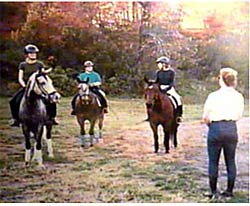
The increasing number of horsemanship programs, whether college affiliated or not, makes choosing a school baffling. Let me offer this starting place: the single most important factor for the serious horseman to consider in comparing programs is total number of hours spent on horseback under qualified instructors. This may sound obvious, but it's not. More than a few schools offer curricula of horse-related activities, but only two or three hours per week on horseback.
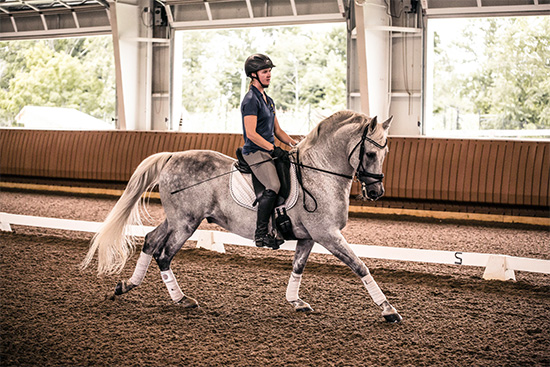
But horsemanship is a sport requiring unique physical and mental skills, and there's only one way to develop those skills: on the back of a horse. A good school will pair students up with a wide variety of different horses over the duration of study; and to maximize individual attention, will maintain a student/teacher ratio in riding classes of around 6 to 1 (six students per instructor) or less.
The outside limit for riding class size in my opinion is seven students. So while several prestigious universities are entering the equestrian field, the programs that can give you the most saleable skills are the ones that can give you individualized attention and keep you in the saddle the longest.
Directly related to this is the matter of theory. The body of knowledge of the average amateur
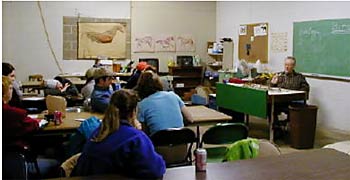
horseman is generally a patchwork of insights, tips, and hints gleaned from books, clinics, and the many disparate experiences of the show ring. But a school producing professional horse people must provide a unified central philosophy of horsemanship enabling students to organize and use their knowledge. To that end, a strong core of theory classes directly supporting the riding time is a must. Inquire into the nature of the theory classes, and how they support the riding time.
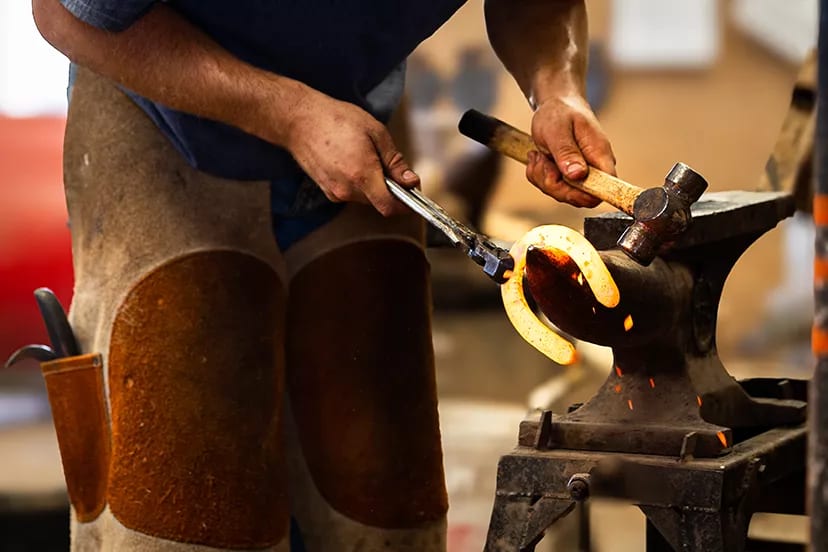
A well-rounded school must also offer courses in practical skills such as Business Management, Teaching Techniques, Public Relations, Stable Management, Horse Health, and Facilities Maintenance courses. Whether you own your own facility, or manage someone else's, advancement in the horse business depends on these real world skills. Additionally, a few schools offer studies in related fields such as farrier science, leather working, breeding, equine massage, judging, and the like. Here again, the more you know the greater your chance of a successful career in the horse industry.
Ask about a school's room and board situation if the student is to live on campus, and stable space and cost if the student will take their own horse. Personal preference and individual circumstance applies here: I suggest narrowing your choices down to a few, and then touring the campuses, if possible.
Finally, investigate the career records of some of the school's graduates. Talk to some graduates, if possible. Ask how they felt about the school in general and the instructors in particular. Was adequate attention paid to developing their skills? Have those skills enabled them to distinguish between innovations in the horse industry, and the many fads that come and go? The answers to these questions will prove a good indicator of whether you will be getting the most education for your money at any given school.
Be assured that there will always be a place for excellence in any field. If you know without a shadow of a doubt that working with horses is your calling in life, then commit yourself to be the best you can be, through hard work, dedication, and keeping your mind open to always learning as much as you can.
Meredith Manor International Equestrian Centre Meredith Manor is an equestrian trade school dedicated entirely to producing professional riders, trainers, instructors, and farriers for the horse industry. All programs and courses are designed specifically to prepare you for a successful equine career. Our programs range in length from 3 to 18 months, and our students spend 6 hours a day in primarily hands-on, skill based classes with additional time spent in the barns and with the horses. Students don't have to excel in academic, classroom based classes to be successful in our programs, but they must have a passion for horses and a dedication to having a successful equestrian career.
Meredith Manor's name and reputation are known by serious horse people throughout the world. Students from the ages of seventeen to sixty-three have attended the School from every state and many foreign countries. Meredith Manor strives to provide a climate of learning in which each student may identify and accomplish his or her goals. We have continuously researched the horse industry, designed the facilities, and developed the educational programs that will give our students the training, experience, and confidence needed to have successful, life-long careers with horses!
Ron Meredith has over forty years' experience as president of the school and has developed it from its humble beginnings of six students in 1963 to its current world class level. Because of his outstanding contributions to the horse industry and specifically to equestrian education, he has received a number of distinctive recognitions including an Honorary Doctorate of Equestrian Studies. Dr. Meredith has held seven AHSA judges' cards and has trained top level horses and riders in the cutting and reining world.