

Equine Metabolic Syndrome & Insulin Resistance: Feeding, Management, Supplements, and Hope for the Easy Keeper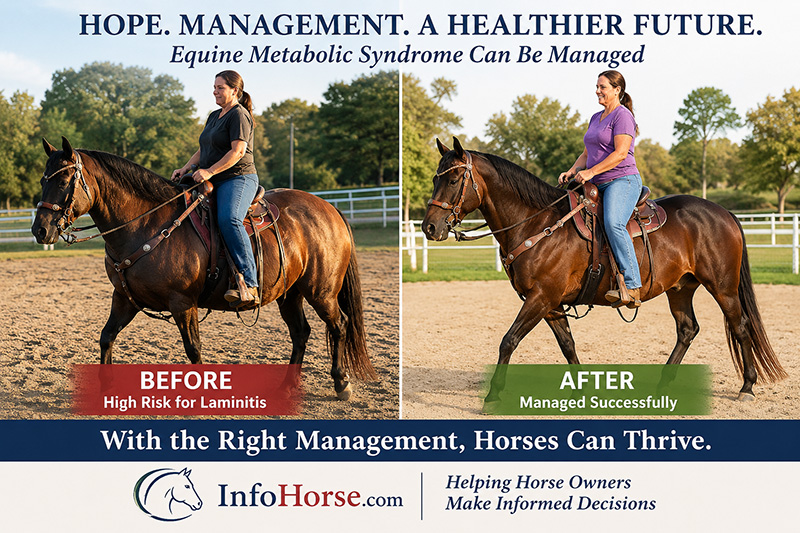
Equine metabolic syndrome, or EMS, is a condition in which a horse’s body does not handle insulin normally—veterinarians now call it insulin dysregulation—and its real danger is that high insulin can trigger laminitis. It cannot be confirmed by looks alone; diagnosis comes from veterinary testing of insulin and glucose. The hopeful news is that EMS is manageable: feed low-sugar, low-starch forage around 10 percent NSC or lower, test your hay, control or eliminate grass, keep weight healthy, exercise only when the feet are sound, and work closely with your veterinarian and farrier.
If you own an “easy keeper” the kind of horse who seems to gain weight by looking at grass then you already know the frustration. One handful too much pasture, one rich hay change, one spring flush, and suddenly your horse has a hard crest, fat pads, sore feet, or that short, careful “walking on eggshells” stride every metabolic owner fears.
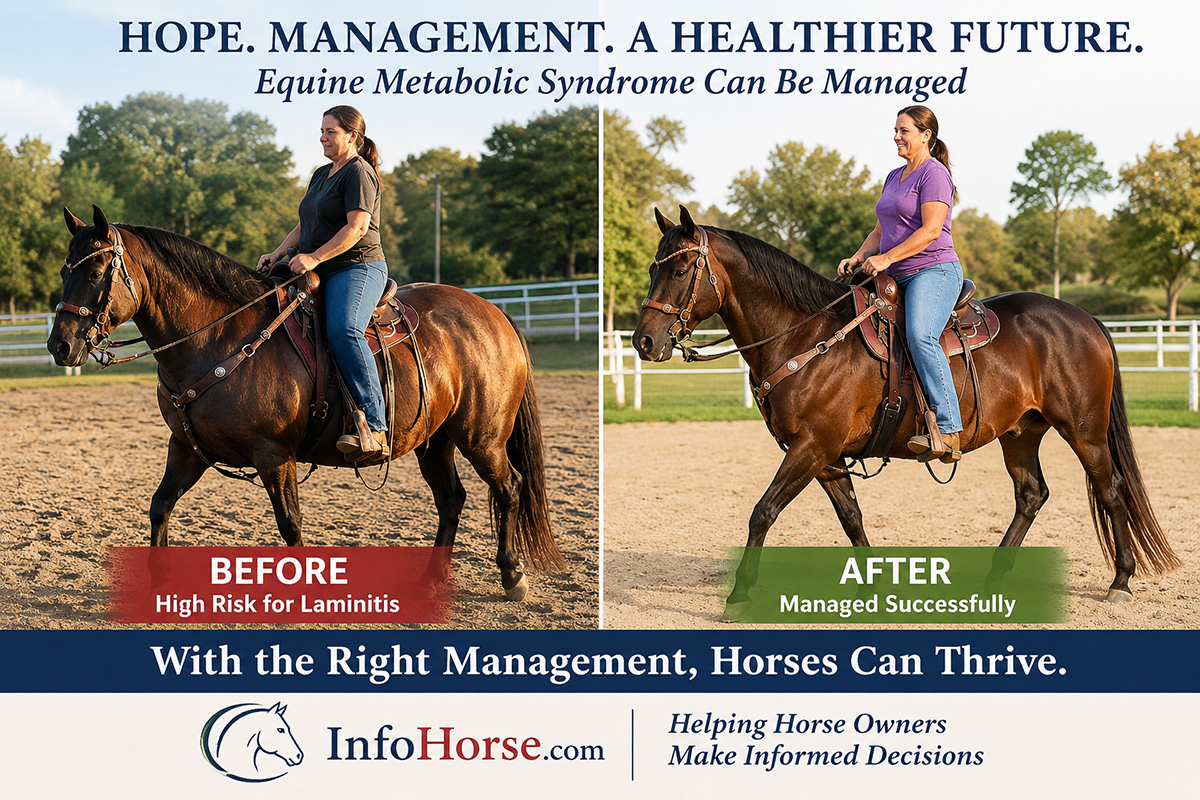
The good news is this: equine metabolic syndrome can be managed. Many horses with EMS and insulin dysregulation live long, natural, useful lives when owners catch the problem early and manage it consistently.
This is not about blaming the horse or the owner. Some horses are simply genetically built to survive on very little. Ponies, Morgans, mustangs, Arabians, Paso Finos, Tennessee Walking Horses, Saddlebreds, and many native or “good doer” types can be remarkably efficient. That trait may have helped horses survive harsh conditions, but in modern barns with good hay, pasture, grain, treats, and limited movement, it can become dangerous.
The real danger of EMS is not just weight. The real danger is high insulin -and high insulin can trigger laminitis.
What Is Equine Metabolic Syndrome?
Equine metabolic syndrome, often called EMS, is a metabolic condition where the horse’s body does not handle insulin normally. The most current term you will hear from veterinarians is insulin dysregulation.
Insulin is the hormone that helps move sugar from the bloodstream into the body’s cells. In a horse with insulin dysregulation, the body may produce too much insulin after eating, keep insulin elevated too long, or respond abnormally to sugar and starch in the diet.
That matters because high insulin is strongly linked to a serious form of laminitis called hyperinsulinemia-associated laminitis.
In plain barn language: EMS is the warning system. High insulin is the fire. Laminitis is where the damage shows up.
The Hopeful Part: This Is Manageable
A metabolic horse is not a lost cause. A cresty neck is not a death sentence. A prior mild laminitis episode does not mean the horse cannot recover and do well.
But EMS does require a different way of managing the horse.
The owners who succeed are usually the ones who stop guessing and build a routine:
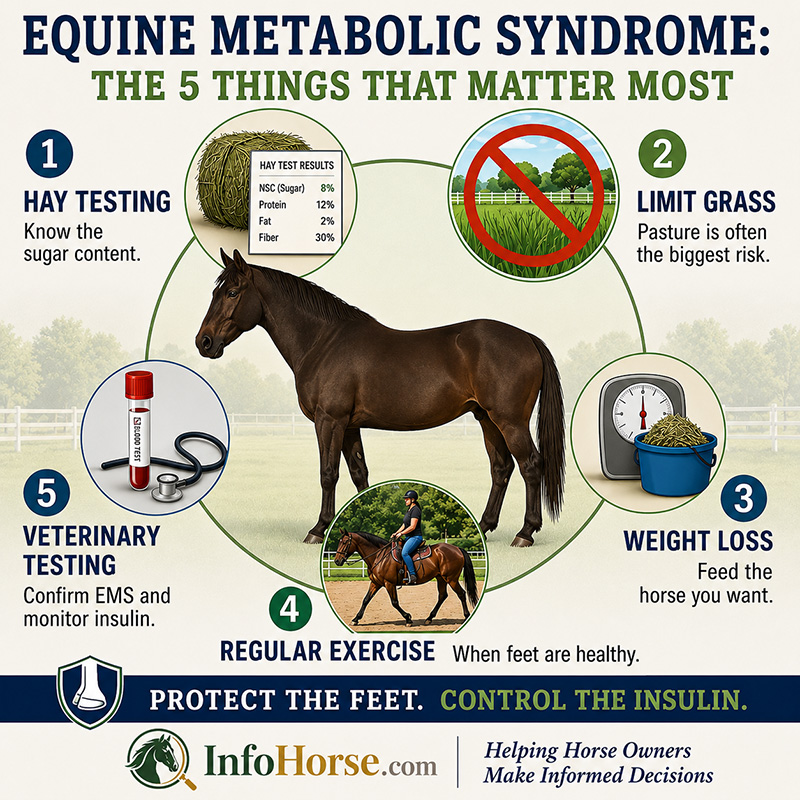
Test the hay.
Control grass.
Feed low sugar and starch.
Use slow feeders.
Measure the diet.
Support the horse with balanced minerals.
Exercise when the feet are safe.
Work with the veterinarian.
Watch the horse every day.
That kind of steady management can turn a horse around.
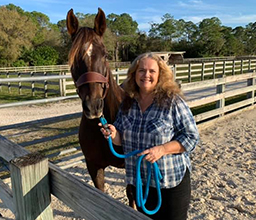
Ann’s Morgan mare Sugar is a good example. Sugar has had metabolic trouble and recovered from a mild laminitis episode several years ago. With careful management, controlled diet, appropriate support, and close attention, she is doing very well. That is exactly the message horse owners need to hear: EMS is serious, but it can be managed.
Common Signs of EMS and Insulin Dysregulation
Many owners sense something is wrong before they know the name for it. Watch for these signs:
A horse that gains weight very easily.
A hard, thick, cresty neck.
Fat pads over the tailhead, behind the shoulders, around the sheath, around the udder area, or above the eyes.
Difficulty feeling the ribs.
Repeated mild foot soreness.
A short, pottery stride.
Reluctance to turn tightly.
Heat in the hooves.
A bounding digital pulse.
Hoof rings that suggest past laminitis.
Sudden sensitivity after spring grass, fall grass, or a hay change.
Some horses with insulin dysregulation are not extremely fat. They may look only slightly overweight or have regional fat pads rather than whole-body obesity. That is why appearance alone is not enough. A horse can look “not that bad” and still have dangerous insulin numbers.
Why Laminitis Is the Big Concern
Laminitis is inflammation and failure of the sensitive structures that connect the hoof wall to the coffin bone. In severe cases, the coffin bone can rotate or sink. That is founder.
For metabolic horses, laminitis may not come from a grain-room accident. It may come from ordinary feed, ordinary hay, or ordinary grass that the horse’s body cannot safely handle.
This is why owners must take “mystery foot soreness” seriously. A horse who is repeatedly sore after turnout, a lush pasture week, or a rich hay delivery may be telling you that insulin is part of the problem.
How EMS Is Diagnosed
You cannot confirm EMS by looking at a horse.
A cresty neck, fat pads, and easy weight gain are important clues, but the diagnosis should come from your veterinarian. Testing usually focuses on insulin and glucose. Your vet may recommend resting insulin, an oral sugar test, an oral glucose test, or post-feeding insulin testing.
Your veterinarian may also test Acth to look for PPID, commonly known as Cushing’s disease. EMS and PPID are different conditions, but they can overlap, especially in middle-aged and older horses. This matters because PPID has its own treatment plan.
A simple way to think about it:
EMS is often the easy keeper with fat pads, a cresty neck, high insulin, and laminitis risk.
PPID is more common in older horses and may involve a long curly coat that does not shed, muscle loss, increased drinking and urination, and sometimes worsening insulin problems.
Many horses need testing for both.
Feeding the Metabolic Horse
The foundation of EMS management is diet. No supplement, medication, or management trick replaces a safe diet.
The goal is to reduce sugar and starch, often described as NSC, or non-structural carbohydrates. For many metabolic horses, hay and feed should be kept around 10 percent NSC or lower. Some sensitive horses need even tighter control.
Test the Hay
Hay is the largest part of most horse diets, so hay matters more than almost anything else.
You cannot tell sugar content by looking at hay. Soft green hay is not automatically bad, and stemmy hay is not automatically safe. A forage test is the only way to know.
For metabolic horses, grass hay is usually preferred over rich legume hay. Alfalfa is not always “forbidden,” but it is calorie-dense and may not be ideal for an overweight easy keeper unless the veterinarian or nutritionist has a specific reason to use it.
Soak Hay When Needed
If hay is borderline or unknown, soaking can help reduce water-soluble sugars. Soaking hay for 30 to 60 minutes, then dumping the soak water, can make hay safer for some metabolic horses.
Soaking also removes some minerals, so a soaked-hay diet should be balanced carefully. This is where a good mineral balancer or well-formulated metabolic support product can be useful.
Remove Grain and Sweet Feed
Most metabolic horses do not need grain. Sweet feed, high-starch concentrates, sugary treats, and unnecessary calories can work directly against the goal.
If the horse needs a carrier for supplements, many owners use a small amount of low-sugar soaked beet pulp, a low-NSC ration balancer, or another vet-approved low-starch option.
Be Serious About Grass
Pasture is the hardest part for many owners because grass feels natural. But for a metabolic horse, grass can be the trigger that causes laminitis.
Spring grass is risky. Fall grass can also be risky. Sunny days, cool nights, frost conditions, and stressed grass can all increase sugar concerns.
Many EMS horses do best on a dry lot with tested hay. Others can tolerate limited early-morning turnout with a grazing muzzle. Some cannot safely have pasture at all.
This is not punishment. It is protection.
Weight Loss Without Starvation
Overweight metabolic horses usually need slow, steady weight loss.
A common starting point is feeding low-NSC forage at about 1.5 percent of the horse’s body weight per day, adjusted with veterinary guidance. Severely overweight horses, ponies, miniature horses, and horses with laminitis need especially careful planning.
Do not crash diet a horse. Horses need forage moving through the gut. Long periods without feed can increase stress, ulcers, behavior problems, and other health risks.
Use tools that make a smaller ration last longer:
Slow-feed hay nets.
Multiple small meals.
Track systems or dry-lot movement.
Weighing hay with a scale.
Body condition scoring.
Weight tape measurements.
Progress photos.
The goal is not to make the horse thin. The goal is to return the horse to a healthy body condition where insulin is easier to manage and the feet are under less stress.
Exercise: Powerful, But Only When the Feet Are Safe
Exercise improves insulin sensitivity and helps with weight control. For a sound metabolic horse, regular movement is one of the best tools available.
But never force exercise on a horse with active laminitis or foot pain.
If the horse is sore, the feet come first. Call the veterinarian. Work with your farrier. Use deep bedding, hoof support, radiographs when needed, and pain control under veterinary direction.
Once the veterinarian clears the horse for work, start gradually. Hand walking may come first. Then longer walking. Then light riding or controlled exercise. Many horses eventually benefit from consistent work several days per week.
The best exercise plan is one the horse can do safely and the owner can maintain.
Supplements: Useful Support, Not Magic
Supplements can help, but they should be presented honestly.
A supplement does not cure EMS. A supplement does not make unsafe grass safe. A supplement does not replace hay testing, weight loss, exercise, or veterinary care.
Where supplements can be very helpful is in filling nutritional gaps and supporting the daily management plan.
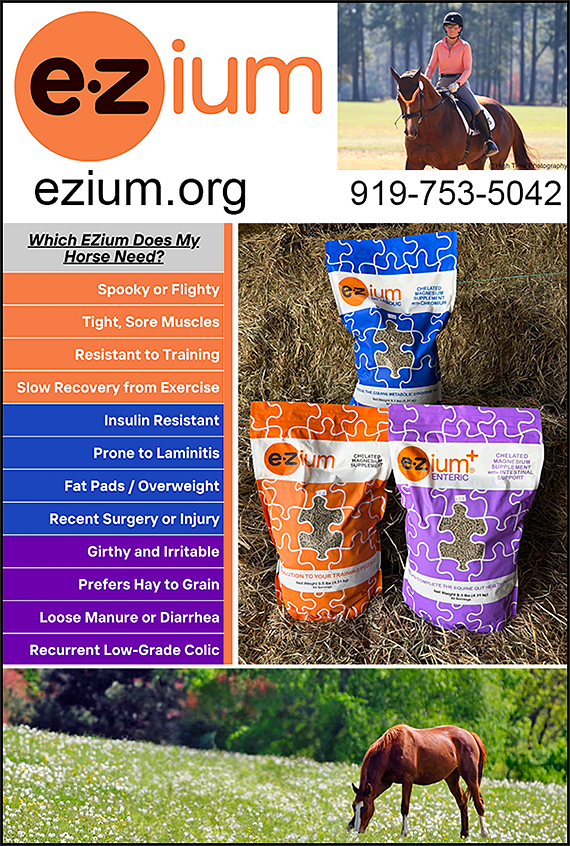
Metabolic horses often eat restricted diets. If hay is soaked, some minerals are lost. If grain is removed, vitamins and minerals may be missing. A well-formulated ration balancer, mineral supplement, or metabolic support product can help round out the diet without adding sugar and starch.
Common support categories include:
Magnesium, when the diet is deficient.
Chromium, which has research interest for insulin sensitivity.
Vitamin E, especially for horses without fresh pasture.
Omega-3 fatty acids from appropriate sources.
Trace minerals balanced to the hay.
Low-NSC ration balancers.
Gut support when diet changes are being made.
The best supplement is the one that fits the hay analysis, the horse’s weight, the veterinarian’s plan, and the owner’s ability to feed it consistently.
When Medication May Be Needed
Most metabolic horses start with diet, weight control, exercise when safe, and proper hoof care. But some horses remain dangerously high in insulin despite excellent management.
In those cases, veterinarians may consider medication.
Older options have included medications such as levothyroxine for weight loss support in selected cases. Newer veterinary interest has focused on SGLT2 inhibitors, a class of drugs that may help lower insulin in some difficult cases of insulin dysregulation and laminitis risk.
These medications are not do-it-yourself products. They require veterinary diagnosis, dosing, monitoring, and follow-up. They may be important for certain horses, but they do not replace the daily feed-room work.
Think of medication as another tool your veterinarian may use when the horse needs more help.
Hoof Care Is Part of Metabolic Care
A metabolic horse is not only a feeding project. It is a hoof-care project.
Regular farrier care matters. Balanced trimming matters. Radiographs may be needed if laminitis has occurred or is suspected. A horse with chronic laminitis may need therapeutic trimming, shoeing, boots, pads, or other support.
The veterinarian and farrier should work together. The feed room protects the insulin level. The hoof-care team protects the foot.
Emergency Signs: Call the Vet Now
Sudden foot soreness.
Reluctance to walk.
Rocking back onto the hind feet.
Shifting weight from foot to foot.
Heat in the hooves.
Bounding digital pulse.
Short, careful, pottery steps.
Lying down more than usual.
Pain after grass exposure.
While waiting for the veterinarian, remove the horse from grass and place him in a deeply bedded stall or soft dry lot. Do not force movement.
Laminitis is an emergency.
 Daily Management Checklist for the Metabolic Horse
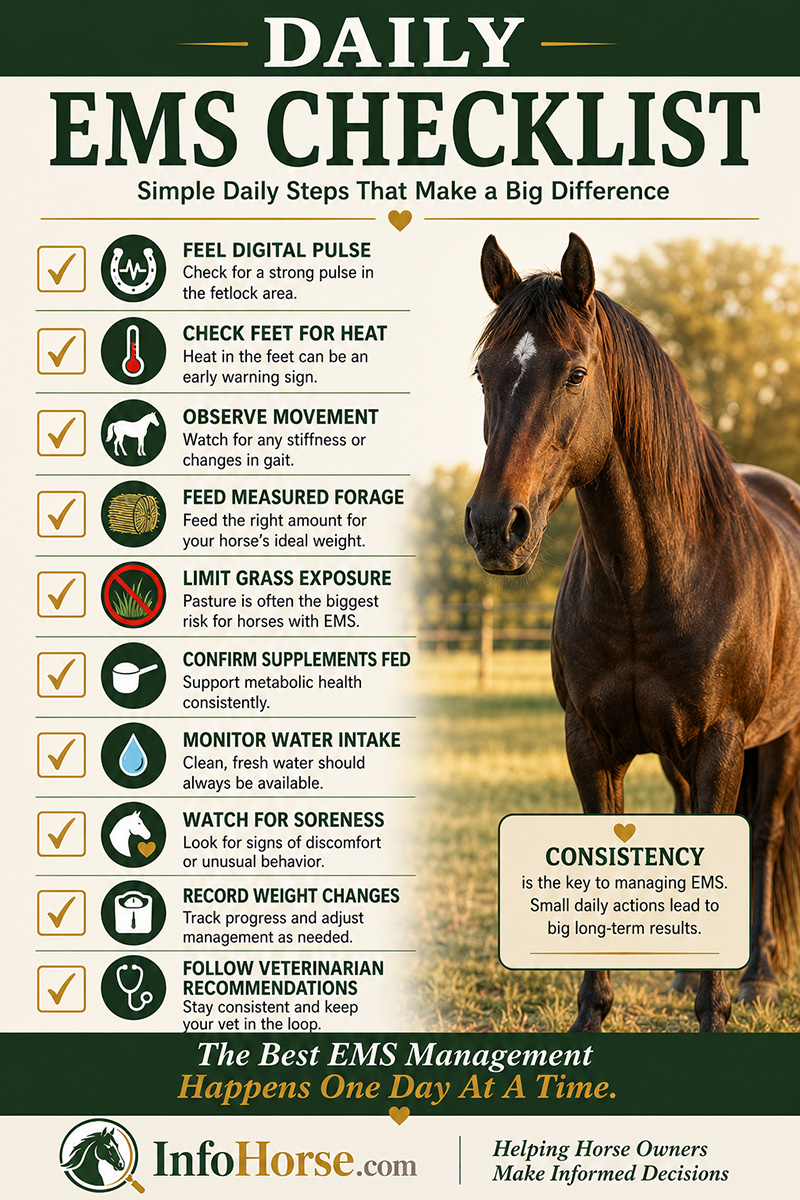
Test hay when possible.
Feed low-NSC forage.
Weigh hay instead of guessing.
Use a slow feeder.
Avoid grain and sweet feed.
Restrict or eliminate pasture.
Use a grazing muzzle if turnout is allowed.
Track body condition.
Measure the neck crest and weight regularly.
Balance minerals.
Exercise only when sound.
Schedule regular farrier care.
Test insulin as recommended by the veterinarian.
Watch the feet every day.
The Emotional Side of Managing EMS
Managing a metabolic horse can feel discouraging at first. Owners often feel guilty taking away pasture, reducing feed, or saying no to treats. But the horse does not need a lush field to feel loved. He needs comfort, safety, movement, companionship, forage, and sound feet.
A dry lot with safe hay is kinder than a pasture that causes laminitis.
A grazing muzzle is kinder than a founder episode.
A weighed hay ration is kinder than guessing.
A blood test is kinder than waiting for the next sore-footed morning.
This is where hope comes in. EMS is not managed by one dramatic cure. It is managed by small faithful decisions repeated every day.
And those decisions work.
Success Is Usually Boring
Most successful EMS horses are not managed through dramatic treatments.
They succeed because owners consistently do simple things:
Test hay.
Control grass.
Feed appropriate forage.
Maintain healthy weight.
Exercise when safe.
Work closely with their veterinarian and farrier.
The horses that stay comfortable year after year are usually owned by people who quietly follow the plan every day.
EMS management is rarely exciting, but it is often very effective.
Ann’s Note About Sugar
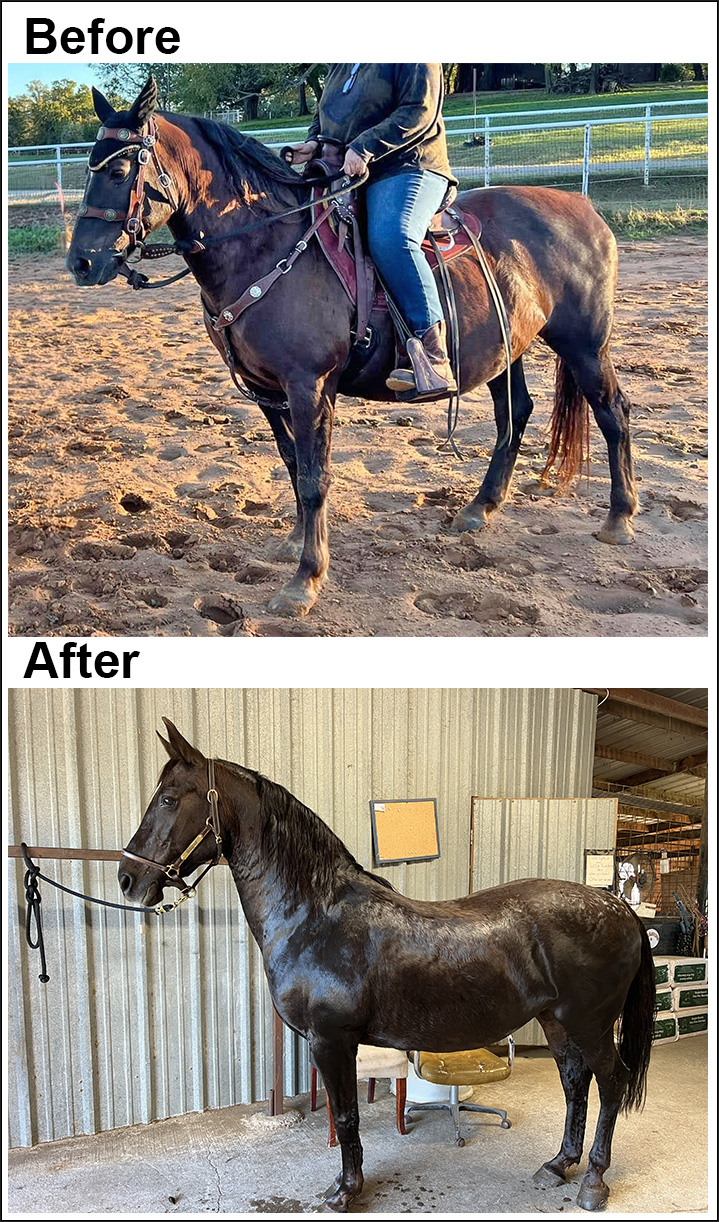 My Morgan mare Sugar has lived this story. She is an easy keeper and has had metabolic trouble, including a mild laminitis episode several years ago. With careful management, she is doing very well.
That is why this subject matters so much to me. I know the fear of watching a horse take those short, careful steps. I also know the relief of seeing that same horse come back comfortable, bright-eyed, and happy because the daily plan is working.
Sugar'S Story
Sugar, Ann Pruitt's Morgan mare, developed EMS and experienced a mild laminitis episode several years ago.
Through careful management, controlled diet, weight control, veterinary care, and ongoing monitoring, Sugar is now living comfortably and doing very well.
Her story is a reminder that EMS is serious — but it is also manageable.
Many horses with EMS can enjoy long, active lives when owners understand the condition and stay consistent with their care.
If your horse has EMS or insulin dysregulation, do not give up. Get the diagnosis. Test the hay. Control the grass. Work with your veterinarian and farrier. Feed the horse you have in front of you, not the horse you wish could live on unlimited pasture.
Metabolic horses can have good lives. Many can have long, natural, useful lives. They simply need owners who understand the rules their bodies require.
Final Thought

Equine metabolic syndrome is serious because laminitis is serious. But serious does not mean hopeless.
The winning formula is simple, even when it takes discipline:
Low sugar.
Low starch.
Controlled calories.
Safe movement.
Balanced minerals.
Excellent hoof care.
Veterinary testing.
Consistent daily management.
Do those things, and you give your horse the best chance to stay comfortable, avoid laminitis, and enjoy many good years ahead.