

Using the Easyboot Bare on a Barefoot Horse for Trail or Endurance Riding
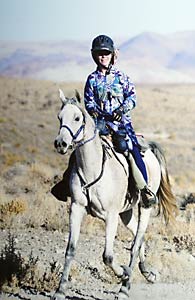
A barefoot horse can be ridden on trail or in endurance competition with hoof boots—endurance rider Karen Chaton kept her horses barefoot while competing in Easyboot Bares and Epics, and her horse Granite Chief+/ won the AERC National Mileage Championship in 2005. The Easyboot Bare combines a gaiter attachment that keeps the boot on in all types of terrain, a sole pattern that mimics a barefoot hoof, and a front bungee that replaces the cable-and-buckle design for a simpler, lower-profile boot. Start by taking measurements—front feet may require a different size than hinds—and be sure to fit the boots ahead of time.
The Easyboot Bare is a terrific product for our horses. The design is similar to that of an Easyboot Epic in that it has a gaiter attachment that works to keep the boots on horses in all types of terrain and trail conditions. by Karen Chaton
The Bare also has a unique pattern for the sole of the boot, one that mimics that of a barefoot horse. It has a bungee attachment on the front which eliminates the cable and buckle design that is on the Epic and original Easyboot. These changes make the boot very simple.
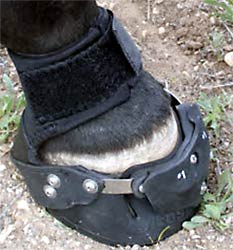
I have ridden in several endurance rides using these boots and think they are great. One of my horses does especially well in them due to the lower profile that is provided by the bungee attachment on the front. He travels close behind and these boots are perfect for him. Keep in mind that some horses may work better in different boots and that there may not be one type of boot that will work perfectly for every single horse. They are individuals just like us. Don’t give up if you try a boot and it doesn’t work, keep looking because there are several options available now that weren’t available even two or three years ago!
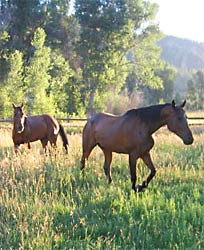
The benefits my horses have experienced from being able to live a barefoot lifestyle, while using Easyboot Bares and Epics to compete in, have been phenomenal. I, myself, am still having a hard time believing that this has not only worked, but it’s worked so well! I had been skeptical about being able to keep a high mileage competing endurance horse barefoot. After my own horse Granite Chief+/ won the AERC National Mileage Championship in 2005 you can believe me when I say that I am no longer a skeptic.
I believe that, for my horses at least, keeping them barefoot and using the option of a hoof boot during competition has been one of the best things that I have ever done for my horses. I’m going to show you some of the basics that will help you in using your new Bares for the first time. If you need more help, don’t be afraid to ask!
You can find a great deal of additional information on using EasyCare hoof boots on my blog www.easycareinc.typepad.com/karen/
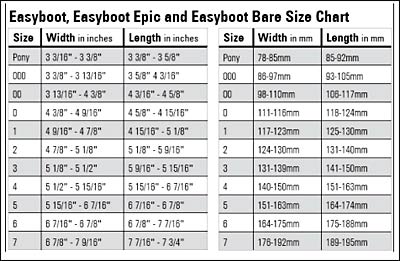
The first thing to do when purchasing an Easyboot Bare for your horse is to take measurements. A free Easyboot size calculator can be downloaded from the company’s website or read the chart below:
The boots will come with the bungee attached on each side on the middle setting. You will want to try the boots with this setting first. If the boot is difficult to get on, you may wish to loosen the setting to the next hole. If the boots are easy to get on you may want to tighten to the tightest setting and also check to see if the size is correct. The boots are more difficult to put on when they are brand new. The effort is well worth it, especially because after a couple of uses they will slip on and off with ease.
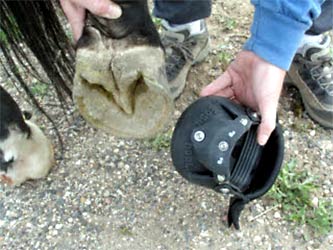
Fold the gaiter back as far as you can. You’ll need to keep this back so that it won’t get wedged between the horses heel and the boot itself. If it does get wedged, take the boot off and start over. Don’t pull hard on the gaiter or you may rip it. Take the black nylon strap that comes with the boot and loosen it up from how it is attached to the backstrap on the boot. Now loop one end of it through.
Once the boot is on the horse you will pull up with this strap to get the backstrap of the boot up on the heel and then pull one end of it to get it out. Important: For the first couple of uses you may choose to eliminate this step and simply remove the nylon strap and not worry about pulling the heelstrap (backstrap) up. After a couple of uses the boot’s gaiters will become a lot easier to work with and you’ll be able to do this step if need be.
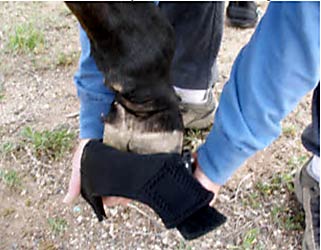
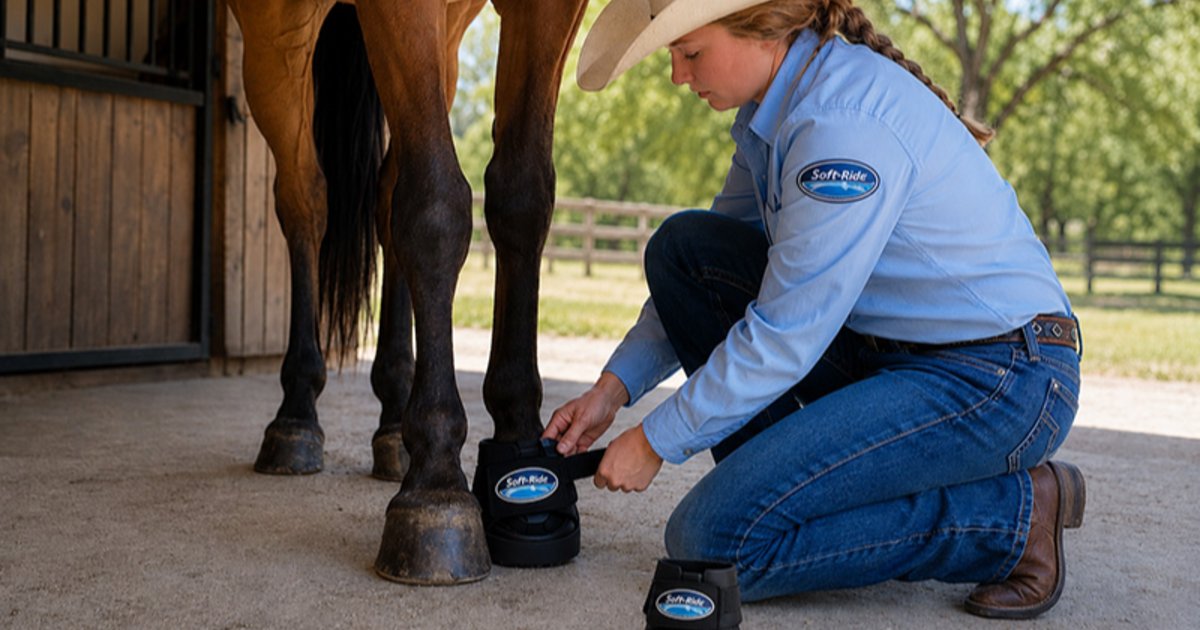
Pick up your horses clean hoof and start with slipping the toe of the hoof into the boot. Work it from side to side pulling the sides of the boot over each side of the hoof wall. With the cable loosened up you should be able to work the boot on with very little effort.
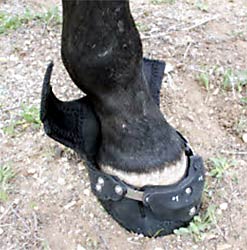
Let your horse step down and see if the boot looks like it is all of the way on. If not, pick the foot back up and work the boot on a little bit more. If it is a really tight fit you may want to walk the horse a few steps.
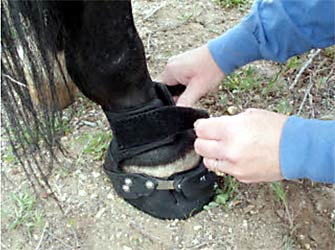
After the boot is on the hoof, make sure the gaiter is on correctly. Remember not to pull hard on it. Take both sides of the gaiter and wrap around towards the front of the pastern and Velcro together. Be sure to get a snug fit here, and to keep the bottom of the gaiter straight across on the bottom.
Some Tips for Trail Riders:
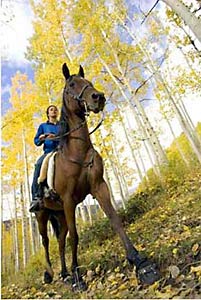
'Be sure to fit the boots ahead of time.
'Front feet may require a different size than hinds.
EasyCare, Inc. has been a leader in the hoof boot industry for years, beginning with the invention of the Easyboot back in the early 70’s. Since then, the need for boots has grown tremendously as more and more horse owners see the healthy advantages of pulling shoes and switching to natural hoof care. EasyCare is excited about being part of this growing trend.
For more information about hoof boots or natural hoof care please call EasyCare, Inc. at 1-800-447-8836, e-mail: [email protected] or visit www.easycareinc.com. While at their website, you may wish to sign up for EasyCare’s free newsletter which is filled with useful information on how to use hoof boots, articles on natural hoof care and the barefoot horse as well as specials and promotions.
Contact : EasyCare's Friendly Staff 2300 E. Vistoso Commerce Loop Tucson, Arizona 85755 Phone: 800-447-8836 Email: [email protected] Website: www.easycareinc.com