

Canter Departures With Richard Winters Horsemanship
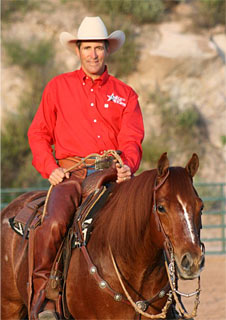
To sharpen canter departures, practice a figure-eight exercise: lope smooth, balanced circles, straighten the horse’s body for one to three strides as you approach the middle, stop, leg yield in the direction you were traveling, then canter depart on the new lead while moving straight ahead. Done consistently, this teaches a horse to pick up a particular lead without depending on a circle, builds shoulder control, and correctly frames the horse for the depart—and it’s a great precursor to flying lead changes.
In this article I’d like to discuss how you can improve the canter departs maneuver.
Canter depart is the term used to describe how well a horse picks up a canter or lope from a walk when asked to move out on a particular lead. This maneuver is important for the reining horse because he must start the figure eight pattern loping off on the correct lead while maintaining straightness and staying on course to begin the circles. It is also important for the western or English show horse who must execute a canter departure while on the rail. Mastering the following exercise will bring refinement to your canter departures and help you overcome some common problems riders have when attempting to lope off correctly.
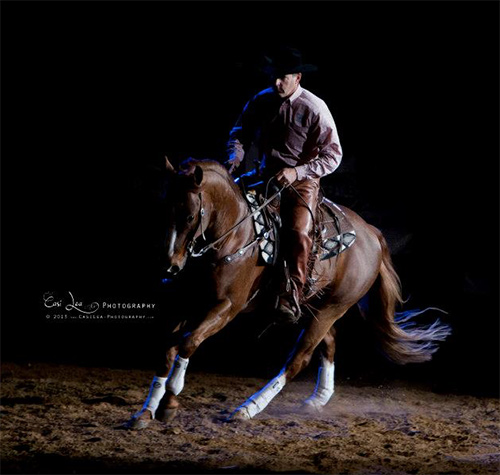
I like to practice this exercise within the context of a figure eight. It’s beneficial to have some sort of marker designating the center of your figure eight so that you can begin to ride with more accuracy. To receive the most benefit from this exercise you should also be attempting to make symmetrical and even circles on both sides of the figure eight. In this series of photos I will begin to lope circles to the right. The pole is my middle marker so that I stay even and on course.
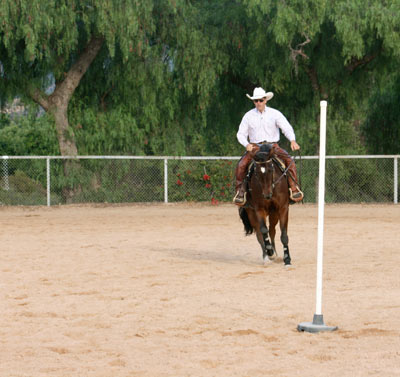
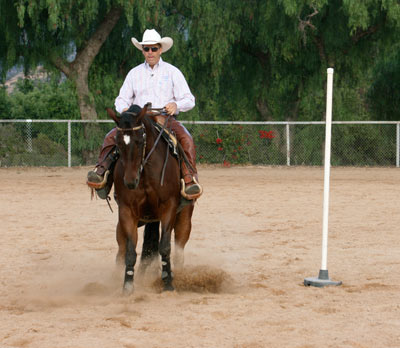
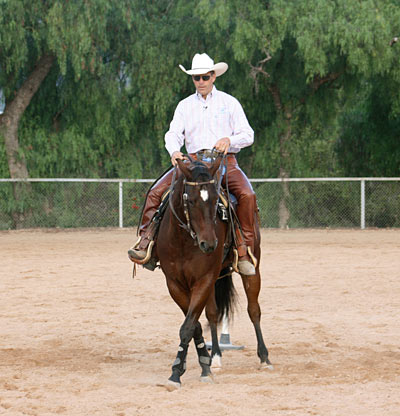
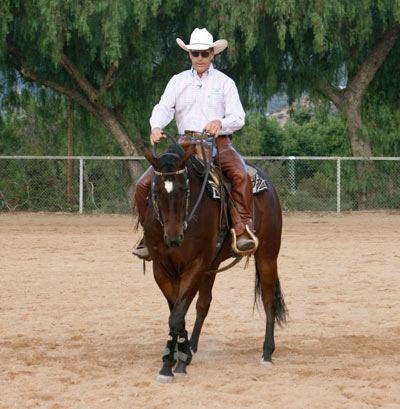
What are the benefits of this exercise? 1) You will begin to lope off on a particular lead without depending on a circle to help establish it. After you leg yield over - it’s important to lope off on the new lead while traveling straight ahead. Don’t turn off into your new circle until the new lead is established.
2 You will begin to establish better shoulder control
3 This exercise helps to correctly frame your horse as you depart into the lope
I have been referencing this exercise being executed while loping figure eight circles. It will help if you can envision figure D’s instead. In figure D’s you will straighten your horse’s body as you approach the middle in preparation for the stop. Then you will continue to travel straight, after the leg yield for a couple strides, and then reestablish the circle in the new direction. In this maneuver; the stop and canter departure are executed on a straight line. This is critical to keeping correct form and body posture. This exercise is also a great precursor to flying lead changes.
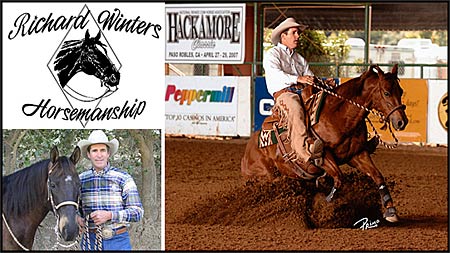
Executing a proper canter departure demonstrates that we are riding with more accuracy, refinement, and body control. It always comes back to body control when training the performance horse. Remember; body control is not the main thing. Body control is everything! For more information about Richard Winters Horsemanship please go to wintersranch.com.