

Keeping Horses Warm in Winter from Big Ass Fans
Horses carrying a coat appropriate for the season are generally most comfortable between 20 and 60 degrees F, and acclimated horses with a full natural haircoat rarely need blankets—blanketing can actually reduce warmth by preventing the natural lofting of hairs that traps a layer of warm air around the body. The best heat source is internal: hindgut fermentation of fiber warms a horse from the inside out, so feed a minimum of 1.5% of bodyweight in forage daily (about 15 lb of hay for a 1,000-lb.
horse), increasing toward 2% when the weather turns cold. Blankets earn their keep for horses in poor or lean condition, clipped or unacclimated animals, lighter breeds like Thoroughbreds and Arabians, and any horse without access to shelter.
When winter winds begin to blow and snow starts to fly, many horse owners jump to bundle their babies into their heaviest blankets and batten down the hatches so their horses stay nice and warm in the barn.
But although a snug stall and warm rug sound great to us, they’re actually contrary to what’s healthiest for most horses during the cold months.
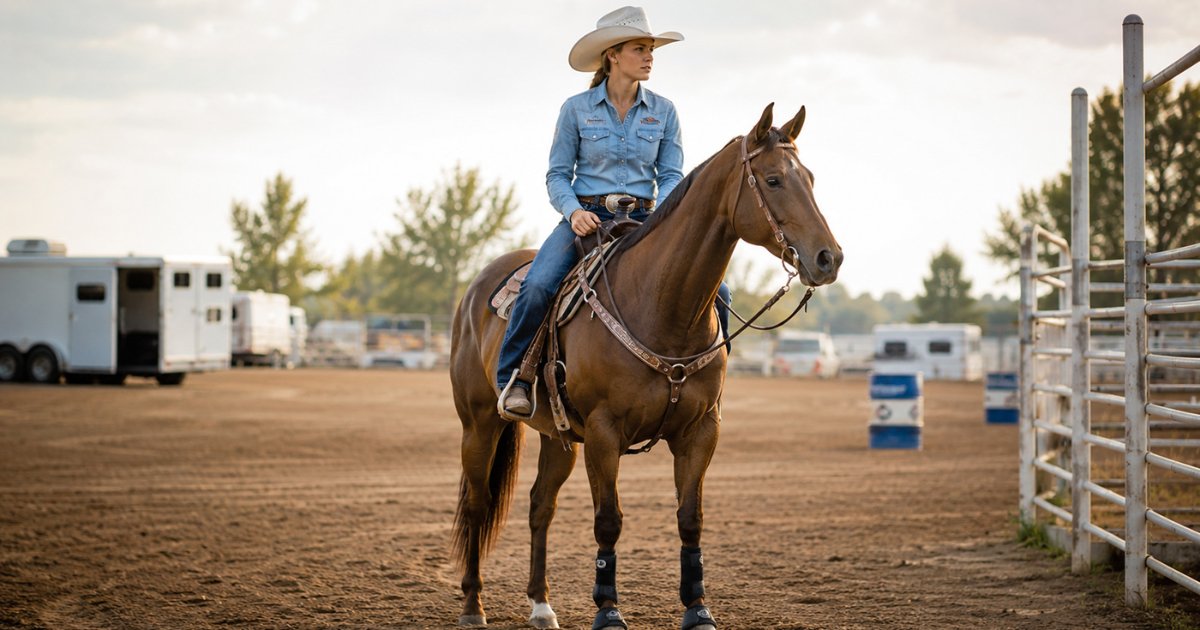
Although multiple variables including body condition and haircoat can affect individuals differently, horses with coats appropriate for the seasons are generally most comfortable at temperatures between 20 and 60 F—far cooler than their human handlers! However, many horses that work through the winter months are prevented from sporting a full winter coat, through either management or clipping . These horses require additional coverage and protection from the elements when the temperature drops.
To blanket or not to blanket Acclimated horses with a full natural haircoat rarely require blankets. In fact, blanketing such animals might reduce their warmth, as the blankets prevent the natural lofting of hairs to create a layer of warm air around the animal’s body. However, blankets can be useful, or even lifesaving, in certain scenarios.
The first type of horse that benefits from blanketing is an animal in poor or lean body condition. This could be a geriatric horse, or simply one coming out of a strenuous work situation, such as an animal that’s racing fit. These horses need to conserve calories toward improving condition, rather than waste them by trying to stay warm. A well-insulated, waterproof blanket can help to prevent calorie loss through shivering.
Horses that are not acclimated to local temperatures, such as those recently relocated from Florida to Northern Minnesota might also require blankets, as will horses whose natural haircoat has been clipped for winter workouts. Still others, particularly lighter breeds of horses such as Thoroughbreds and Arabians, might not have a sufficient natural cover to keep them comfortable through the winter months.
Finally, horses that do not have access to shelter should have a waterproof layer to protect them from precipitation that plasters the hair down flat and removes its insulating properties.
Warmth from Within For all horses, internal combustion created by the hindgut fermentation of fiber provides heat from the inside out. The best way to ensure a horse is warm and comfortable is to provide high-quality forage in appropriate amounts for the animal’s condition and workload. It is preferable to increase the horse’s hay ration rather than simply pouring more grain, as slowly consuming the long-stem fiber in hay will give the horse something it keep it occupied, while also providing greater bulk for a healthier GI tract.
A simple rule of thumb for assessing a horse’s forage needs is a minimum 1.5% of the animal’s bodyweight in forage each day. Thus, a 1,000-lb. horse should consume around 15 lb of hay or other forage each day for optimal digestive function. When the weather turns cold, this amount can be increased slightly to 2% (20 lb in this example), or more as needed. Consult with your veterinarian or an equine nutritionist for specific recommendations for your horse.
Air Quality
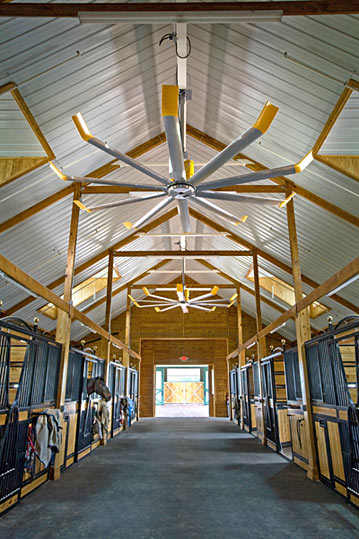
Even if horses are stabled in cold weather, it’s still important provide proper ventilation and circulation of fresh air within equine facilities. An airtight facility might be warmest, but it’s not healthiest!
In New England, it’s a pretty big building to heat, especially with a dirt floor,” Holman said. “All the heat would just go up to the ceiling and I couldn’t get it to move around.” The Big Ass Fan Company had the perfect solution to keep Holman’s trainers and charges happy: three 18-ft. diameter Powerfoil X Plus fans. In Eagle Creek Farm’s riding arena, the difference was immediate. “They’re able to ride more consistently year round!
Equine facilities require both ventilation and circulation of air year round. Ventilation is the exchange of interior and exterior air, whereas circulation is the mixing of air within the space to prevent stagnant conditions.
A ventilation system ensues that the warm, dusty, humid and odiferous barn air is continually replaced by fresh outside air. A well-ventilated barn should not have issues with humidity or odors. Ventilation systems can include natural elements, such as operable windows and ridge vents, along with mechanized elements, such as exhaust fans.
Despite what managers might assume, an effective ventilation system is not the same as, or a replacement for, an effective circulation system. Ventilation and circulation systems selected and operating in unison will result in improved comfort and reduced energy usage.
Within the barn, the mixing, or circulation, of the air is equally important. Allowing air to become stagnant can lead to issues with ammonia and condensation, as well as stuffy conditions.
Keeping Warm with Air Movement
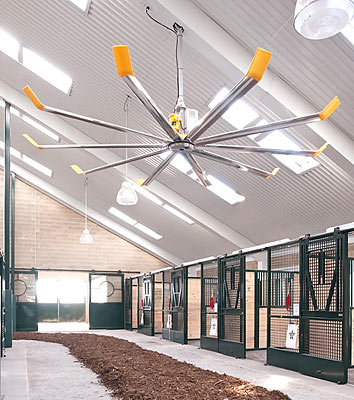
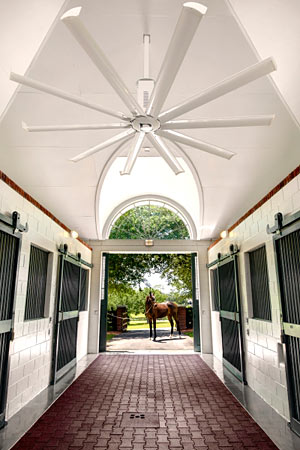
It may seem counterintuitive, but one of the best ways to keep barns and arenas comfortable for horses and riders alike is better known for its summer cooling power. Large diameter, low speed overhead fans aren’t your standard living room air movers. These aptly-named Big Ass Fans® range in size from 6 to 24 feet in diameter and use their immense size, rather than speed, to efficiently circulate air through the entire space, from ceiling to floor and wall to wall.
Stratification occurs because air coming out of a heater is 5-7% lighter than cool air in a space and tends to rise to the ceiling In the winter, Big Ass Fans can be used to destratify heat by moving large volumes of warm air off the ceiling without creating a draft. The steady mixing of air creates a uniform temperature throughout the space.
In heated barns and arenas, this steady mixing of air creates a uniform temperature throughout the space, which can help the heater to maintain the same thermostat setpoint with less effort, resulting in a serious reduction of operating costs.
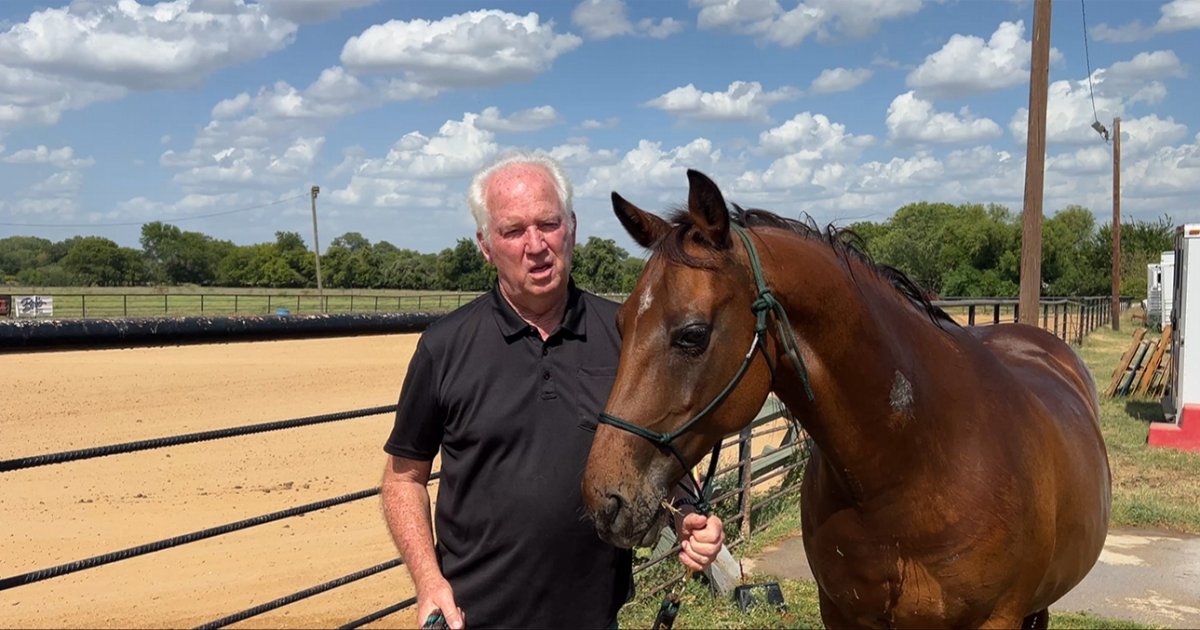
When Mike and Whitney Alvis of Norman, Okla., built a barn for their three Quarter Horses, the health and comfort of their equine family members was a top consideration. The Alvises asked a friend with a 250-head ranch for his advice, and his answer was clear—Big Ass Fans were the way to go.
The Alvises put two 10-ft. diameter Powerfoil®X fans from the Big Ass Fan Company in their seven-stall barn. The fans provide constant movement to improve overall air quality, allowing the horses to have a refreshing breeze throughout the barn at all times. The large-diameter fans silently and efficiently move a huge volume of air using only a 1-horsepower motor, while costing a fraction of other, less efficient fan systems.
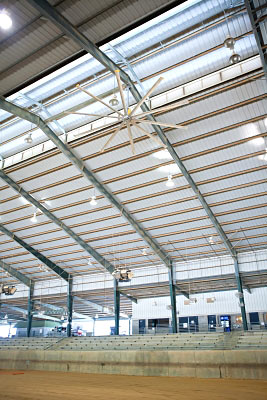
In the winter, radiant heaters and the fans work together to keep the cold Oklahoma air from chilling the horses. Run at a lower speed, the Big Ass Fans gently send the warmed air down, circulating and mixing it to keep the entire space consistently toasty warm.
“In the winter, I keep the fans going at a very low speed, just to push the heat down,” Mike Alvis said.
The same principle can be put to work in indoor arenas. A hunter/jumper training facility based in Temple, N.H., Eagle Creek Farm considered not only the comfort of its trainers and clients’ horses, but also their ability to work year round when designing an indoor riding arena suited for the tough New England climate. Farm manager Gary Holman added a wood boiler heating system to the 120 by 210-ft. riding arena two years ago. But all the heat was rising to the peak of the 35-ft. ceiling, leaving horses and riders in the cold below.