

Natural Insect Control for Horse Barns
By Karen Elizabeth Baril Just this week, officials in Ohio, Washington, and Massachusetts issued warnings for citizens to protect themselves against mosquito bites.
That warning came on the heels of finding several trapped mosquitoes that tested positive for the West Nile Virus.
Most people who are infected with the virus experience a mild headache and fever; rarely does it cause long-term damage. For horses though, the West Nile Virus is particularly dangerous, attacking the central nervous system. Symptoms include stumbling, weakness, and in the final stages, coma. Mosquitoes, of course, aren’t the only problem; deer flies, face flies, midges, and stable flies carry debilitating diseases as well.
We do our best to protect our horses by vaccinating them against vector-borne diseases and limiting exposure to biting insects outdoors. Fly sheets, fly masks, and spray go a long way to protecting them from insect bites in the field and paddock, but we also need to keep insects out of the barn. In this article, we’ll look at some natural ways to do just that.
Keep the Air Moving
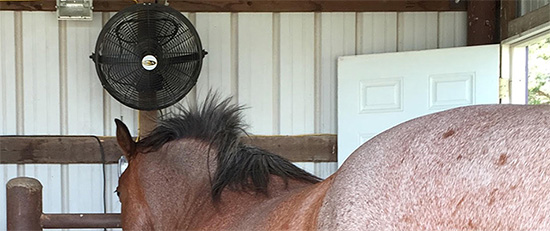
Researchers study the habits and lifestyles of different species of mosquito with the primary goal of developing effective control methods. One fact we can use to our advantage is that while mosquitoes are strong fliers in the rain, dodging raindrops if they have to , they aren’t adept at flying in even the mildest of breezes. One of the simplest, most cost-effective methods of keeping them out of the barn is to simply keep the air moving.
Ceiling fans and basket fans Never use a household box fan in the barn. Box fan motors are not designed for the damp and dusty barn environment; a blocked motor is a recipe for disaster. A properly designed mechanical ventilation system plays a significant role in providing fresh air, but it also keeps biting insects away.
' Agricultural Exhaust Fans are installed high on one or both ends of the barn. Install them so that one fan works on intake and the other works on outtake, otherwise they’ll just work against each other.
' Ceiling Fans move air horizontally, flushing dead air out of corners and helping to moisture at bay. Flies and mosquitoes love those moist environments. Consider that our horses respire 1 to 1 ' gallons of water per day, creating a perfect moisture-laden environment for bacterial growth and insects. Ceiling fans work well on their own or in tandem with exhaust fans. Look for unites that are cost-effective to run. Some use less wattage than a 100-watt light bulb.
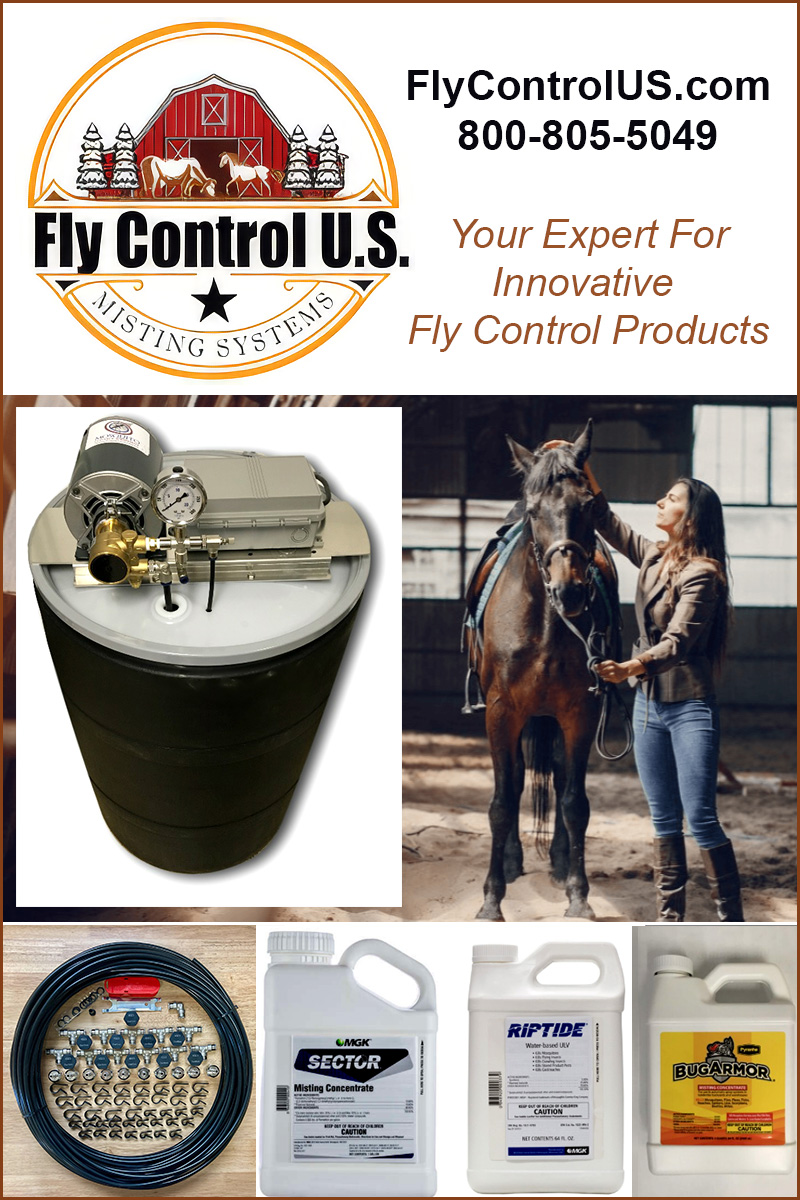
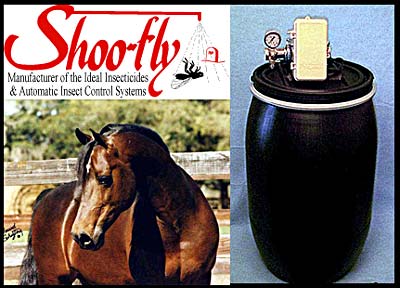
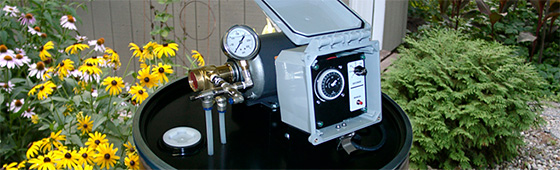
' Automatic fly and mosquito systems work well to eliminate flies and mosquitoes in the barn. They’re safe, effective, and cost efficient. The systems use a safe, natural equine fly control. Make sure your system uses an insecticide that meets all of the strict requirements set forth by the EPA. Some fly and mosquito control units utilize an analog timer that allows you to set the spray at regular intervals, depending on the season and how much fly control you need. Systems use insecticide derived from the chrysanthemum flower so it’s safe for you, your horses, your family, and even the barn cat!
' Eliminate hidden sources of water. Fix leaky faucets and sweep up spilled water. Mosquitoes need standing water to lay their eggs. Consider that the average female mosquito can lay up to 400,000 eggs in her lifetime! How long does she live? Just a week or more.
' A word on traps and zappers--- don’t use them!Traps and zappers are not effective against flies and mosquitoes. In fact, they tend to kill off the very bugs that eat flies and mosquitoes. Plus, all those exploding bug parts are a significant health hazards to horses and humans.
Fly and Mosquito Control Systems keeps flies, mosquitos, midges, and flies out of the barn and your horse’s stall. How does it work? Our system uses a safe, natural equine fly control that is organic. In fact, we made sure that our insecticide meets all of the strict requirements set forth by the EPA so you can feel safe using it. Of course, it’s biodegradable and safe for the environment as well.
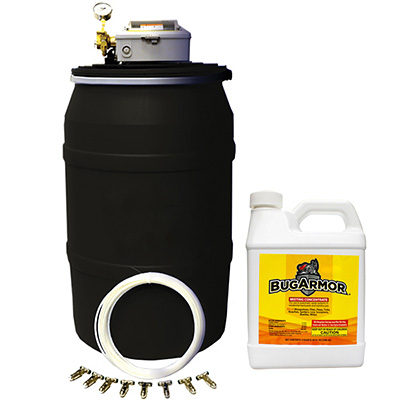
Our fly and mosquito barn control system works on a unique analog timer that allows you to set the spray at regular intervals, depending on how much fly control you need. The system is programmable to spray up to eight times per day in your barn and each stall, but you can also operate it manually with just the push of a button.
Fly and Mosquito Control System spray is set for a 1-minute increment and each nozzle puts out 5 oz. of spray per minute at an incredible 160 ps. You won’t see it, but our insecticide works for up to 45 minutes after each spray. Better yet, it’s fully adjustable so you can set the rate for whatever is convenient. Let’s say you’re going camping or to a horse show for the weekend---you can set the timer for longer intervals. You’re still keeping the insects at bay, but saving money as well.