

Trail Ride Preparation Should Include Bee Protection and Bee Sting Treatment for Horse and Rider
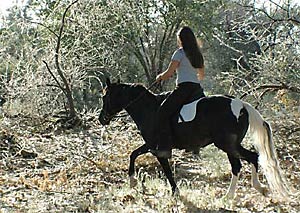
Be Ready with the BeeReady Bag by Giddyap Girls™
Protecting horse and rider from Africanized honey bees—confirmed in nine states according to the U.S. Department of Agriculture—starts with simple precautions: wear light-colored clothing since bees tend to attack dark things, avoid floral or citrus scents, and never swat at a bee, because swatting releases an alarm signal that stimulates other bees to attack. These aggressive bees sting excessively when defending a nest and will chase an enemy up to a mile or more, so never tie or pen animals near a hive and never jump in water, where bees will wait for you to come up for air.
On the trail, a kit like the Giddyap Girls BeeReady Bag™ clips to a Western or English saddle and organizes safety spray, a sting guard head cover, sting-and-bite treatment scrub, and antihistamine gel caps for quick access.
The Bees are Here! We’ve all heard about them, and it’s no hype. According to the U.S. Department of Agriculture, the Africanized Honey Bee (AHB) has infiltrated nine southern states, and attacked and seriously injured hundreds of people and animals.
History of the Notorious AHB In the 1950’s, honey bees from Africa were brought to Brazil, with the hopes of introducing genetic material from the tropically-adapted African bees into the resident European bees, thus making better honey producers. Unfortunately, some of the introduced bees were accidentally released. They thrived in the tropical environment, and over the next four decades the wild AHB population expanded into most of the tropical and subtropical parts of the Americas. The first AHB swarm in North America was discovered on October 19, 1990 in a small town in southern Texas.
Why a Threat? Bee colonies replicate by swarming. The AHB has more swarm cycles (when it is establishing a hive) per year than the European bee. As a result, the aggressive AHB is quickly outnumbering the calmer European bee. According to the U.S. Department of Agriculture, more than 100 counties in Texas, 6 in New Mexico, 14 in Arizona, 1 in Nevada and 3 in southern California have reported AHB.
The bees have also been confirmed in Utah, Louisiana, Arkansas and Florida, making a total of nine states with an infestation of AHB. The AHB doesn’t discriminate in its choice of nests, and has been found in hollow trees, walls, porches , sheds, barns, livestock areas, attics, utility boxes, garbage containers and abandoned vehicles. The bee is very unpredictable, stings excessively in defending its nest and will chase an enemy up to a mile or more.
It responds quickly to disturbances by people and animals 50 feet or more from its nest, and once disturbed, colonies may remain agitated for as long as 24 hours. Since the 1990’s, hundreds of stinging incidents have been reported, including 24 deaths.
Bee Safety As the number of Africanized bee colonies increases in an area, so does the likelihood of human and animal encounters with them. Serious injury can be avoided if the habits of Africanized bees are learned and precautions taken:
' Wear light-colored clothing. Bees tend to attack dark things (dark hair, dark clothing).
' Avoid wearing floral or citrus perfumes, lotions or aftershaves. Bees are sensitive to odors, both pleasant and unpleasant.
' Check your house and yard at least once a month to see if there are any signs of bees taking up residence. If you do find a swarm or colony, keep people and pets away. Find a pest control company or local beekeeper to remove it.
' Fill all cracks and crevices in walls with steel wool and caulk to help prevent bees from building a colony in your house or yard. Fill holes in the ground, and remove piles of refuse; bees will nest in an old soda can or an overturned flower pot.
' Be alert for bees that are acting strangely. Bees often will display some preliminary defensive behavior before going into a full-fledged attack.
' When you are outdoors, in a rural area, a park or wilderness reserve, be aware of your surroundings and keep an eye out for bees the way you would watch out for snakes and other natural dangers.
' Don’t panic at the sight of a few bees foraging in the flowers. Bees are generally very docile as they go about their normal activities.
' Don’t tie or pen animals near bee hives; they will have nowhere to go if attacked.
' Do not swat at bees; swatting causes the release of an alarm signal and stimulates other bees to attack.
' Don’t provoke bees by spraying the hive with a garden hose.
' DO NOT Jump IN Water!! Bees will wait for you to come up for air.
With careful planning of your outdoor activities, including bringing the Giddyap Girl BeeReady Bag on your next trail ride or camping trip, you can greatly reduce the chances of you or your horse being injured.
How can the Giddyap Girls BeeReady Bag Protect Me and My Horse? This specialty kit organizes essential life-saving items to prevent, shield and protect you and your horse in case of attacks by bees or other stinging insects. Features of the bag include:
' Organized design for quick access ' Heavy-duty denier nylon ' Compact size ' Lightweight ' Full Velcro closure for handy and secure storage ' Clips to Western or English saddles ' Clips to rider’s leg, if preferred
The Kit Contains the Exclusive:
' BeeReady safety spray – creates a non-toxic virtual “bubble of protection” around you and your horse, deterring bees, social stinging insects…even mosquitos and flies!
' Sting Guard Head cover (Bees target the head, and nearly all those who suffer serious stinging incidents with Africanized bees are overcome by stings to the head and face)
. Covers head and neck
. Drawstring lock-clip offers easy closure
. White color – deters bees
. Durable and flexible coated netting
' Mitigator Sting and Bite Treatment Scrub (1-oz tube) – Eliminates itching and pain, neutralizes toxins, prevents blistering and scarring
' Two Benadryl© Histamine Blocker Gel Caps – Relieves severe allergic reactions that may accompany bee stings.
' Slot for Epi-Pen life-saving antibiotic (Epi-Pen not included in kit)
' Slot for antibiotic for your horse (available through your veterinarian)
With the spread of the AHB, contact with humans and animals may be unavoidable. But with your Giddyap Girls BeeReady Bag™ on hand, you can feel confident in knowing that you and your horse have the ultimate protection.

Let Giddyap Girls™ help protect you and your horse from an attack of the notorious Africanized Honey Bee.
Contact: Our Friendly Staff P.O. Box 1246 Costa Mesa, California 92626 Phone: 1-888-Giddyap (443-3927) Email: [email protected] Website: www.giddyap.com