

What Does Hay Cost? Feeding a Horse on Today’s Prices
By Bob Pruitt · Updated June 24, 2026 · Horse Care
Written from 50+ years of horse ownership — and a lot of trucks backed up to a lot of hay barns.
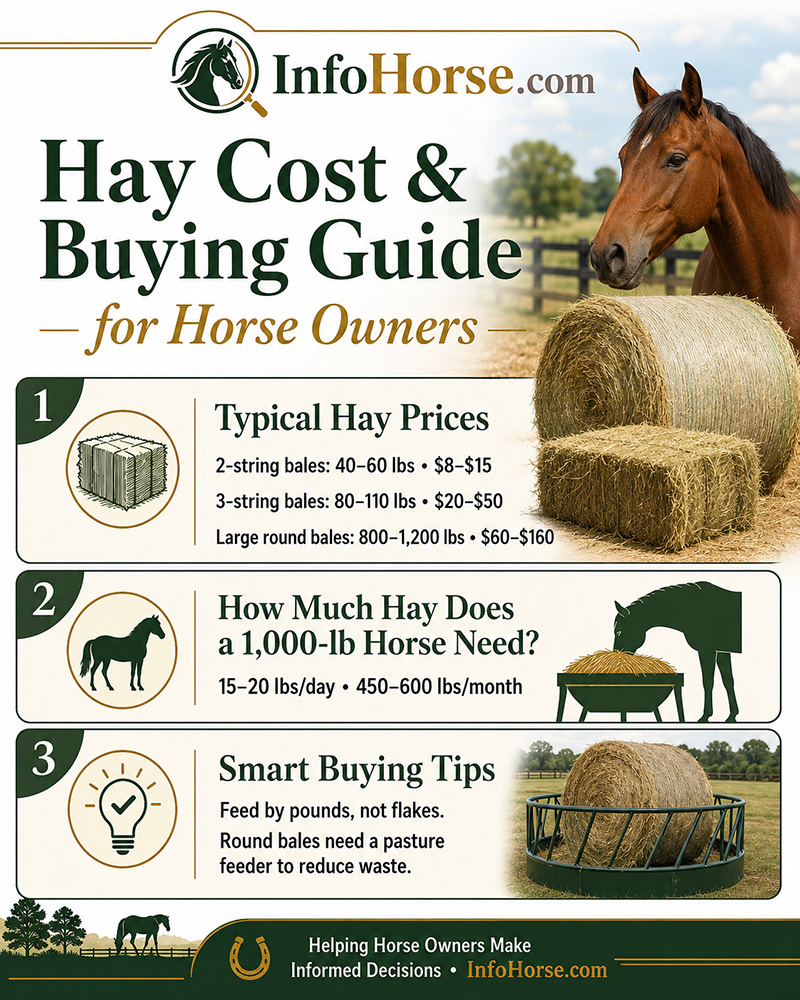
In 2026, a 2-string bale of horse hay usually weighs 40 to 60 pounds and runs about $8 to $15 per bale, a 3-string bale weighs 80 to 110 pounds and runs about $20 to $50, and a large round bale weighs 800 to 1,200 pounds and costs about $60 to $160, depending on forage type, quality, and location. Feeding one horse typically runs roughly $100 to $400 a month—a 1,000-pound horse needs about 15 to 20 pounds of hay a day, or 450 to 600 pounds per month—with the final bill shaped by the hay, the horse, your region, the weather, and how much is wasted.
The short answer: In 2026, most horse owners buy hay as 2-string bales, 3-string bales, or large round bales. A 2-string bale of horse hay usually weighs 40 to 60 pounds and runs about $8 to $15 per bale. A 3-string bale usually weighs 80 to 110 pounds and runs about $20 to $50 per bale, depending on forage type, quality, and location. Large round bales usually weigh 800 to 1,200 pounds and cost about $60 to $160 per bale. Feeding one horse can run roughly $100 to $400 a month, depending on the hay, the horse, your region, the weather, and how much hay is wasted.
The first real cold snap is when it hits you.
You walk out to the hay barn, look at the stack, and realize it is lower than you thought. Then you call your hay supplier, and the price is higher than last year. Every horse owner knows that little drop in the stomach.
I have felt it more winters than I can count.
Hay is usually the biggest feed decision you will make, and on many horse properties it is the biggest feed cost, too. But here is the thing I want every horse owner to understand before we talk about a single dollar figure: hay is not just a line item on your budget.
Hay is the thing standing between your horse and a colic.
Between your horse and a founder.
Between your horse and a hard winter.
Hay is comfort. Hay is gut health. Hay is weight control. Hay is prevention. Hay is what keeps a horse doing what a horse was designed to do — eating forage, slowly and steadily, through the day.
Get hay right and most everything else gets easier.
Get it wrong to save a few dollars, and you may pay the difference to your vet, with interest.
At InfoHorse, this is why we believe horse owners deserve practical, plain-spoken information. Hay should not be a guessing game. A horse owner should be able to look at a bale, ask the right questions, understand what their horse needs, and make a decision that protects both the horse and the budget.
What Hay Actually Costs in 2026
Horse owners do not usually talk about hay as “squares.” We buy hay in bales.
More specifically, most horse owners buy 2-string bales, 3-string bales, or large round bales.
Commercial farms may use very large 800-pound bales, but that is not how most small horse owners buy or feed hay. The average horse owner is usually dealing with bales they can haul, stack, open, portion, and feed — or large round bales placed in the pasture for multiple horses.
Here is a more realistic look at how horse owners buy hay.
Hay Form |
Typical Weight |
Typical 2026 Price |
Who It Suits |
|
2-string bales |
40–60 lbs |
$8–$15 per bale |
Most one-to-few-horse owners; easiest to handle, stack, and portion |
|
3-string bales |
80–110 lbs |
$20–$50 per bale |
Owners who want more hay per bale and can handle the extra weight |
|
Large round bales |
800–1,200 lbs |
$60–$160 per bale |
Multiple horses, pasture feeding, larger properties; must be managed carefully to prevent waste |
Prices vary widely by region, drought conditions, forage type, cutting, delivery distance, and whether you are buying from the field, a dealer, or a feed store. These ranges are meant to help horse owners understand typical buying patterns, not replace a local hay quote.
The price depends on forage type, quality, location, season, drought pressure, and trucking.
A 2-string bale of grass hay may be affordable in one part of the country and much higher in another. A 3-string bale of premium alfalfa in the West may be priced very differently than a 3-string bale of Bermuda in Texas or Oklahoma.
That is why hay prices can feel so frustrating. There is no one national number that fits every barn.
But there is one rule that does fit every horse owner:
Cheap hay is not always cheap.
Dusty, moldy, stemmy, poor-quality hay buys you a vet bill and a sick horse. You pay for good hay once. You pay for bad hay twice.
Typical 3-String Bale Prices by Hay Type
A 3-string bale of horse hay typically weighs between 80 and 110 pounds. It costs more than a 2-string bale, but you are also getting more hay per bale.
Here are common 3-string ranges horse owners may see:
|
Hay Type |
Typical 3-String Bale Weight |
Typical Price Range |
|
Alfalfa |
90–110 lbs |
$19–$35 per bale |
|
Timothy |
80–90 lbs |
$23–$45 per bale |
|
Orchard grass / grass mixes |
Around 90 lbs |
$35–$45 per bale |
|
Bermuda |
90–100 lbs |
$20–$25 per bale |
These ranges can shift quickly with drought, fuel prices, trucking, and local supply. But they give horse owners a more realistic picture than talking about hay in terms most owners do not use.
The real question is not just, “What does this bale cost?”
The better question is:
What does this hay cost per usable pound — and is it right for my horse?
How Much Hay Does One Horse Really Need?
Before you can figure out what hay costs, you have to know how much hay your horse actually eats.
A good starting point for most horses is 1.5% to 2% of body weight per day in forage. That means a 1,000-pound horse usually needs about 15 to 20 pounds of hay a day, or about 450 to 600 pounds of hay per month.
That is where the math gets real.
If you are feeding 2-string bales that weigh 50 pounds each, one horse may go through about 9 to 12 bales per month.
If those bales cost $12 each, that is about $108 to $144 per month for one horse before waste, delivery, winter increases, or extra hay during bad weather.
If your horse is on a dry lot, has little or no pasture, is older, needs more forage to maintain weight, or you are feeding through winter, that number climbs.
If you are using 3-string bales, you may buy fewer bales, but each one costs more and weighs more. If you are using round bales, the price per pound may be lower, but only if the hay is protected and not wasted.
And this is why I always tell horse owners: do not feed hay by “flakes” alone.
A flake is not a measurement.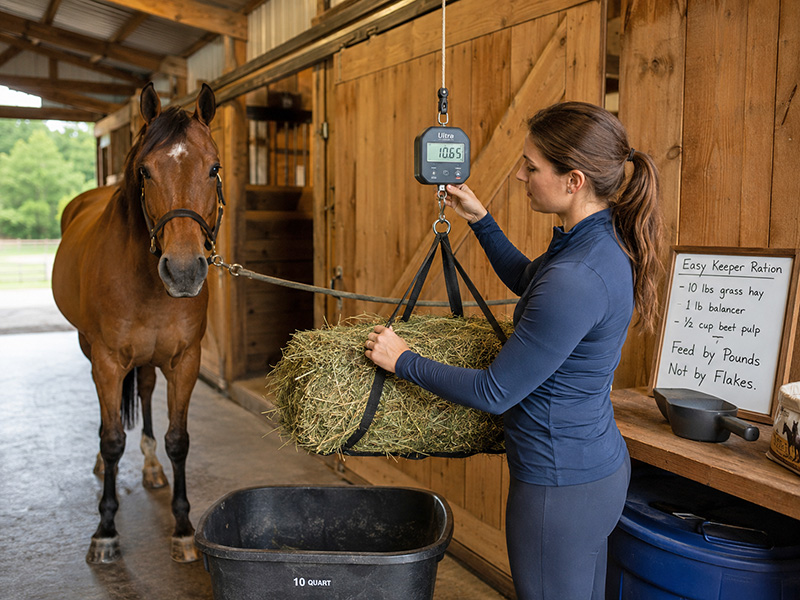
One flake may weigh 3 pounds, and another may weigh 8 pounds depending on the bale. If you are trying to manage cost, weight, laminitis risk, or an older horse’s condition, you need to know pounds — not guesses.
Buy a simple hay scale. Weigh a few flakes. Learn what your hay actually weighs.
That one small habit can save money, prevent overfeeding, and help you make better decisions.
Why Hay Costs What It Costs
When your hay bill climbs, it is rarely one thing. It is a stack of them.
Weather is the big one. Drought reduces hay production, lowers quality, and forces buyers to look farther from home. When local hay gets scarce, hay has to be hauled in from another region, and that adds cost fast.
Then comes fuel and trucking.
Hay is heavy. Hay is bulky. Every mile it travels lands on your bale price.
Add fertilizer, labor, irrigation, equipment, land costs, and competition from other buyers. Stack all that up and you get the number that made your stomach drop when you called your hay seller.
None of that is in your control.
So let’s talk about what is.
The Part That Actually Matters: Which Hay Does Your Horse Need?
Hay is not one product at different prices.
Hay is different tools for different horses.
The cheapest bale on the lot is the most expensive thing you can buy if it is wrong for your horse. And the priciest tested hay may be a bargain if it keeps your metabolic horse off the vet’s table.
Do not assume every bale of hay is suitable for horses. Cattle-quality hay, stemmy hay, dusty hay, or hay that has been rained on may be cheaper, but it may not be safe or appropriate for your horse.
That phrase matters: horse-quality hay.
Lots of hay is hay. Not all hay is horse-quality hay.
Grass Hay: Timothy, Bermuda, Orchard, Brome
Grass hay is the everyday backbone for most horses. It is usually lower in protein, higher in fiber, and easier on the gut than richer hay.
Timothy and orchard grass are common in many parts of the country. Bermuda is a warm-season staple across much of the South. Brome is common in parts of the Midwest and Plains.
For the average pleasure horse, trail horse, or lightly worked horse, good grass hay is usually exactly right. It is often the more affordable choice, too.
But “grass hay” still needs to be good hay.
It should be clean, dry, sweet-smelling, and free of dust and mold. It should be horse-quality hay that fits the horse, not just the budget.
Legume Hay: Alfalfa and Clover
Alfalfa is the rich stuff.
It is higher in protein, higher in calcium, and higher in calories. That does not make it bad. It makes it a tool.
A hard keeper, broodmare, growing horse, or horse in heavy work may need alfalfa or a good grass-alfalfa mix. But an easy keeper, overweight horse, insulin-resistant horse, or laminitis-prone horse may not tolerate rich hay well at all.
Feeding alfalfa to a horse that does not need it is not generous.
It can be a risk.
And one warning about alfalfa that too few people know, so hear me on this: blister beetles.
Blister beetles can get baled into alfalfa, and they contain a toxin called cantharidin that is deadly to horses. It does not take many beetles to kill a horse.
Buy alfalfa from a reputable grower or dealer who knows their fields and manages for blister beetles. This is one more reason a trusted hay seller is worth more than the cheapest truck in the classifieds.
Mixed Hay and the Cuttings
A timothy/alfalfa blend or grass/alfalfa mix can split the difference. It may offer a moderate protein and calorie bump without being as rich as straight alfalfa.
Then there are the cuttings.
First cutting is often stemmier, more mature, and more filling. Second cutting is usually softer, leafier, and more nutritious. Third cutting can be delicate, rich, and very attractive to horses.
Which cutting is “best” depends entirely on the horse standing in front of you.
A chubby easy keeper may do better on a clean, mature grass hay. A senior horse with dental trouble may need something softer. A hard keeper may need the extra calories. A metabolic horse may need tested, low-sugar forage above all else.
That is why there is no one perfect hay.
There is only the right hay for this horse, in this season, with this health history.
“The right forage program is the foundation of every healthy horse. Get the hay right, and good nutrition follows.”
Bagged Chopped Forage: Another Hay Option Worth Knowing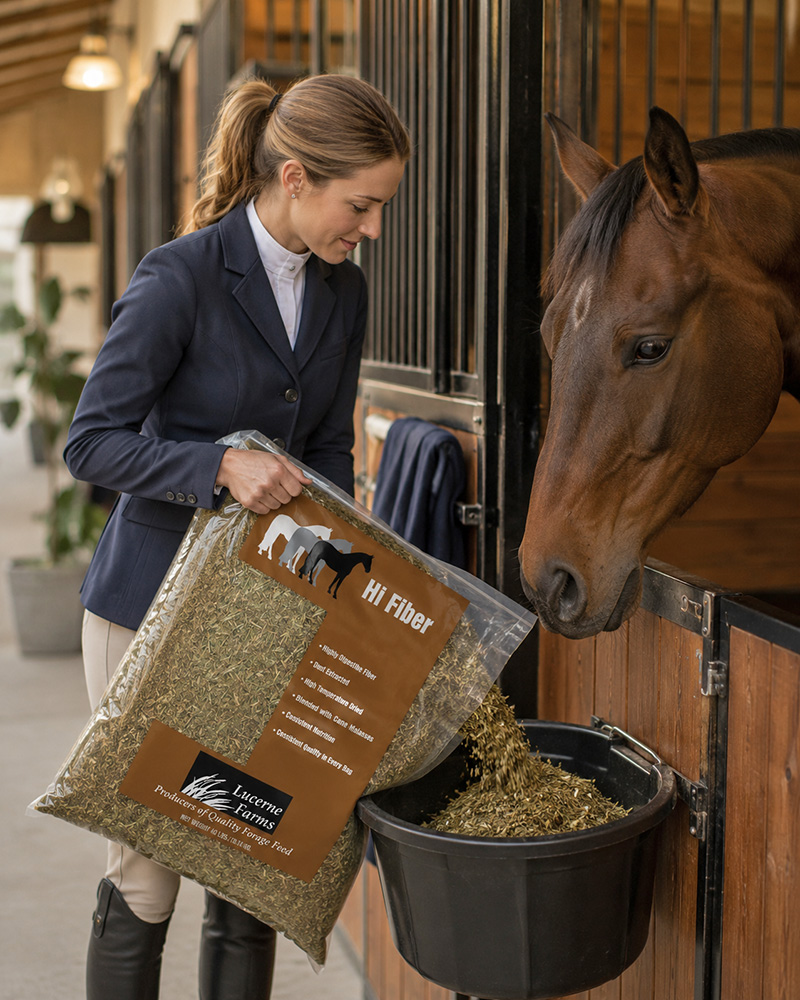
Most horse owners think of hay as 2-string bales, 3-string bales, or round bales. But there is another option that belongs in this conversation: bagged chopped forage.
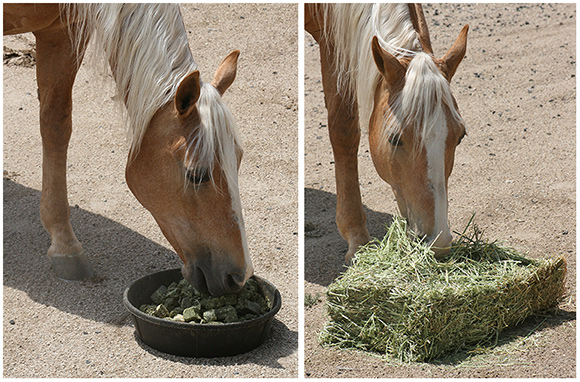
Bagged forage is not meant to make every hay barn disappear. For many horse owners, baled hay will still be the foundation of the feeding program. But chopped forage can be a very useful tool, especially when you need consistency, easier storage, less waste, or a more controlled way to add quality forage to the diet.
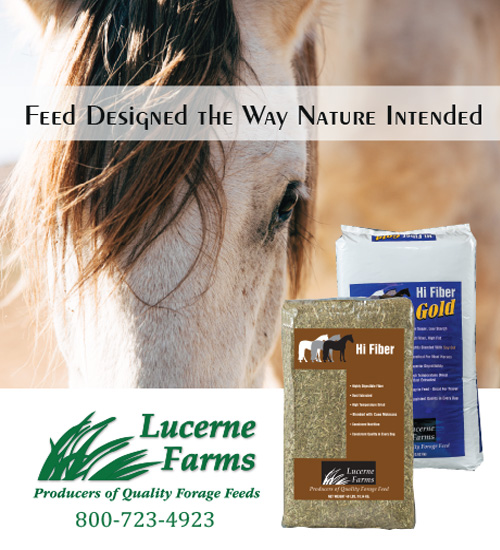
This is where our longtime advertiser Lucerne Farms fits naturally into the hay conversation. Lucerne Farms offers chopped forage blends for horses that can be used as a grain complement, fiber supplement, or hay replacement, depending on the horse and the feeding program. Their forage products include traditional forage blends as well as molasses-free options for horses with special concerns such as laminitis, insulin resistance, obesity, Copd, or other health challenges.
For the average horse owner, the practical value is simple: bagged forage is easy to store, easy to measure, and easy to feed. You are not guessing at flakes. You can feed by weight, add it to a bucket or feed tub, mix it with a ration, or use it when your horse needs more chew time and more forage in the diet.
Bagged chopped forage can be especially helpful for:
- Senior horses that struggle with long-stem hay
- Horses with dental issues
- Horses that waste too much hay
- Horses that need a controlled forage source
- Metabolic horses needing carefully selected forage
- Traveling horses or horses at shows
- Barns with limited hay storage
- Times when good horse-quality hay is hard to find
Like any feed change, chopped forage should be introduced gradually. Lucerne Farms recommends feeding according to the horse’s age, weight, temperament, and workload, and making diet changes gradually over 7 to 10 days. For horses with metabolic issues, laminitis history, weight concerns, or special medical needs, it is always wise to talk with your veterinarian or equine nutritionist before changing the forage program.
The big point is this: hay does not always have to look like a bale to serve an important forage purpose.
Good bagged forage can give horse owners another practical option when they are trying to keep horses eating safely, consistently, and well — especially in years when hay quality, storage, and price are all difficult.
View Sponsor Profile →
The Horse That Changes Everything: The Easy Keeper and the Metabolic Horse
If you have a horse that gets fat on air — and a lot of our ponies, Morgans, minis, and easy keepers do — sugar matters more than price.
Rich hay can tip a metabolic or laminitis-prone horse into real trouble. Founder is a heartbreak and a giant vet bill rolled into one.
For those horses, you want tested, low-sugar grass hay, often called low-NSC hay. It may cost more. It may be harder to find. But that is not overspending.
That is some of the cheapest insurance you will ever buy.
The right hay for the wrong horse is still the wrong hay.
This is where tested hay from a reputable dealer earns its keep. A good hay seller who tests hay can hand you the actual numbers — sugar, starch, protein, fiber — and those numbers let you make an informed decision instead of a hopeful guess.
It matters more than you might think, because the right hay changes with the horse.
A young growing horse has very different needs than an older horse. A horse in heavy work has different needs than a retired pasture horse. And an insulin-resistant horse absolutely must have sugar and starch watched closely.
For that horse, the numbers are not a nicety.
They are the whole game.
Here is the one I want every owner of an older horse to take to heart. For a horse with Cushing’s, insulin resistance, or a history of laminitis, rich hay can be dangerous. Too much sugar and too many calories can push an already vulnerable horse toward laminitis, which can become life-threatening.
That is not a scare line. It is how a lot of good old horses are lost.
Low sugar. Appropriate protein. Tested hay when possible. A hay seller with a real reputation. And a veterinarian who knows your horse.
That is the formula.
And it leads to the most important advice in this whole article: talk to your veterinarian. Your vet can help you understand what kind of hay and what forage numbers fit your individual horse.
That conversation is worth more than anything a price chart will ever tell you.
The Hidden Hay Cost Nobody Talks About: Waste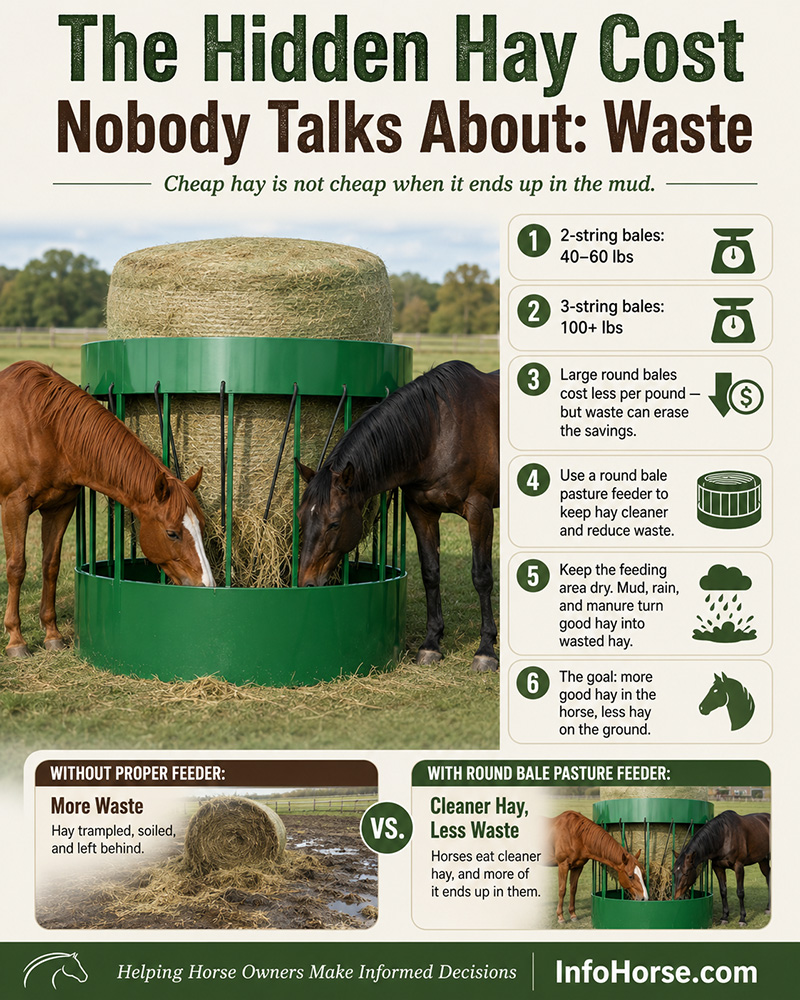
The cheapest hay on paper is not always the cheapest hay in real life.
Hay waste can quietly eat up your budget faster than almost anything else.
Large round bales often cost less per pound than 2-string or 3-string bales, which is why so many horse property owners use them for multiple horses or pasture feeding. But round bales only save money when they are managed correctly.
If a round bale is dropped in mud, left uncovered, rained on, trampled, or pulled apart by horses, a shocking amount of what you paid for can end up on the ground.
A $90 round bale is not really a $90 round bale if a third of it is wasted.
That is where many horse owners lose the savings they thought they were getting.
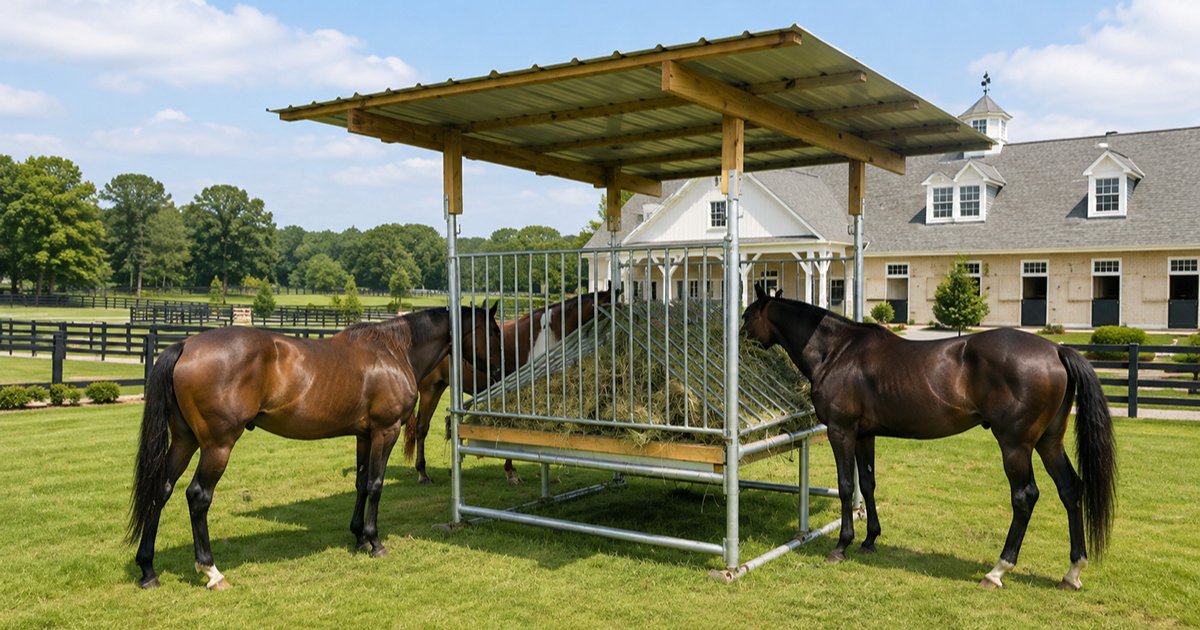
Round bales fed in pastures should be placed in a round bale pasture feeder. A proper feeder helps keep the bale contained, reduces trampling, slows down waste, and keeps more hay where it belongs — in the horses, not packed into the mud.
A dry feeding area matters too. Mud, rain, and manure can turn good hay into wasted hay quickly. Hay that has been walked into mud, soaked by weather, or contaminated with manure is not hay I want my horse eating.
Clean hay matters.
This does not mean round bales are bad. Round bales can be a smart, economical way to feed horses when they are clean, horse-quality, properly stored, and fed in a safe pasture feeder.
But the goal is not just to buy hay cheaper.
The goal is to get more good hay into your horse and less of it onto the ground.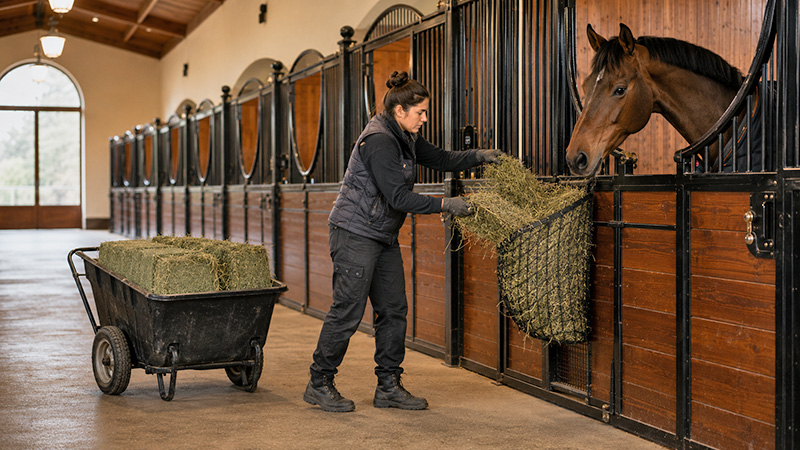
Compressed hay bales are another option worth knowing about, especially for horse owners who want high-quality hay that stores neatly and creates very little waste. They are not available everywhere, but better hay dealers often carry them, and they are usually sold by weight. The important thing to remember is that compressed hay can fool your eye. The flakes look smaller than regular hay flakes, but they are dense and can weigh much more than they appear to. Always weigh compressed hay before feeding it. It may cost a little more, but it offers real advantages: good quality, less waste, easier handling, and the ability to store more hay in the same hay room because it is tightly compressed.
The Real Cost: Delivery, Stacking, Labor, and Time
When comparing hay prices, ask whether delivery is included.
A $12 bale picked up at the field may not be cheaper than a $14 bale delivered and stacked, especially if you have to borrow a trailer, buy fuel, or spend half a day hauling it yourself.
The real hay cost is the bale price plus the time, fuel, delivery, labor, and waste.
Some hay sellers have minimum orders. Some charge delivery by distance. Some will drop hay at the barn but not stack it. Others will deliver and stack, which may be worth every penny if you are buying a larger load or cannot safely handle heavy bales yourself.
For a horse owner, the cheapest price is not always the best value.
The best value is clean, horse-quality hay that gets to your barn safely, is stored properly, and actually ends up feeding your horse.
How to Buy Hay Smart
A few hard-won habits can save real money without cutting a single corner on your horse’s health.
Buy in bulk when you can store it. Prices often peak in late winter and early spring when everyone’s stack is low. Prices usually improve when new crop comes in over summer.
Buying hay ahead can save you money by February.
But only if you can keep it dry.
Buying in bulk only saves money if you can store it properly. Do not buy a year’s worth of hay just because the price is good if you do not have a dry, ventilated, safe place to keep it. Hay lost to mold is not savings — it is expensive waste.
Hay stored in the weather molds, and moldy hay is money you set on fire. Worse than that, moldy hay can make a horse sick.
Always look, smell, and feel before you buy.
Good hay should smell sweet and clean. It should feel dry. It should not be dusty, musty, sour, blackened, damp, or hot.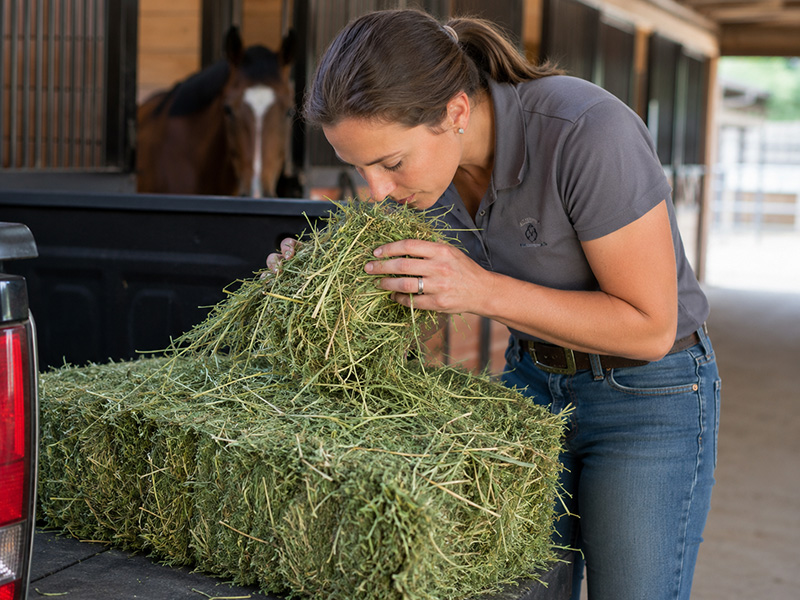
Brown hay is not always bad if it was sun-bleached on the outside, but brown, musty, moldy hay is not horse-quality hay.
That is a colic or a heave waiting to happen.
And let me be plain about mold, because people get this wrong.
Personally inspect every load you can. Look for mold. Smell it. If the smell is off — musty, sour, anything that makes you hesitate — do not buy the hay.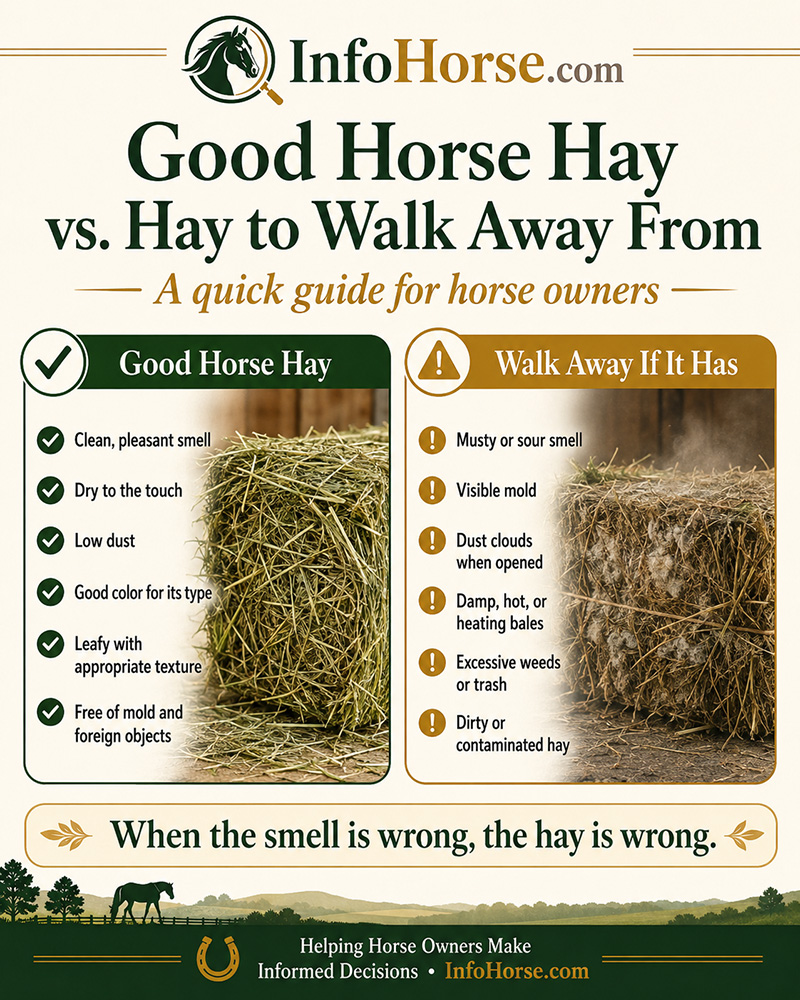
Walk away.
You sometimes hear that mold is not a big deal because cattle can eat moldy hay. A cow has a complex stomach built to handle a lot that a horse cannot. Horses are not cattle.
A horse’s gut cannot handle mold the way a cow’s can, and moldy hay can mean colic or worse. What a steer shrugs off can put your horse down.
When the smell is wrong, the hay is wrong.
Price does not enter into it.
Storing Hay: Protect the Feed You Already Paid For
Buying good hay is only half the job. Storing it right is the other half.
Hay needs to stay dry, off the ground, and protected from weather. Pallets, gravel, mats, or a raised floor can help keep bottom bales from wicking up moisture. Good airflow matters, too. Hay stacked too tightly in a damp barn can sweat and mold.
Check the roof. Check the walls. Check where rain blows in. A small barn leak can ruin a surprising number of bales before you notice it.
If you use tarps, do not trap moisture under them. A tarp thrown over hay on the ground can sometimes make things worse by holding condensation against the bales. Hay needs protection, but it also needs air.
And remember that hay put up too wet can heat. Heating hay is a fire risk. If you ever notice hay that feels hot, smells caramelized, smokes, or seems unusually damp inside, take it seriously.
Protecting hay after you buy it is part of the real cost of feeding a horse.
Every moldy bale is money lost.
Questions to Ask Before You Buy Hay
Before you buy hay, ask a few plain questions. A good hay seller will not mind answering them.
Ask:
- What kind of hay is it?
- Is it horse-quality hay?
- Is it a 2-string bale, 3-string bale, or round bale?
- What does the bale usually weigh?
- When was it cut?
- Where was it grown?
- Has it been rained on?
- How was it stored?
- Has it been tested?
- Is delivery included?
- Is stacking included?
- Is there a minimum order?
- Is it suitable for easy keepers or metabolic horses?
- If it is alfalfa, how do you manage for blister beetles?
If you have an easy keeper, senior horse, Cushing’s horse, insulin-resistant horse, or laminitis-prone horse, ask whether a forage analysis is available.
Then use your own senses.
Look at it. Smell it. Feel it.
Good horse hay should smell clean and pleasant. It should not smell musty, sour, moldy, or dusty. If something about the hay makes you hesitate, listen to that hesitation.
Your horse has to eat what you bring home.
At InfoHorse, this is exactly why we believe education matters. Horse owners should not have to guess their way through decisions that affect their horse’s health. A little knowledge before the hay truck arrives can save money, prevent mistakes, and sometimes protect a horse from serious trouble.
Change Hay Slowly When You Can
One more thing that deserves saying: hay changes should be made gradually when possible.
A sudden change from one hay type to another can upset a horse’s gut, especially if you are moving from mature grass hay to richer hay, or from one region’s hay to another. Sometimes you cannot help it. Hay runs out. Suppliers change. Weather happens.
But when you can, transition slowly.
Mix the old hay with the new hay for several days, or longer for sensitive horses. Watch manure, appetite, water intake, attitude, and signs of discomfort.
A horse’s digestive system likes consistency.
That does not mean you can never change hay. It just means you should respect the gut when you do.
A Word on Soaking Hay
One more trick is worth knowing because it solves several problems at once.
Soaking hay can help a horse with a cough by cutting the dust that irritates the airways. It adds water to a horse that is not drinking enough — a real worry in cold weather or for a horse prone to impaction colic.
It also softens hay so an old horse with worn or bad teeth can actually chew it and get the good out of it.
Soaking can lower sugar a little, which may help a metabolic horse. It is not magic, and it does not replace testing hay, but it can be useful.
For a senior horse with dental trouble, soaked hay can be the difference between a horse that maintains weight and one that drops it.
Simple. Cheap. Practical.
Just remember: soaked hay should not sit around for hours in warm weather because wet hay can sour. Feed it fresh, keep tubs clean, and do not assume wet hay is automatically safe if it has been sitting too long.
The Real Lesson on Hay Cost
After 50 years of horse ownership, I do not look at hay the way I did when I was younger.
Back then, I mostly looked at the price.
Now I look at the horse.
That is the difference.
A bargain bale that makes a horse cough is not a bargain. A rich bale that puts weight on the wrong horse is not kindness. A low-sugar tested bale that costs more but keeps a laminitis-prone horse safe may be the best money you spend all year.
Hay is not where you gamble.
Hay is where you protect the horse.
And if there is one thing Ann and I have tried to do through InfoHorse all these years, it is help horse owners make better decisions before the mistake is made. Before the horse gets sick. Before the money is wasted. Before the owner says, “I wish somebody had told me.”
So here it is, plain and simple:
Buy the best hay you can afford.
Buy the right hay for your horse.
Buy horse-quality hay.
Store it like it matters.
Feed it by pounds, not guesses.
Use a feeder that keeps hay clean and reduces waste.
And never forget that every good horse deserves good forage.
Because when the hay is right, the horse has a better chance to be right — through winter, through drought, through age, through metabolic trouble, and through the hard seasons every horse owner eventually faces.
How Much Does a Horse Cost?
Hidden Cost of Horse Ownership Nobody Budgets For
How Much Does Boarding a Horse Cost? Home Care vs Full Care Boarding
BP
About the Author — Bob Pruitt
Bob co-founded InfoHorse.com in 1997 and has more than 50 years of hands-on horse ownership, from a PMU rescue named Dream to a lifetime of trail and pleasure horses. He has bought hay in good years and drought years across several states.
Alongside Ann Pruitt, he has spent nearly three decades connecting horse owners with trusted, verified equine professionals and products.
More about Bob →
Key Takeaways
- Horse owners usually buy hay as 2-string bales, 3-string bales, or large round bales.
- A 2-string bale usually weighs 40–60 pounds and costs about $8–$15 per bale.
- A 3-string bale usually weighs 80–110 pounds and costs about $20–$50 per bale, depending on hay type, quality, and location.
- Large round bales usually weigh 800–1,200 pounds and cost about $60–$160 per bale.
- Prices vary widely by region, drought, forage type, delivery distance, and whether you buy from the field, a dealer, or a feed store.
- A 1,000-pound horse usually needs about 15–20 pounds of hay per day, or 450–600 pounds per month.
- Feed hay by pounds, not flakes. A flake is not a reliable measurement.
- Not every bale is horse-quality hay. Cattle-quality, dusty, stemmy, moldy, or rained-on hay may not be safe for horses.
- Match hay to the horse, not just the price tag.
- Easy keepers and metabolic horses often need tested, low-sugar hay.
- Round bales should be fed in a round bale pasture feeder to reduce waste.
- Hay waste is part of the real cost. Mud, rain, trampling, poor storage, delivery, labor, and stacking all affect what hay really costs.
This Is One Piece of the Bigger Picture
The full cost-of-ownership breakdown: What a horse really costs →
The hidden monthly costs nobody budgets for →
Farrier costs explained: Trims, shoes, and how often →
Frequently Asked Questions
How much does hay cost for one horse per month?
Feeding one horse can cost roughly $100 to $400 a month, depending on hay type, bale size, your region, your horse’s needs, and how much hay is wasted. A 1,000-pound horse usually needs about 450 to 600 pounds of hay per month.
What is a 2-string bale of hay?
A 2-string bale is the smaller, handier bale many horse owners use. It usually weighs about 40 to 60 pounds and commonly costs about $8 to $15 per bale, depending on hay type, quality, and location.
What is a 3-string bale of hay?
A 3-string bale is larger and heavier than a 2-string bale. It usually weighs about 80 to 110 pounds and may cost $20 to $50 per bale, depending on forage type, quality, and location.
How much does a 3-string bale of horse hay cost?
Prices vary by hay type. Alfalfa 3-string bales often weigh 90 to 110 pounds and may run about $19 to $35 per bale. Timothy often weighs 80 to 90 pounds and may run $23 to $45 per bale. Orchard grass or grass mixes often weigh around 90 pounds and may run $35 to $45 per bale. Bermuda often weighs 90 to 100 pounds and may run $20 to $25 per bale.
How much does a large round bale cost?
Large round bales for horses usually weigh 800 to 1,200 pounds and may cost about $60 to $160 per bale, depending on hay type, quality, region, and delivery.
Are round bales cheaper for horses?
Round bales often cost less per pound, but they are only cheaper if they are managed correctly. If a round bale is wasted in mud, rain, or manure, the savings disappear. Round bales should be placed in a safe round bale pasture feeder to reduce waste and keep hay cleaner.
Should I ask about delivery and stacking?
Yes. A cheaper bale picked up at the field may not be cheaper once you add fuel, trailer use, time, labor, delivery, and stacking. Always ask whether delivery is included, whether stacking is included, and whether there is a minimum order.
What is horse-quality hay?
Horse-quality hay is clean, dry, pleasant-smelling hay that is appropriate for horses. It should be free of mold, excessive dust, weeds, trash, and contamination. Not all hay is suitable for horses, even if it is suitable for cattle.
What kind of hay is best for my horse?
For many pleasure and trail horses, good grass hay such as Timothy, Bermuda, orchard, or brome is right. Alfalfa may suit some hard keepers, broodmares, growing horses, and horses in heavy work, but it can be too rich for easy keepers, overweight horses, or metabolic horses.
Is bagged chopped forage the same as hay?
Bagged chopped forage is forage, but it is processed and packaged differently than baled hay. Instead of feeding from a 2-string bale, 3-string bale, or round bale, chopped forage comes in a bag and can be measured more easily. It may be used as a fiber supplement, grain complement, or hay replacement depending on the horse and the feeding program. It can be especially useful for senior horses, horses with dental trouble, horses that waste hay, or times when clean horse-quality hay is hard to find.
Is cheap hay a bad idea?
Cheap hay is a bad idea if it is dusty, moldy, sour, overly stemmy, contaminated, or not suited to your horse. The goal is value, not the lowest price. Good hay should be clean, dry, pleasant-smelling, and appropriate for your horse’s health needs.
Can moldy hay hurt a horse if cattle can eat it?
Yes. Cattle have a digestive system that can tolerate things a horse cannot. Moldy hay that a cow shrugs off can cause colic, respiratory trouble, or worse in a horse. If hay smells musty, sour, or wrong, do not feed it.
What hay is safe for a horse with Cushing’s or insulin resistance?
Horses with Cushing’s, insulin resistance, or a history of laminitis often need low-sugar, appropriate-protein hay, ideally tested so you know the actual numbers. Consult your veterinarian for the right forage plan for your individual horse.
Should I soak my horse’s hay?
Soaking hay can reduce dust, add moisture, soften hay for an older horse, and lower sugar slightly. It can help horses with coughs, dental trouble, low water intake, or some metabolic concerns. Feed soaked hay fresh and do not let it sit around in warm weather.
When is the cheapest time to buy hay?
New-crop hay entering the market often brings better prices. Late winter and early spring are usually more expensive because stored supplies are running low. Buying ahead can save money, but only if you can store hay dry and safely.