

The barn is the easiest structure on a horse property to build and the hardest one to move. Site it well and every chore for the next thirty years gets a little shorter. Site it badly and you pay for the mistake twice a day — in mud, in hauled hoses, in a trailer that cannot turn around — for as long as you own the place.
Most horse properties are never really designed. They accrue. A barn goes up where the ground looked flat in June, a paddock gets fenced where the posts drove easily, and ten years on the owner is wheeling a loaded barrow uphill past the well because nobody drew the whole farm on paper first.
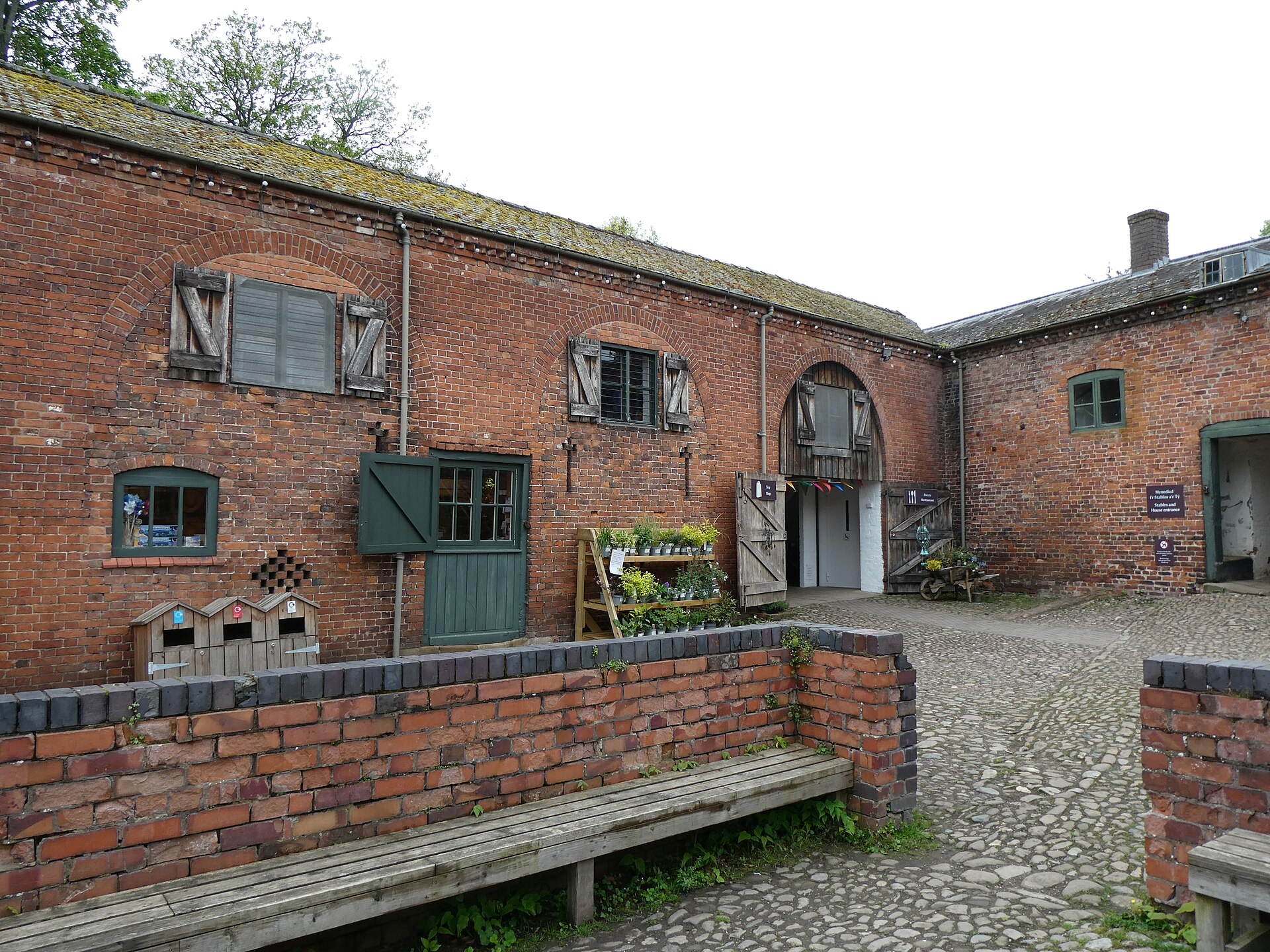
The great estates did it the other way round. Their stable yards were sited before they were styled — high, dry, close to the work, arranged so that water, horses, and wagons all had somewhere sensible to go. The architecture is beyond most budgets. The thinking costs an afternoon and a sheet of graph paper.
Where should the barn go? Follow the water first
Nearly every siting question is a drainage question in disguise. The barn belongs on high ground — not the exposed crown of the hill, but a well-drained rise where water sheds away from the building on every side. Low ground promises chronic mud, damp bedding, insect trouble, and in the worst cases water working quietly at the foundation itself.
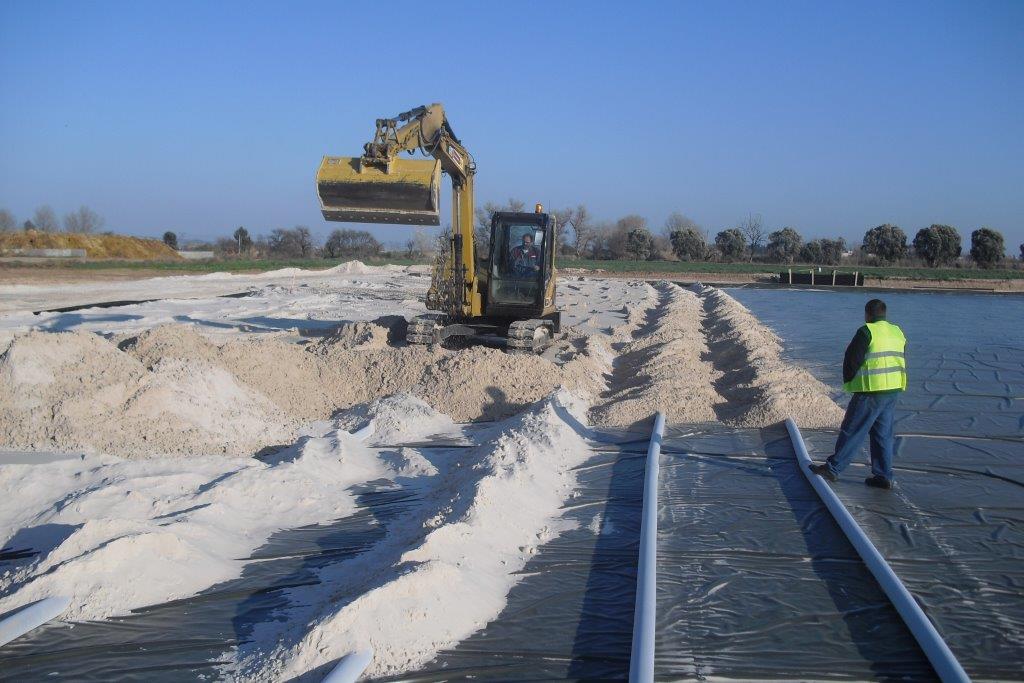
So walk the land in your worst weather, not your best. Where does snowmelt stand in March? Where does the soil stay dark for days after a storm? Those low places are being honest with you; believe them. If the most practical site still holds water, plan on building the ground up first — barn builders commonly raise a pad ten to eighteen inches above the surrounding grade with compacted fill, so runoff leaves the building rather than visiting it.
Then think about wind. You want moving air — it is the cheapest ventilation and fly relief you will ever own — but a center aisle aimed straight down the prevailing wind becomes a tunnel: slamming doors, flying bedding, horses standing in a gale. A common builder’s compromise is to set the aisle roughly forty-five degrees off the prevailing wind, so the barn breathes without howling.
Distance completes the picture. The barn should sit close enough to the house that a two-in-the-morning colic check is a walk, not an expedition, and far enough that flies, dust, and delivery trucks stay out of the kitchen. Remember, too, that every foot between existing utilities and the barn is trench you will pay to dig — water below frost line, electric in conduit — so a site near the existing services often beats a prettier one across the field.
The Bridleway rule: Never build at the bottom of anything. Water, cold air, mud, and regret all flow downhill — site the barn so they drain away from it, not toward it.
How many acres do you need per horse?
The honest answer is a range, and the range depends on what you are asking the land to do. As a working benchmark, land-grant extension programs suggest about two acres of healthy, well-managed pasture per 1,000-pound horse when grass is meant to supply most of the diet through the growing season. On excellent, dense sod the figure can ease toward one to one-and-a-half acres; on thin or neglected ground it climbs. For genuine year-round grazing, treat two acres per horse as a floor — anything less is better understood as turnout, not pasture.
Geography moves the number more than anything else. In the well-watered East, two managed acres can truly feed a horse from spring through fall. In the arid West, unirrigated range may need ten, twenty, thirty acres or more to do the same work — which is why so many Western horses live soundly on dry lots and hay, and why the acres-per-horse question has no single national answer. Your county extension office can tell you what your particular soil and rainfall will actually support.
Here is the reframe that rescues small properties: two acres per horse is a grazing number, not a keeping number. Horses can be kept healthy and content on far less land the moment you stop asking that land to feed them. Hay does the feeding; the land provides movement, turnout, and sanity. Which brings us to layout.
How should you lay out pastures on a small horse property?
Small acreage rewards one design decision above all others: separate where the horses live from where the grass grows. Build a dry lot — call it a sacrifice area, because that is what it is — directly off the barn, and treat every pasture as somewhere the horses visit, never somewhere they loiter.
The dry lot carries the daily infrastructure: water, shelter, hay. Extension guidance puts the workable minimum around 400 square feet per horse, with 750 to 1,000 square feet a more comfortable target, and a long, narrow shape earns its keep by inviting horses to actually move rather than stand. This is the surface to improve first — expect to invest in all-weather footing here and at the gateways, because that is where mud always wins first.
From the dry lot, run a fenced laneway out to the grazing. Divide the remaining grass into three or four paddocks and rotate: graze one while the others rest and regrow. With four paddocks, a week of grazing followed by three weeks of rest is the classic pattern, adjusted to however fast your grass actually recovers. Keep the perimeter fence stout, and subdivide inside it with temporary electric fencing — it is inexpensive, movable, and lets the layout learn from its first year instead of being frozen by it.
Two quiet details repay attention. Hang gates near the corners closest to the barn, so a horse being led naturally funnels toward them and catching stays easy. And route the laneway over the driest ground available, even when that line is not the shortest — a sound track that curves beats a straight one that bogs.
What about wells, manure, and the county?
Manure siting fails quietly, then expensively. Common guidance keeps stored manure at least 100 feet from any well — with some authorities preferring considerably more — and well back from streams, ponds, and seasonal wet spots, where setbacks of 150 to 200 feet are frequently cited. Direction matters as much as distance: keep the pile downhill of the wellhead, so rain carries whatever it carries away from your drinking water rather than toward it. And site the storage where a truck or spreader can reach it in February, because a manure bay you cannot empty in winter becomes a mountain by spring.
Then there is the county. Property-line setbacks, limits on animals per acre, manure-storage rules, whether the barn needs a full permit or qualifies for an agricultural exemption — every one of these varies by county, and sometimes by zoning district within it. Call the planning office and your extension agent before the site plan is final. An hour of phone calls is the cheapest earthmoving you will ever do.
What will you wish you had left room for?
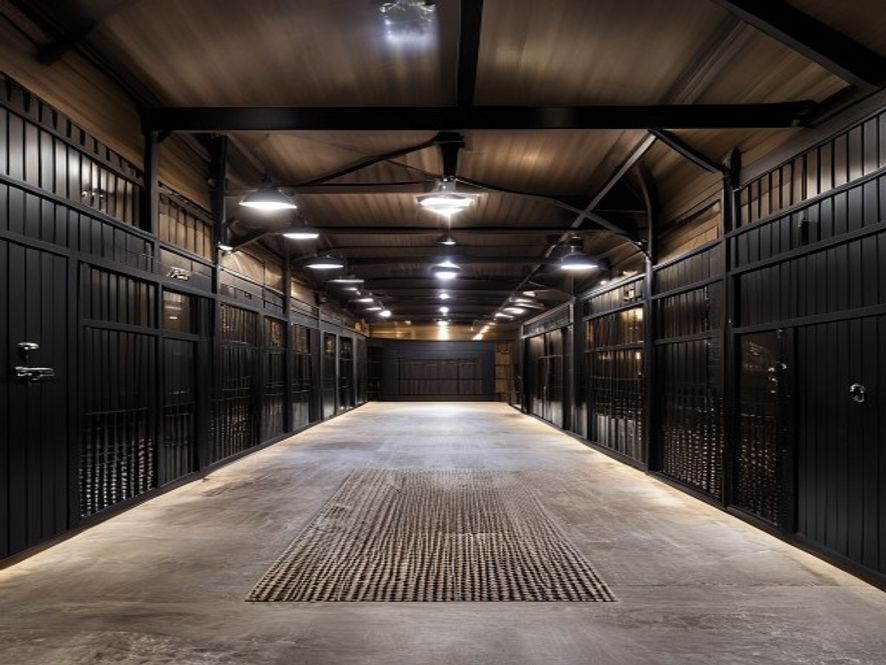
Inside the barn, the standard numbers are standard for good reason: a 12-by-12-foot stall suits a 1,000-pound horse, and a 12-foot aisle is the working norm — 10 feet is a floor, and 14 makes sense where a tractor or delivery equipment passes through. These are cheap lines to draw on paper and brutal ones to change in wood and concrete.
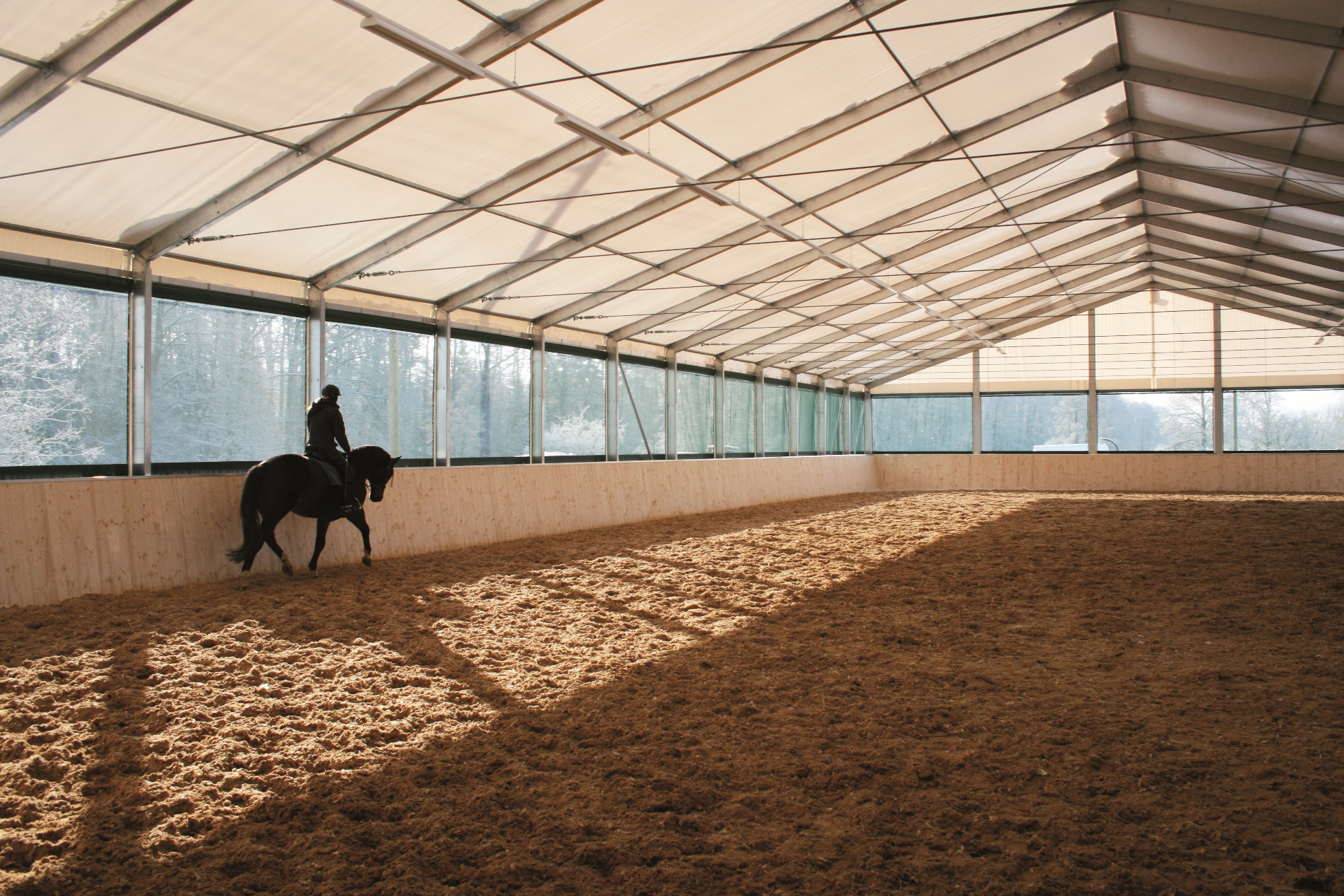
Outside, guard your flat ground jealously. If a riding arena is anywhere in your future, remember that a full dressage arena runs 20 by 60 meters — roughly 66 by 198 feet — plus working room around it, and it wants the most level, best-draining land you own. Fence that ground into pasture now and you will be tearing out fence later, or schooling on a slope forever.
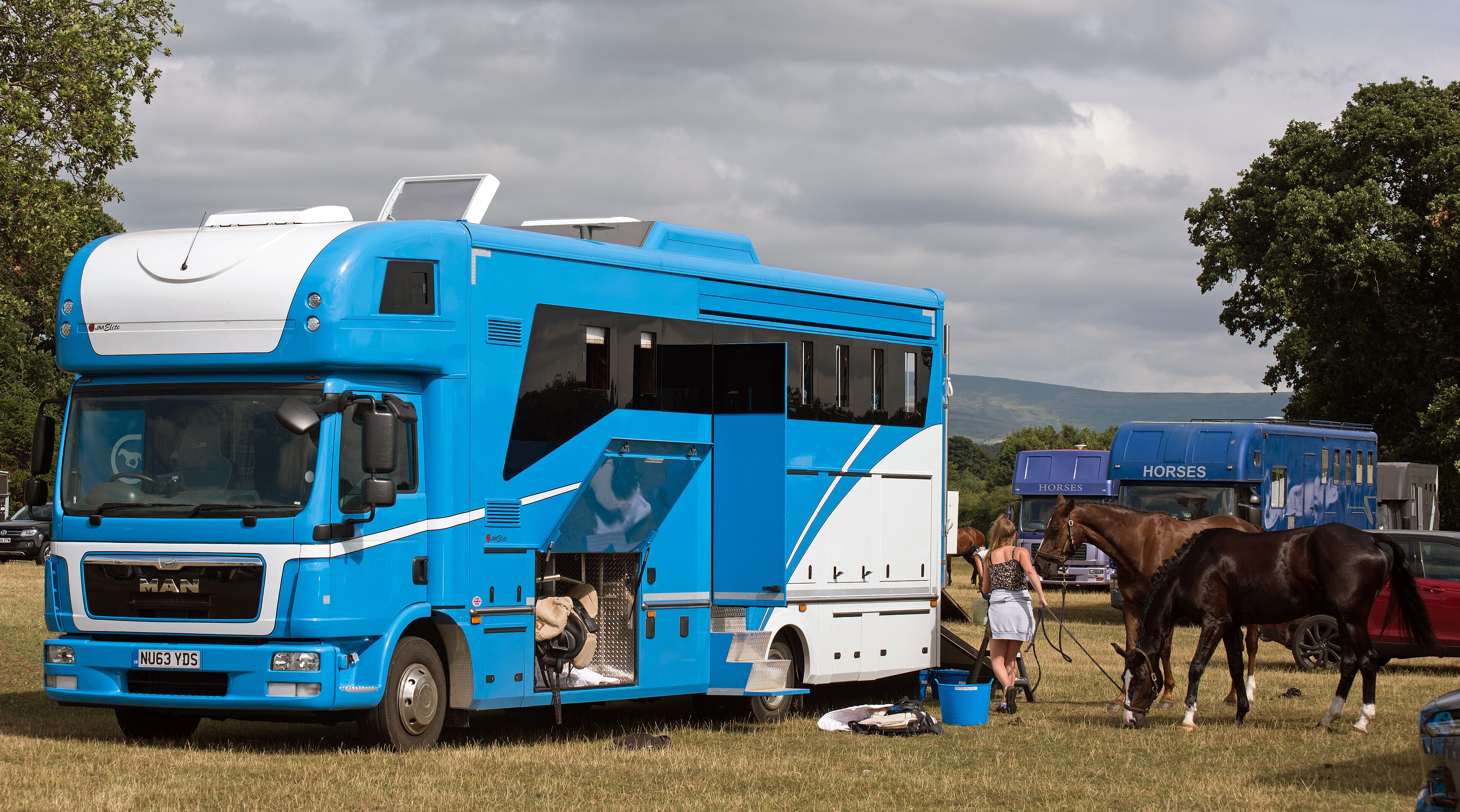
Leave slack for the ordinary traffic too. Hay deliveries, the vet, the farrier, the septic truck, and — pray never — a fire engine all need to reach the barn and turn around while loaded. A generous gravel loop planned now costs a fraction of a rerouted driveway later. And keep one side of the barn unfenced and unplanted, because barns grow: another stall, a hay bay, a wash rack. The expansion you cannot imagine today is the one you will want in year six.
Put it all on paper before you put anything in the ground: the contours, the wet spots, the well, the wind, the truck loop, the pastures, the arena that does not exist yet. The best horse properties do not feel lucky; they feel inevitable — because someone decided them, all at once, before the first post went in. A barn sited well disappears into the routine. A barn sited badly introduces itself every single day.