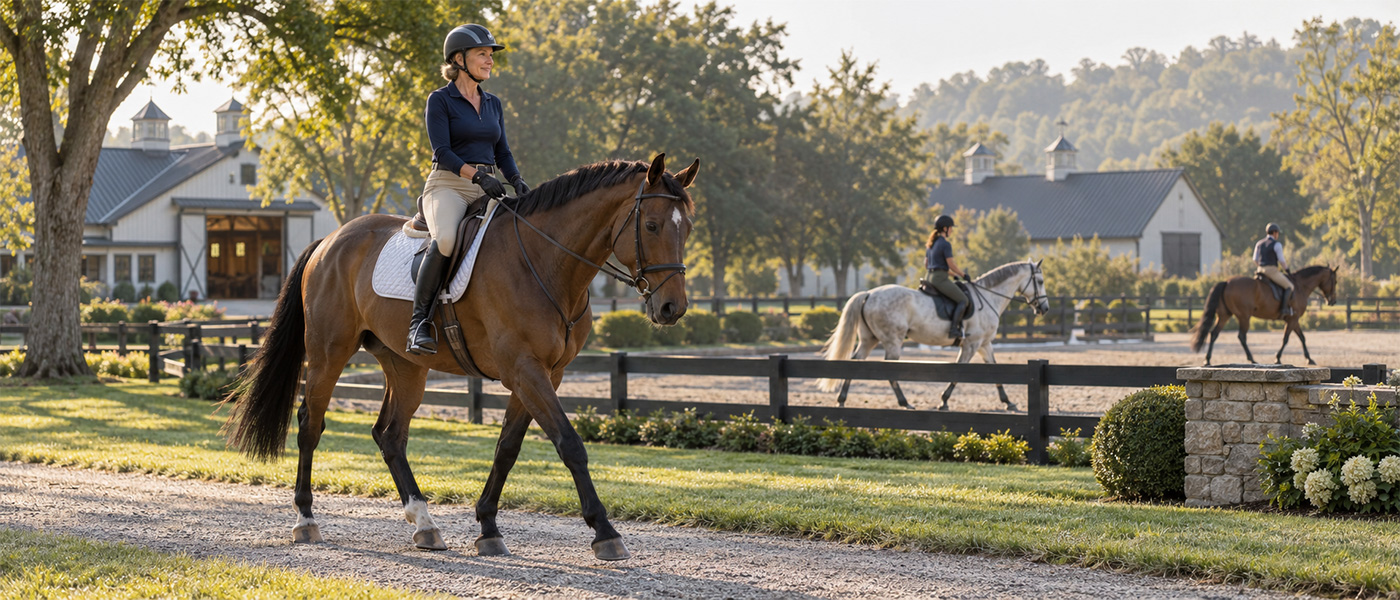



The usual advice is to slow down. Ride fewer days. Shorten the sessions. Accept that you are getting older and that this is simply how it goes now.
I do not believe that, and I have fifty years in the saddle to explain why.
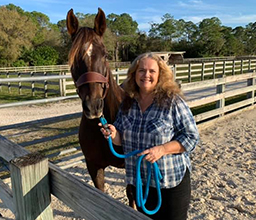
I am the rider who needed this advice as much as anyone. I lost my horse Dream after a twenty five year partnership, and for a while after that I did not ride the way I always had. My life has been wrapped around horses my whole life, and I still found out how quickly a body gives up what it is not asked to do. Getting back to regular riding on my Morgan mare Zoey meant taking some hard looks at myself and at how I had been treating my body. I am giving you my best advice here because the problems I ran into are the same ones most riders have.
The ache is information
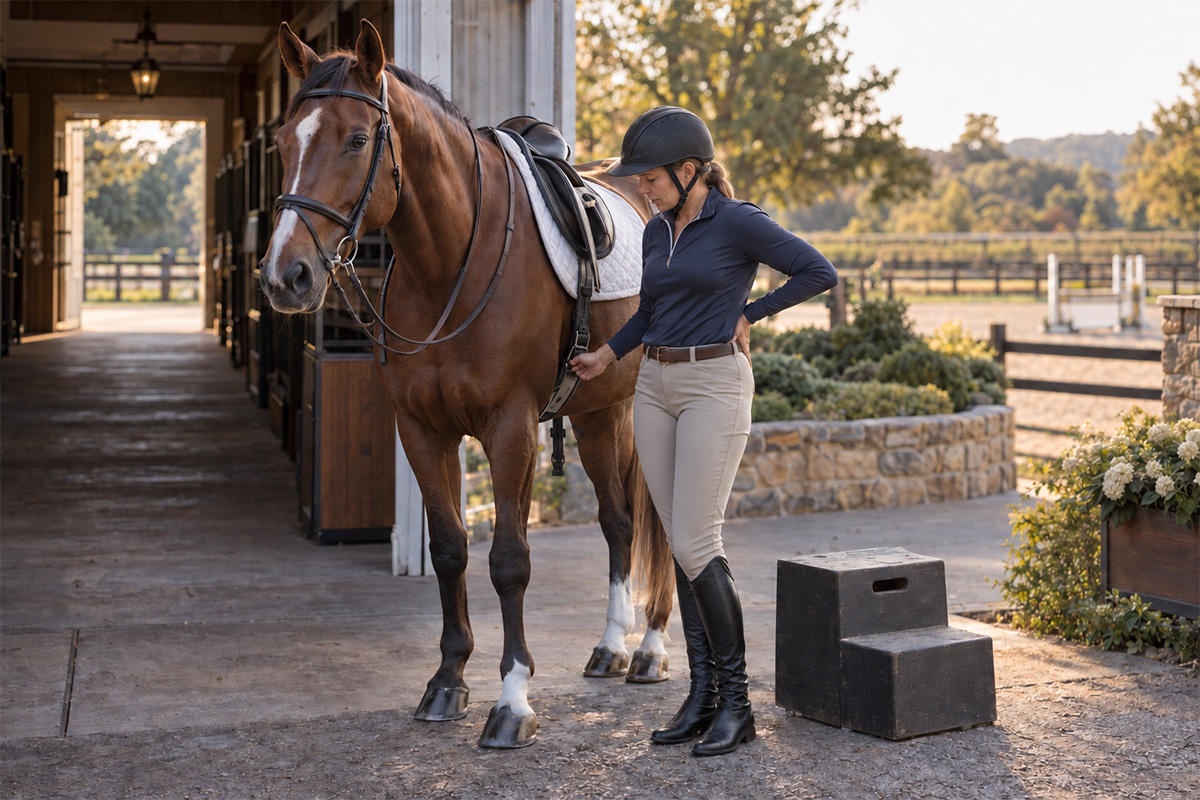
Most riders treat next-day soreness as weather. It happened. Nothing to be done about it. Take something for it and go back out on Saturday.
Soreness is not weather. It is a report. Your body is telling you where it had to work too hard, where it had to brace, and where it had to make up for something that was not doing its job. Read the report and you can usually fix the problem. Ignore it and you will be having the same conversation with yourself in five years, except by then you will have decided it is arthritis and that riding is behind you.
Start here. The ache is pointing somewhere. The rest of this article is about learning to follow where it points.
It is not your age
Here is the part that surprises people.
Younger riders complain about exactly the same things. Sore lower back after a lesson. Hips that will not open. Knees that ache by the second half of the ride. Ankles that will not let the heel go down. If age were the cause, the teenagers in the lesson barn would be fine and only the rest of us would be hurting.
They are not fine. They are hurting too, and for the same reason.
We are all less active than riders used to be. Fewer of us spend the day on our feet. More of us spend it in a chair. Then we ask a body that has been folded into the same position for nine hours to sit tall, follow a moving horse, absorb motion through a relaxed lower back, and keep a steady leg for forty-five minutes. The horse has not changed. The saddle has not changed. We have changed.
That is good news, because it means the problem is addressable. Age is not addressable. Conditioning is.
Before you blame your body, rule out three things
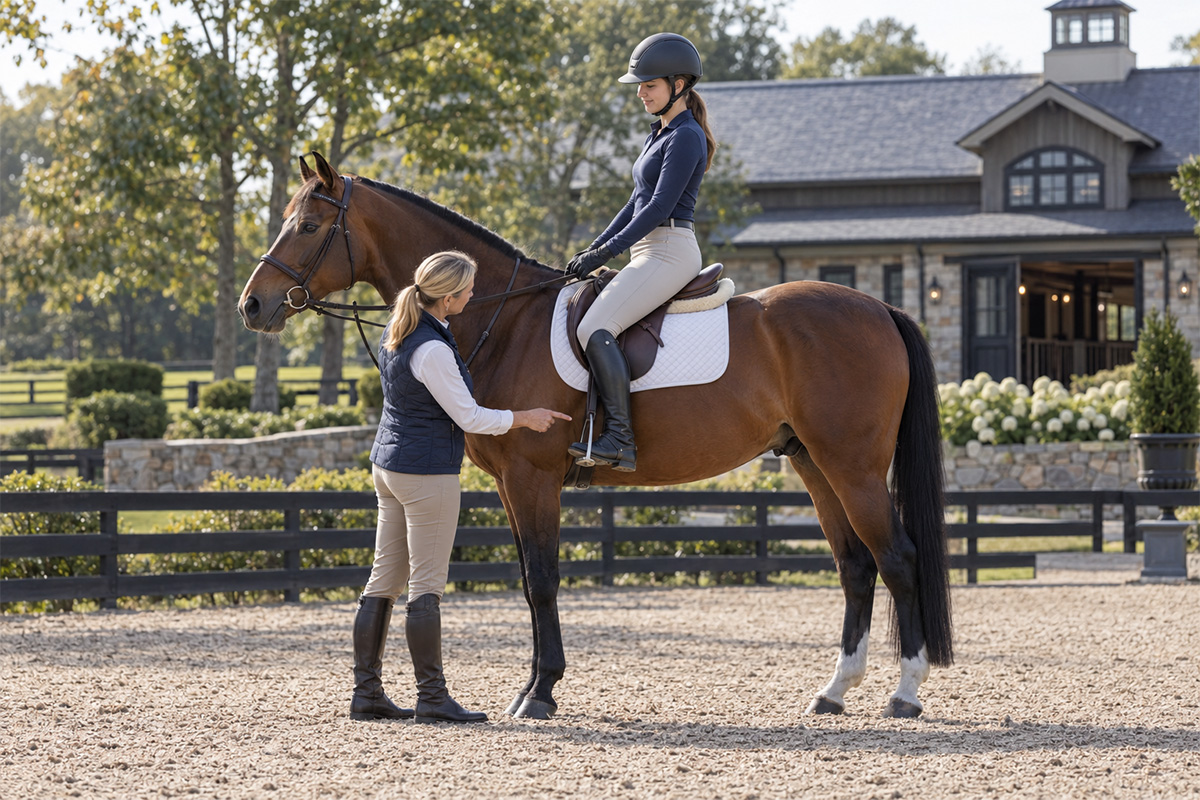
I am not going to send you off to do exercises for a problem that is actually a piece of equipment. Check these first.
Your saddle. A saddle that does not fit the horse will not let you sit correctly no matter how strong you are. A saddle that does not fit you is just as bad. If the saddle puts you behind the motion or tips you onto your fork, your back is going to pay for it and no amount of core work will rescue you. We have a full article on what the horse will tell you about saddle fit before your fitter does, and it is worth reading before you blame yourself.
Your stirrup length. This is the cheapest fix in horsemanship and the most commonly skipped. A hole too long and you will reach for the iron all ride, which drops your heel by stretching rather than by function and drags your leg forward. A hole too short and your knee closes up and your hip stops following. Riders find a length in their first year and then never revisit it, even after a new saddle or a different horse.
I went one hole shorter on Zoey and my knee stopped aching by the second half of the ride. One hole. I had been riding that length out of habit for years without ever asking whether it was still the right one.
Your horse's crookedness. If the horse is stiff to the right, you will sit against that stiffness every stride, and the muscle that does the compensating is going to be sore tomorrow. This one is worth raising with your trainer, because you cannot usually feel your own compensation. You can only feel the result.
Do this before anything else. Three checks, one lesson, and you may find the answer without doing a single stretch.
Five complaints, and what each one is doing to your horse
This is the part riders skip past, so I am going to frame it the way it deserves. Your discomfort is not just your problem. It is being transmitted into the horse's back, one stride at a time.
Lower back and seat
- What it feels like. Sore across the belt line, worse after sitting trot, worse the next morning than the same evening.
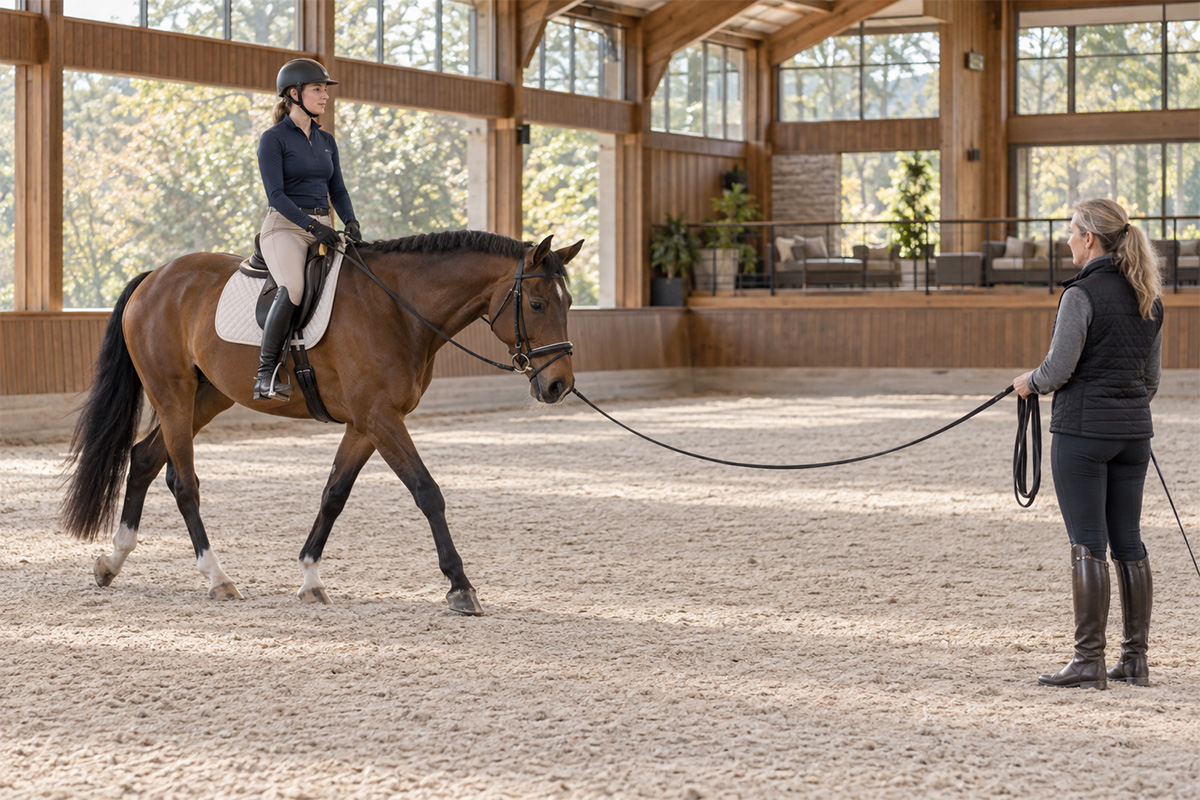
- What it does to the horse. A braced lower back cannot absorb motion, so the horse gets a rider who bounces or who grips to stay still. Either one makes the horse hollow and tighten underneath you.
- Likely cause. Weak deep abdominal and glute support, so the lower back does work it was never meant to do alone. Often made worse by a saddle that tips you back.
- Off the horse. Glute bridges and side planks, held for short spans and done often, beat long sessions once a week.
- On the horse. Ask for short spells of sitting trot, ten or fifteen strides, then rise. Build the tolerance rather than grinding through a whole lesson and paying for it.
Hips and groin
- What it feels like. Tight at the front of the hip, sore on the inside of the thigh, and a nagging sense that you cannot sit down into the saddle.
- What it does to the horse. A closed hip cannot follow the horse's back. Your seat becomes a passenger, or worse, a lid.
- Likely cause. Hours of sitting, which shortens the hip flexors and teaches the pelvis to tip.
- Off the horse. Slow, controlled lunges and standing hip openers. Nothing aggressive. Range of motion, not depth.
- On the horse. Long, forward walk work before anything else. It opens you as much as it opens the horse.
Knees
- What it feels like. Aching on the inside, sometimes swollen the next day.
- What it does to the horse. A pinching knee acts as a pivot and throws your lower leg back or forward, which turns every leg aid into a bump. The horse becomes dull to a leg that is never quiet.
- Likely cause. Gripping with the knee because the seat and thigh are not secure enough to hold you. The knee is doing a job that belongs to the hip.
- Off the horse. Strengthen the glutes and the outside of the hip, which is what should be holding you on.
- On the horse. Deliberately open the knee away from the saddle for a few strides at a walk and feel what your seat has to do to compensate. That is the muscle you need.
Ankles and calves
- What it feels like. Calves burning, ankles stiff, heel that will not go down without conscious effort.
- What it does to the horse. A braced ankle sends every bit of concussion straight up into your knee, hip and back, and it pushes your leg forward, which puts you in a chair seat, which puts you back at the lower back problem.
- Likely cause. Ankles that have lost range of motion. This is the single most common desk-worker injury in riding and almost nobody names it.
- Off the horse. Ankle circles and calf stretches, several times a day, under a desk if that is where you are.
- On the horse. Stop forcing the heel. A heel that goes down because the ankle is supple is worth ten of a heel that goes down because the rider is pushing.
Hands, shoulders and neck
- What it feels like. Tight across the top of the shoulders, sore up the neck, hands that ache by the end of a lesson.
- What it does to the horse. A tight shoulder cannot give an elastic contact. The horse feels a fixed hand and either leans on it or backs off it.
- Likely cause. Bracing, usually because something lower down is unstable and the arms are holding on.
- Off the horse. Shoulder blade work and thoracic rotation. The upper back should be the part that turns, not the lower back.
- On the horse. Ride a few minutes with the reins in one hand and the other arm hanging loose, and notice what your shoulder was gripping for.
Warm yourself up before you warm the horse
Here is a correction to standard advice that most riders have never heard.
Sasha Chelin, who is qualified as both a human and an equine physiotherapist, has pointed out that riders are unusually poor at looking after their own bodies compared with athletes in other sports, and that they rarely rehabilitate injuries properly. Her observation about warm-ups is the one I want you to take with you. Riders will spend twenty careful minutes loosening the horse and then walk to the mounting block and climb aboard without doing anything at all for themselves.
And because stretching works better on warm muscle than on cold muscle, the warm-up has to come before the stretch, not the other way around. She favors movements that switch muscles on over long static stretches held on a cold body.
That matters because nearly every rider fitness article you will read tells you to do dynamic stretches before you ride. If you are doing them cold, standing in the aisle in January, you are stretching tissue that is not ready.
The four minute barn aisle warm-up. Standing. In boots. Nothing on the ground. Nothing that requires a mat or a floor you would be willing to lie on.
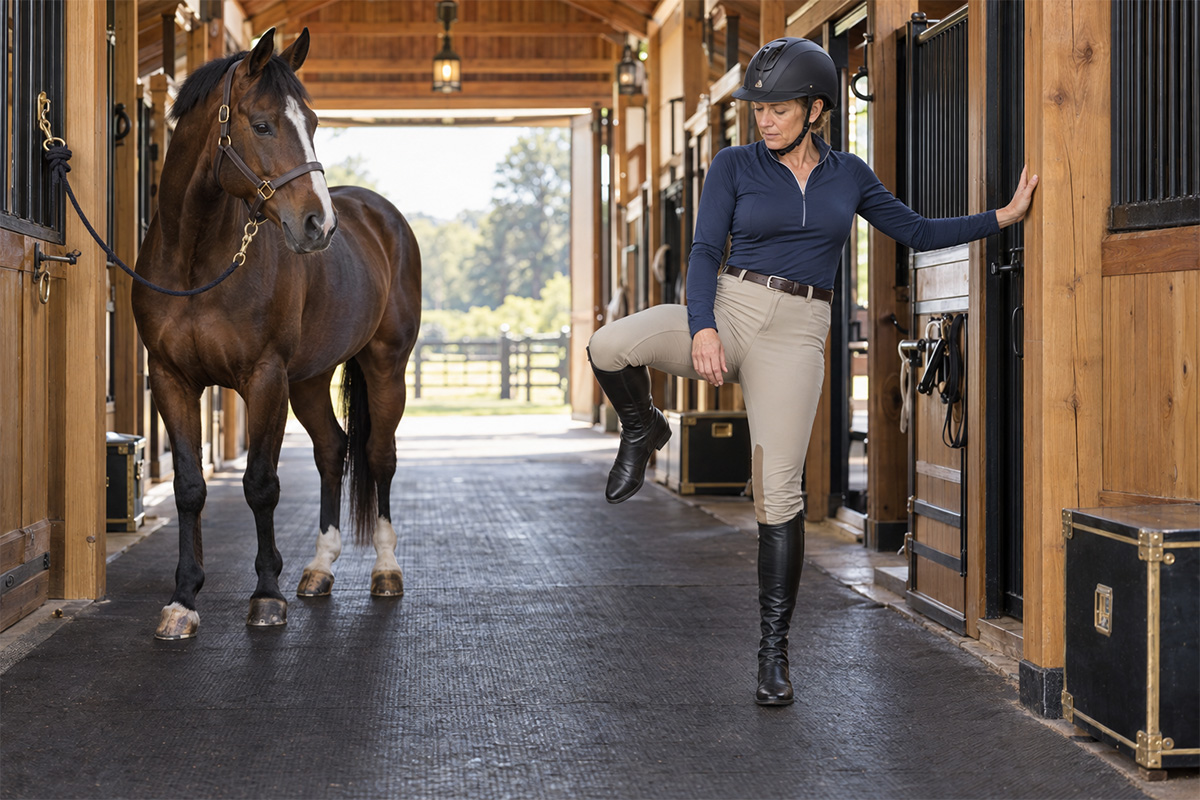
- Walk with purpose for one full minute. To the end of the aisle and back twice. This is the part everybody skips and it is the part that makes the rest work.
- Ankle circles, ten in each direction on each foot, holding the stall door for balance.
- Slow leg swings, forward and back, then across, ten each side. Controlled, not flung.
- Standing hip openers, lifting the knee up and out and back as though you were dismounting, eight each side.
- Arm circles and shoulder rolls, then a slow rotation through the upper back in each direction.
- Six slow breaths, expanding low into the belly rather than up into the shoulders.
That is four minutes. It is free. And you can do all of it while your horse is tied.
One rider interviewed about his own preparation described the order plainly. He warms himself up first, then warms the horse on the longe line, and only then do the two of them work together. He also made the point that riding is physical long before you mount, because from the moment you arrive you are moving between stalls and arenas and carrying heavy loads. That is worth remembering on the days you tell yourself you did not get any exercise.
The horse is the gym
Now the part I actually want you to believe.
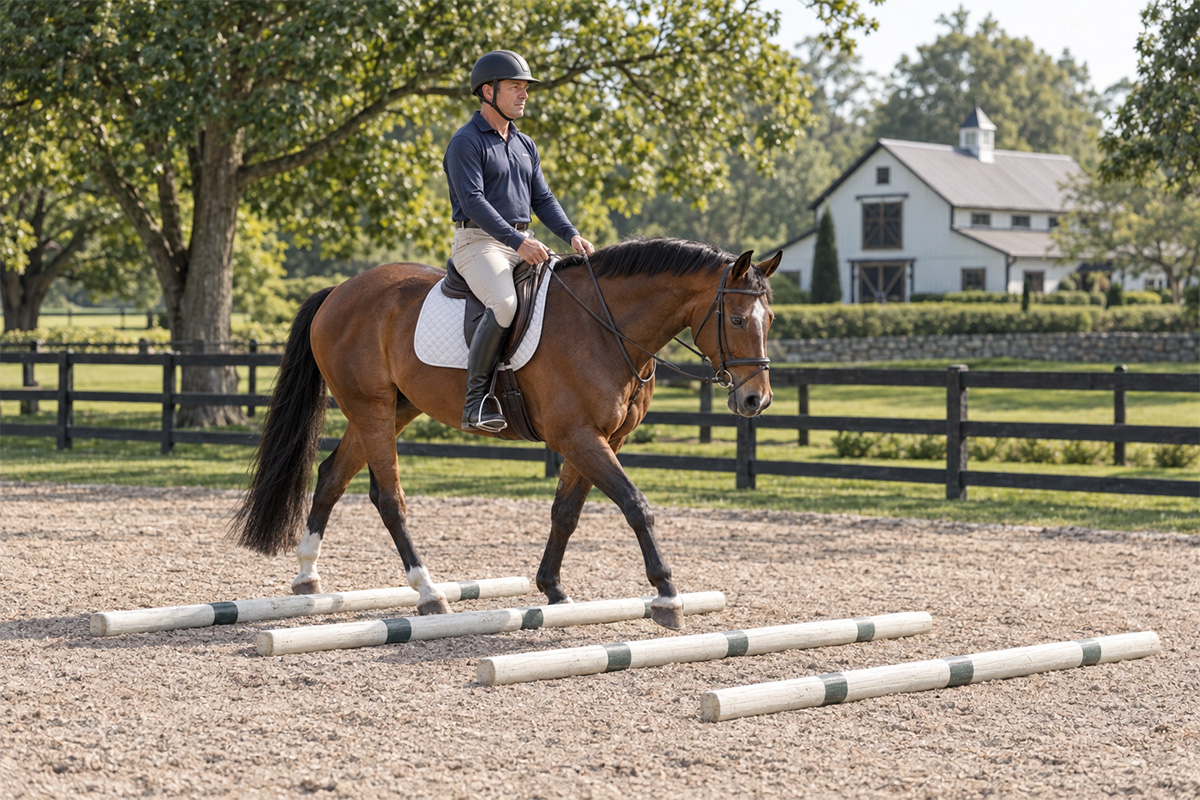
The best preparation for riding is riding. Our bodies adapt to what we ask of them repeatedly. Muscle memory, balance, the strength to hold a position, the reflexes to follow a horse that changes underneath you, all of it is built by doing it, not by reading about it and not by avoiding it.
Look at who is winning at the top of this sport. Andrew Hoy was sixty two years old at the Tokyo Olympics, where he took a team silver and an individual bronze in eventing, making him Australia's oldest male Olympian. He is sixty six now. Asked about his age before those Games, he said he simply does not factor it in, and that what matters is staying sharp mentally and healthy physically.
These riders are not exceptional because they are old. They are exceptional because they never stopped. The horse is their gym, they go to it every day, and their bodies have adapted accordingly.
But be honest about the arithmetic. Riding more often is not the same as riding longer. Four rides of thirty minutes across a week will build you. One three hour ride on Saturday will hurt you, and that second pattern is the one most amateurs actually live. The professional riding eight horses a day arrived there over twenty years of steady accumulation, not over a weekend. Add a day at a time.
What the professionals are not telling you
There is a detail in the professional routine that changes the whole picture for the amateur, and almost nobody points it out.
Boyd Martin has described his horses being warmed up and stretched by his staff before he gets on, so that they usually have a light sweat by the time he mounts and are ready to work immediately. His ride is the intense thirty or forty minutes in the middle.
Add that up. The horse gets fifty or sixty minutes of work. The rider spends thirty of them in the saddle. Two people are doing the job.
You have forty five minutes and you are doing both jobs yourself. That is the real reason your warm-up gets cut, for you and for your horse, and it is why you both end up sore.
The answer is not to warm up longer. The answer is to change what gets cut. On a short day, twenty minutes of purposeful walking is the ride. What you drop is the schooling, not the warm-up. McLain Ward has described his own program the same way, with hacking and a great deal of flatwork, gymnastic work only twice a week, big fences rarely, and an objective for every single day no matter what the work happens to be.
The hardest sentence in this article. If you only have time to warm up, then warm up, and go home satisfied.
Riding more often does not mean schooling more often
I have to say this plainly, because I am telling you to ride more and most of you have one horse.
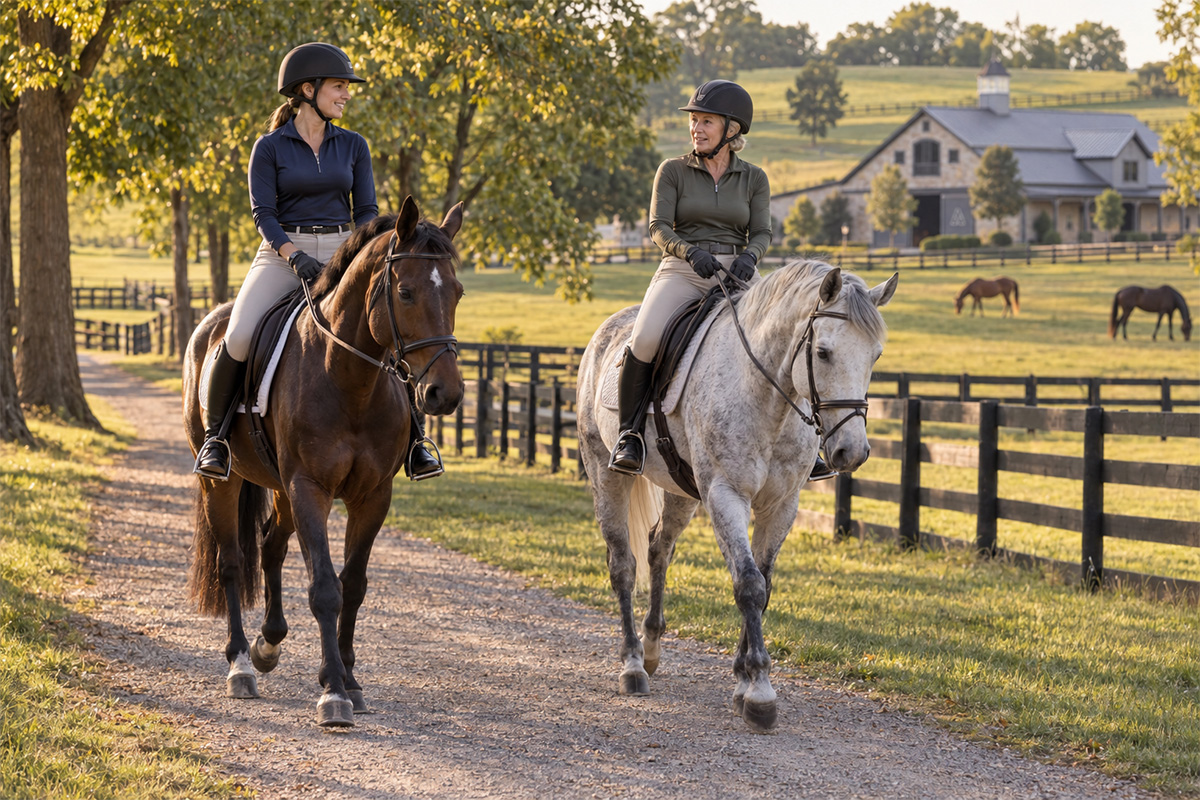
The professional spreads the work across six or eight animals. You do not have that option. If you take "ride more" to mean "school more," you will improve your fitness at your horse's expense, and that is not a trade I am willing to recommend.
Riding more often means more saddle time, not more demanding saddle time. Hack out. Walk the fence line. Do pole work. Ride the trails. Long, forward walking on varied ground builds your balance and your position while asking very little of the horse, and it is better for his body than another circle in the arena.
On the days the horse genuinely cannot do it, that is exactly what the work off the horse is for.
The once a week rider
If you get to the barn on Saturdays and that is the whole of it, you are not excluded from any of this. You are just going to build it somewhere else.
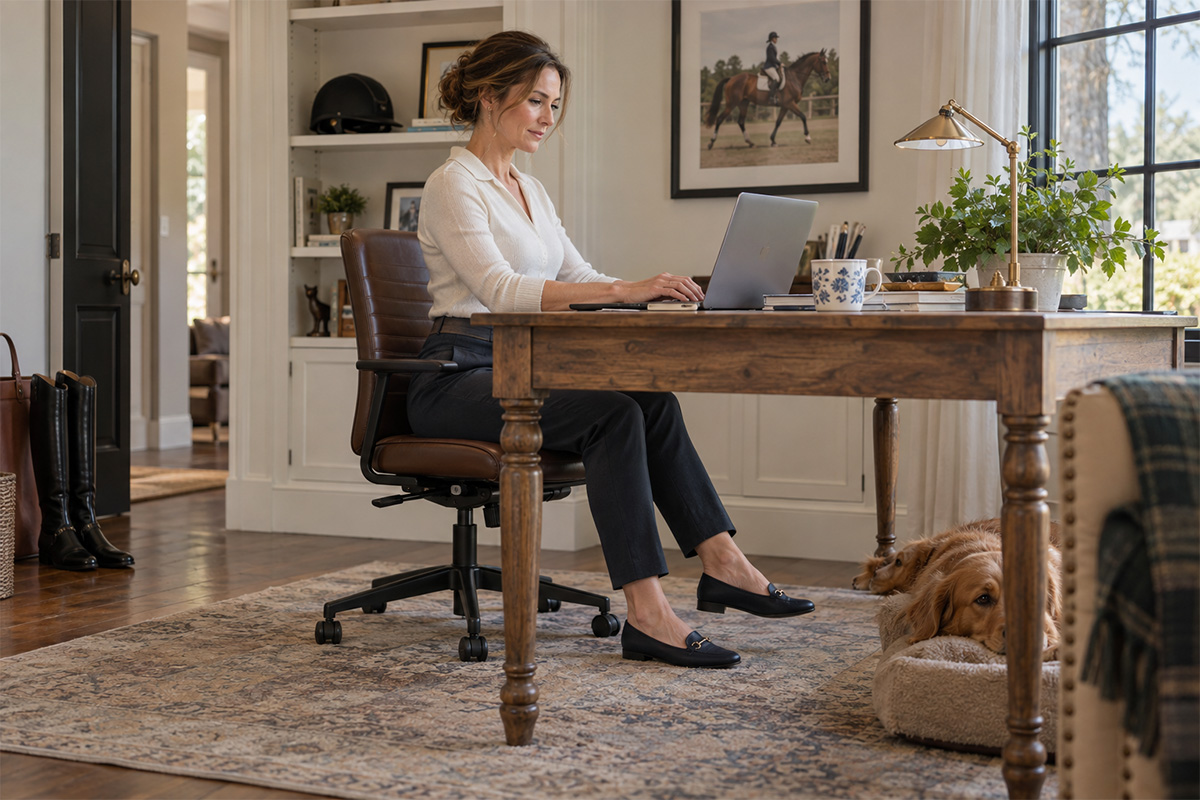
The desk is where you practice the ride. Every time you catch yourself slumped and sit tall again, with your trainer's voice in your head, that is a repetition. You are not going to hold it for eight hours. Nobody holds a frame for eight hours, on a horse or in a chair. What you are building is the habit of noticing and resetting, which is precisely the skill you use in a lesson.
- Stand up without using your hands. Do it every time you get out of the chair. Physical therapists use this as a genuine strength measure, and it maps directly onto posting and onto getting off the horse without hauling on the saddle.
- Take care of your ankles. A day in a chair costs you ankle and calf range of motion, and that is the whole reason heels down is a fight. Circles and calf stretches under the desk, several times a day. This will do more for your position than the step counter on your phone.
- Breathe low. Six slow breaths into the belly, a few times a day. You will want that habit the first time your horse spooks.
Warming up the older horse
Everything above applies to your horse too, and more so if he is in his late teens or twenties.
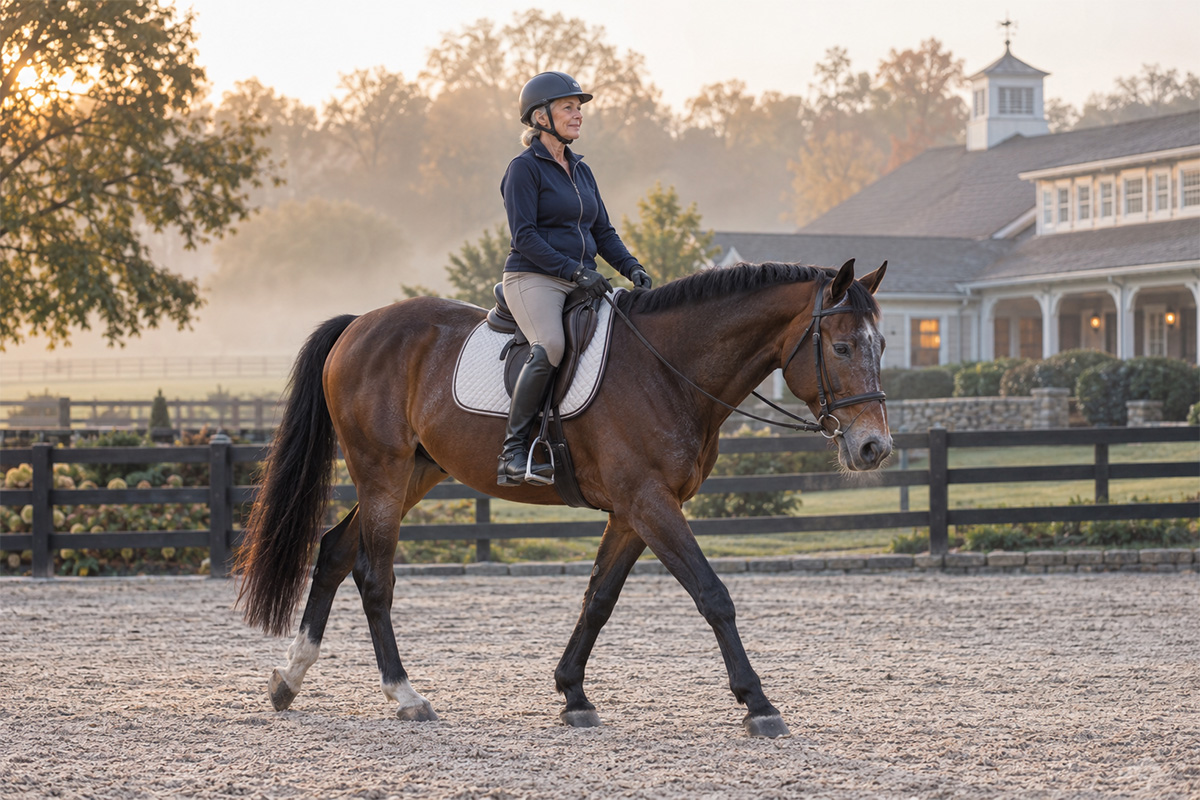
The consensus across the sport is that the older horse needs more time at the walk before the real work starts. Canadian Olympian David Marcus walks on a long rein for a full twenty minutes before he asks for a trot, citing research that twenty minutes of walking reduces the risk of tendon and ligament injury. Rehabilitation specialists make the same case at around fifteen minutes, noting that walking warms the tendons and ligaments, makes them far less likely to fail under higher loads, and moves fluid around the joints. Ten minutes of walking after the session helps clear the waste products that accumulate in the legs.
Get the order right. Loosen, then warm, then supple. Suppling work at the very start of a session is a common mistake, because cold tissue is vulnerable to overstretching. Loosen at a long walk, then five to eight minutes of active forward trot or canter to raise the muscle temperature, and only then ask for bend and lateral work. Fifteen to twenty minutes in total, and longer for an older horse or one with an old injury.
Marcus makes one other point worth passing on. A warm-up is not turning the horse loose to run around on a long rein with no rules and then abruptly imposing rules. The horse will argue, and he is entitled to.
Now the part that runs the other way. More warm-up is right at home. It is not automatically right at a show. Guidance on the senior performance horse recommends a low intensity warm-up with plenty of walking to ease stiffness, ideally done outside the ring so it does not become tedious, but a shorter warm-up before competition so you do not send a tired horse into the ring.
The research supports that caution. A recent review of warm-up strategies across the Olympic disciplines found that a low intensity warm-up delivered the same physiological benefit as a high intensity one, that dressage horses are warmed up longer than show jumpers, and that warm-up duration and intensity both rose as competitive level rose without any effect on the final score. Riding your older horse hard in the schooling ring before a class is not buying you anything, and it may be costing you the class.
What the top barns actually do. Daily movement, and a great deal of it. Isabell Werth's Bella Rose used the aqua trainer every day, wore a magnetic field blanket and got turnout or hand grazing, without special treatment beyond what the other horses in the yard received. Steffen Peters, who competed Floriano internationally into his teens, has said there is no substitute for good training and that modern medicine cannot make up for its absence, and he monitored the horse's respiratory rate and eased his work before major competitions.
Turnout, hacking, walking, variety, and an objective every day. That is the program.
When it is not soreness
Everything in this article is about stiffness and ordinary muscle soreness, and it is the right advice for those things.
It is the wrong advice for some other things, and I want to be very clear about which.
Stop and see a doctor if you have any of these.
- Pain that radiates down your leg or arm.
- Numbness, tingling or weakness anywhere.
- Pain that wakes you up at night.
- A joint that swells after every ride.
- Pain following a fall that is not improving.
- Any chest pain or shortness of breath that is new.
Those are not conditioning problems and more saddle time will not resolve them. Get them looked at, get a diagnosis, and then come back to the rest of this.
And the same courtesy goes to your horse. Before you add days to his week, have the conversation with your veterinarian.
Ask your trainer
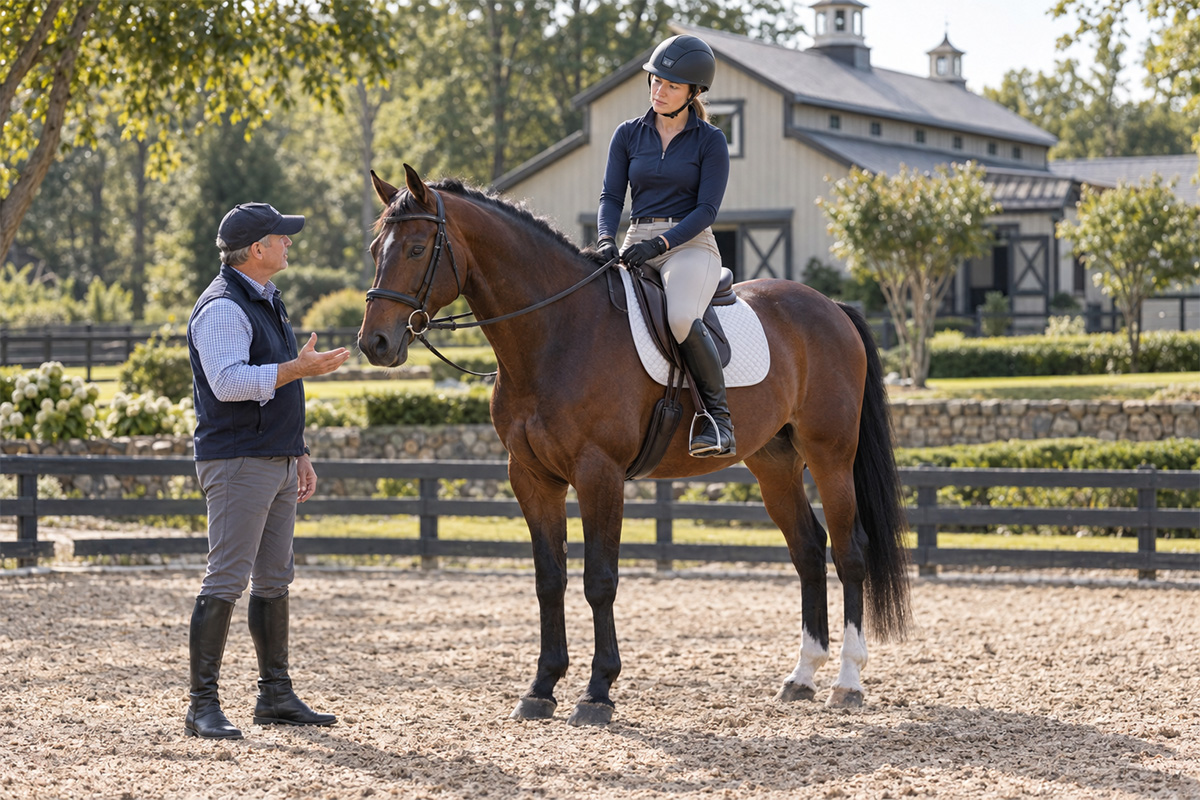
English riders have an advantage here that not every rider has. You have a professional standing in the middle of the arena watching you every week. Use that person for your own body, not just for the horse's way of going.
Most amateurs will not raise it. It feels like complaining, or like admitting to something, and lesson time feels too expensive to spend on it. So here are the words. Any of these takes about ten seconds.
- "My lower back is sore for two days after I ride. Would you watch me and tell me whether it is my position or something I should get looked at?"
- "Can you build me a warm-up that covers both of us, what I do on the ground before I get on and what he needs before we start work?"
- "When I only have thirty minutes, what should I cut and what should I never cut?"
- "What physical fault do you see in me most often, and what do you think is actually causing it?"
- "Is anything in my position making his stiff side worse?"
- "What do your adult riders do on the days they cannot get to the barn?"
- "You have been hurt before. What did you change afterward that you still do now?"
That last one opens people up more than any of the others. Every trainer has an injury story, and most of them have a routine that came out of it.
Ask your veterinarian
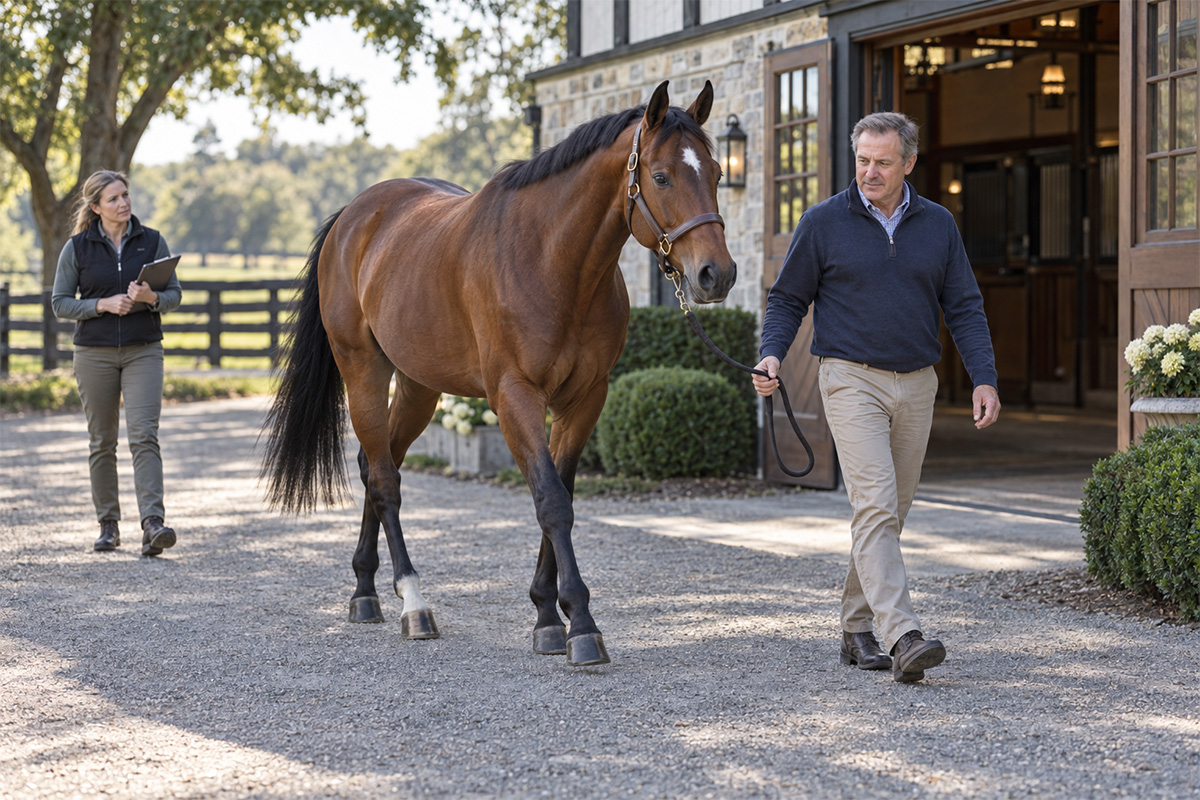
Ask about workload, not about permission. "Is he too old for this" invites a shrug. These invite a plan.
- "What workload can he handle, how often, and on what footing?"
- "How long should his warm-up be before we start real work, and does that change on cold mornings?"
- "How would I know he is working through discomfort rather than just being stiff for the first ten minutes?"
- "Is there anything he needs to stay comfortable at this level, and is there anything he is getting now that he no longer needs?"
- "What should we be screening for at his age?"
On that last one, ask specifically about baseline bloodwork covering kidney and liver function, which matters more if he has been on anti inflammatory medication long term, and about pituitary pars intermedia dysfunction, which is more common in senior horses. If you event, ask about a baseline cardiovascular workup, because the risk of sudden death on cross country rises significantly after fifteen years of age.
- "If he is stiff on one side, do you want to see him before I try to ride him out of it?"
The veterinary thinking on maintenance has moved, and it is worth knowing. The old practice of injecting hocks every six months or two weeks before a competition, with no justification beyond a hope that it might help, is out of favor. One veterinarian speaking on equine longevity put it simply: he will not treat a horse without a reason to believe it needs treating, which means looking closely, paying attention to how the horse responds to flexion on each side, and taking seriously a rider's report of even a slight change in gait.
You are the one who notices the slight change. Tell somebody.
The goal
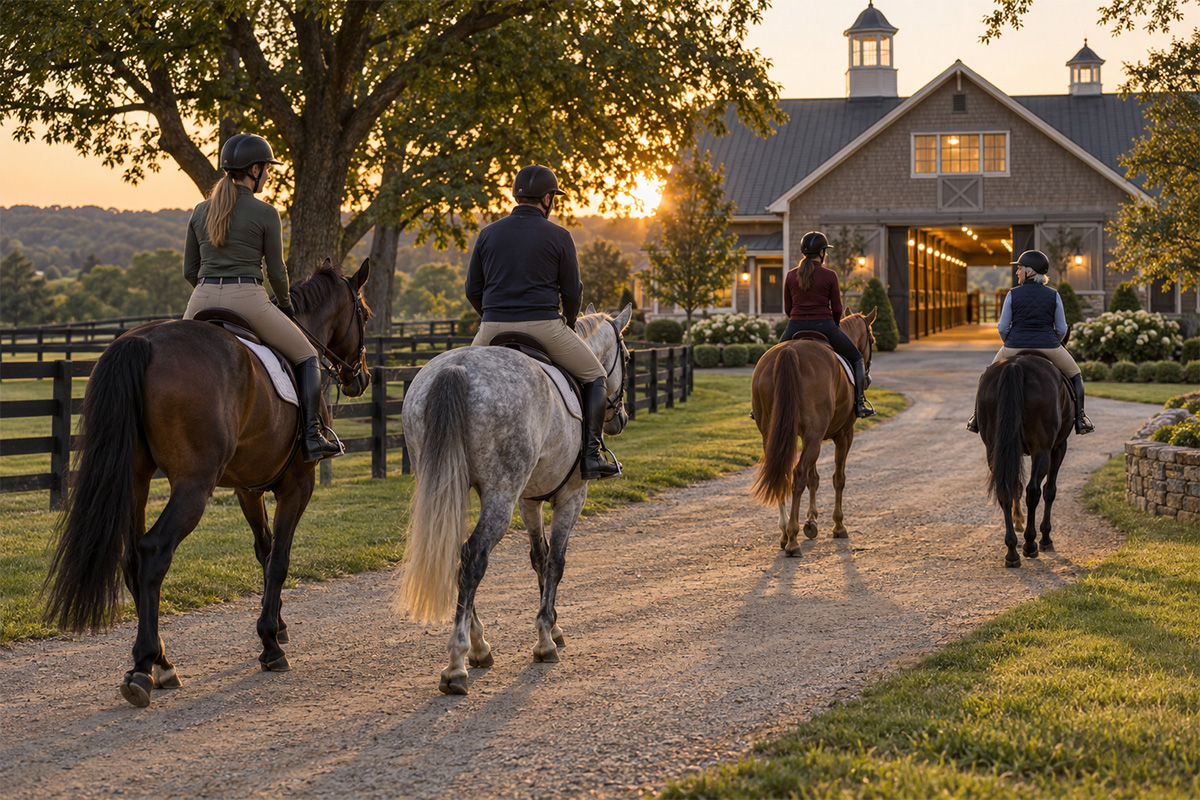
Ride more often. Warm yourself up before you warm your horse. Read the ache instead of medicating it. Ask the two professionals you already pay for the thing you have not been asking them about.
And on the short days, walk. Twenty purposeful minutes at the walk is not a failed ride. Some of the walking rides will be the ones you remember, because it is not always about working and training. Find the time to simply enjoy what happens between a horse and a rider who are not in a hurry.
It is the ride that lets you have the next one.