

What Is Eventing? The Bravest Sport in the Horse World, Explained
Dressage, Cross-Country, and Show Jumping Explained
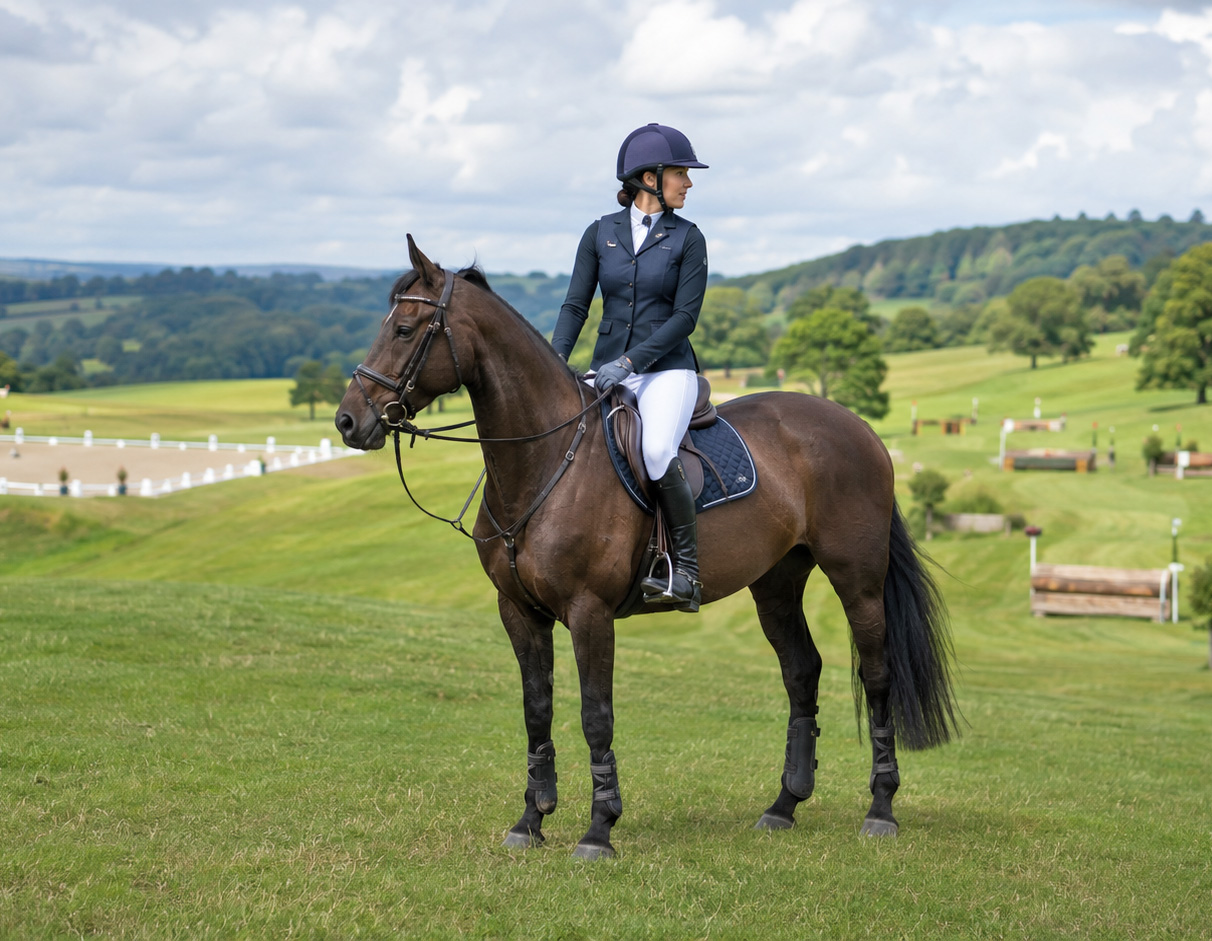
Three Sports. One Horse. One Weekend. Here’s How It Actually Works.
Article by Bob Pruitt
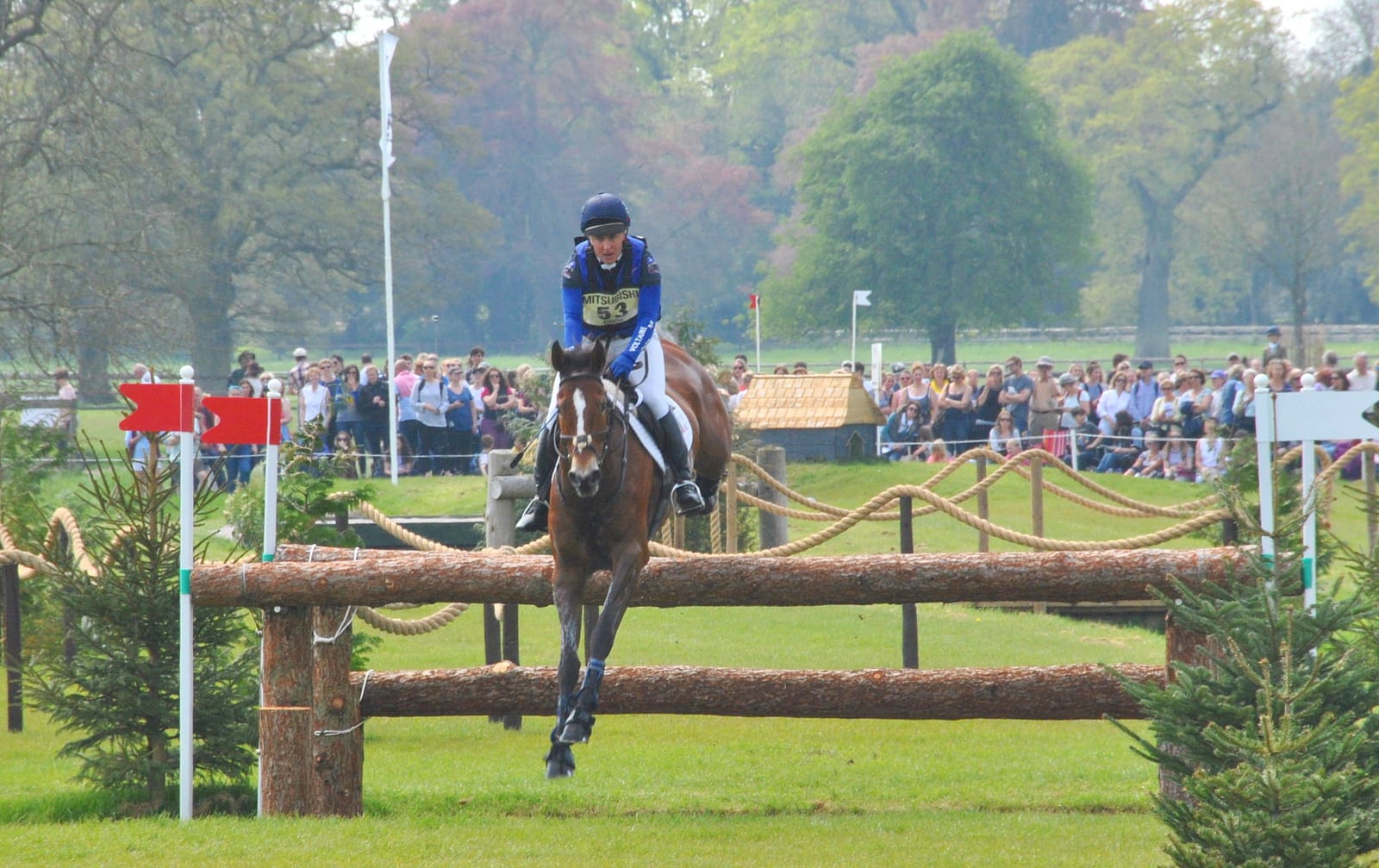
Eventing is a three-phase competition — dressage, cross-country, and show jumping — in which one horse and rider must prove themselves in all three, usually over one to three days. Penalties from every phase are added together, and the lowest score wins. The sport grew out of the cavalry's need for a horse that was obedient on the flat, brave across country, and still sound the morning after.
I’ll be honest with you. The first time I watched cross-country — a horse galloping full-tilt at a solid log fence with a pond on the other side — my stomach dropped.
It looked scary.
It also looked like one of the most beautiful things I had ever seen a horse and rider do together.
Turns out, that feeling is part of the whole point. Eventing is where courage and grace meet. And once you understand what you’re watching, it stops looking like chaos and starts looking like one of the most honest tests in all of horse sport.
Let me walk you through it.
Eventing Is a Triathlon for Horses
That is the simplest way to say it.
Eventing is one horse, one rider, and three completely different challenges — usually held over one to three days. The team with the fewest penalty points at the end wins.
You do not get to be a specialist in eventing. Your horse has to be trained, brave, fit, careful, rideable, and sound. You have to be able to do it all.
The three phases are always the same:
- Dressage
- Cross-country
- Show jumping
At major three-day events, they usually run in that order. At some local one-day horse trials, the jumping phases may be scheduled differently, but the test is still the same: one horse and rider must prove they can handle all three jobs.
1. Dressage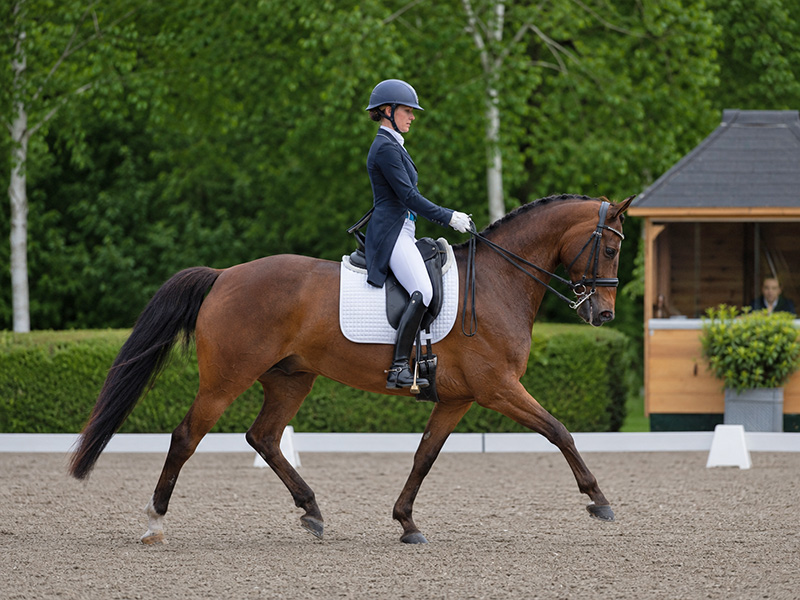
First comes dressage.
The horse and rider ride a set pattern of movements in an arena, judged on rhythm, balance, obedience, accuracy, and how well the two work together as one.
This is the “can your horse behave like a gentleman” phase.
Before the galloping and jumping begins, eventing asks a very simple question: is this horse rideable? Is he listening? Can he stay balanced, calm, and obedient when asked?
Dressage may not look as dramatic as cross-country, but it matters. A horse that cannot listen in the dressage arena is not ready to be trusted at speed over solid obstacles.
2. Cross-Country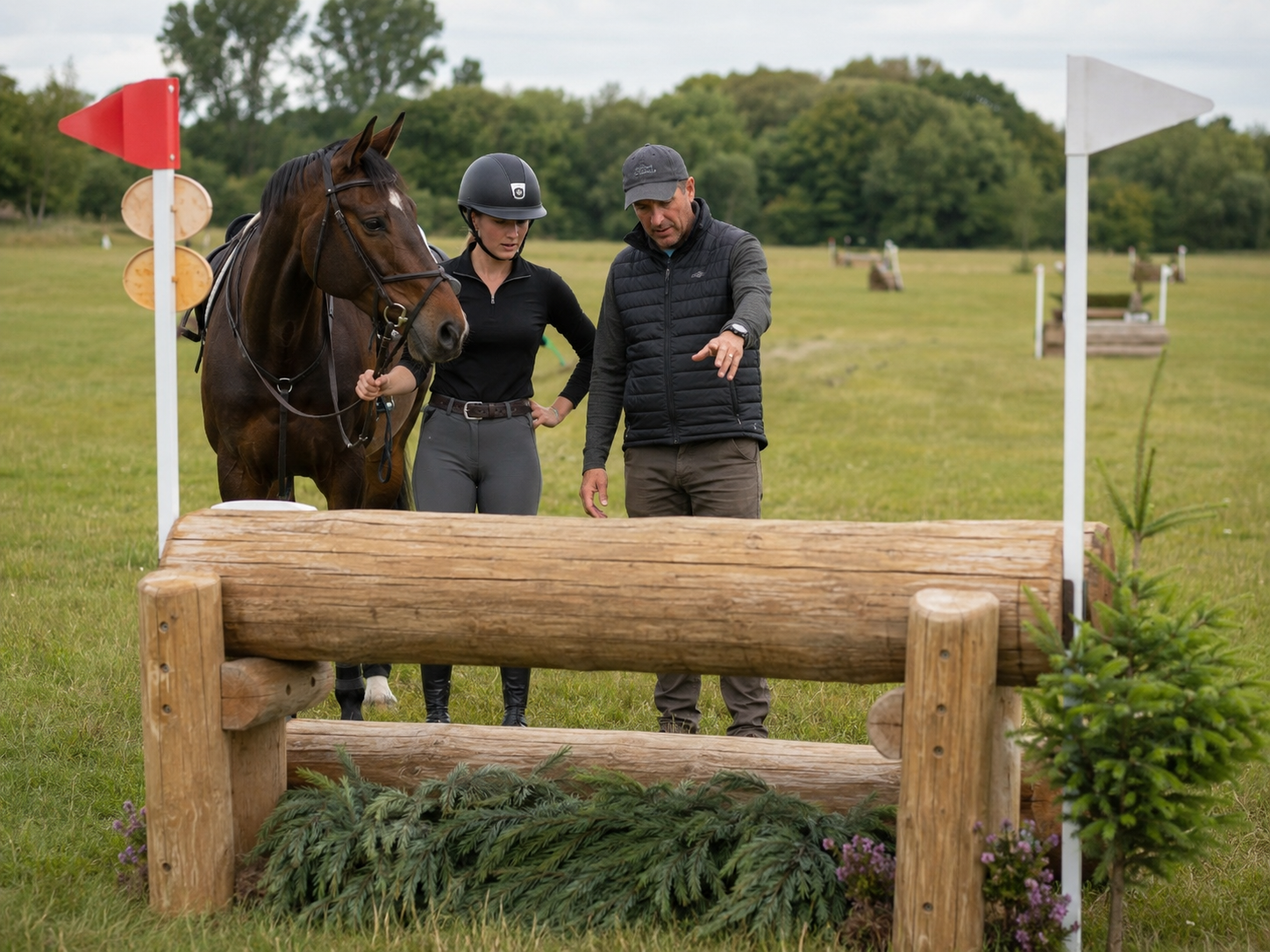
Then comes the phase that makes eventing eventing.
Cross-country is the heart of the sport.
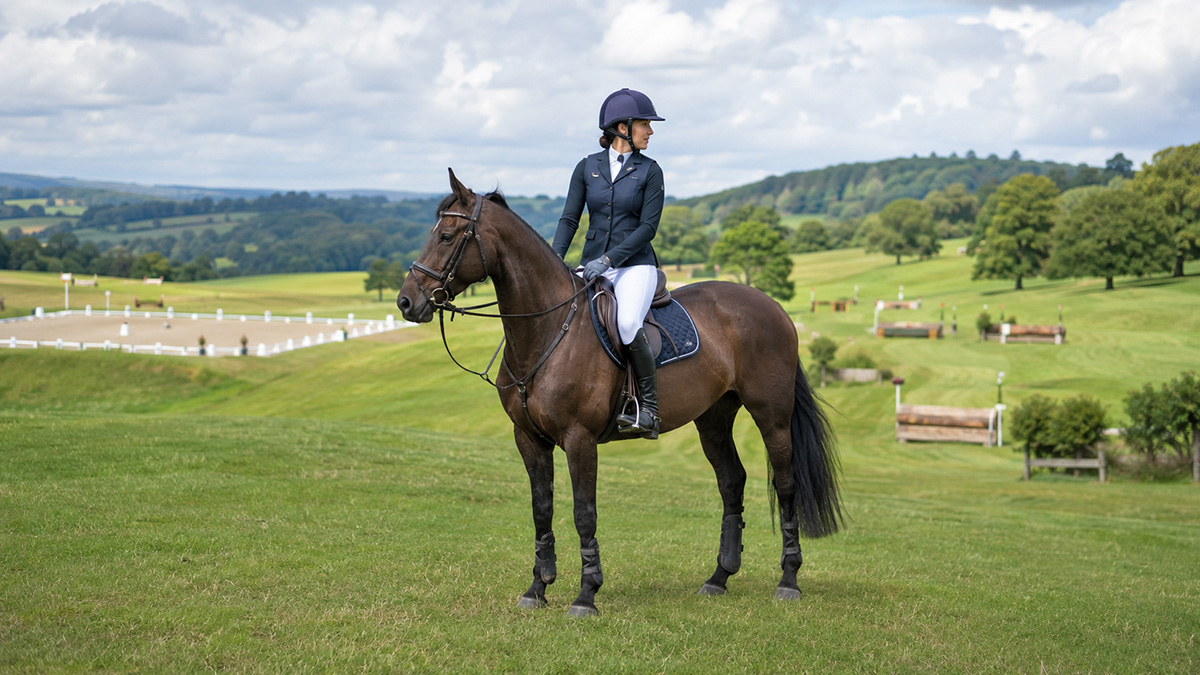
The horse gallops over a long outdoor course with solid, natural-looking obstacles - logs, stone walls, ditches, banks, water crossings, brush fences, and combinations that ask the horse and rider to think quickly and trust each other.
The rider also has to finish within an optimum time. Not too slow. Not reckless. Just right.
That is what makes cross-country so thrilling. It is fast, bold, and honest. The horse has to go forward. The rider has to make decisions. And the partnership has to be real.
There is no pretending out there.
3. Show Jumping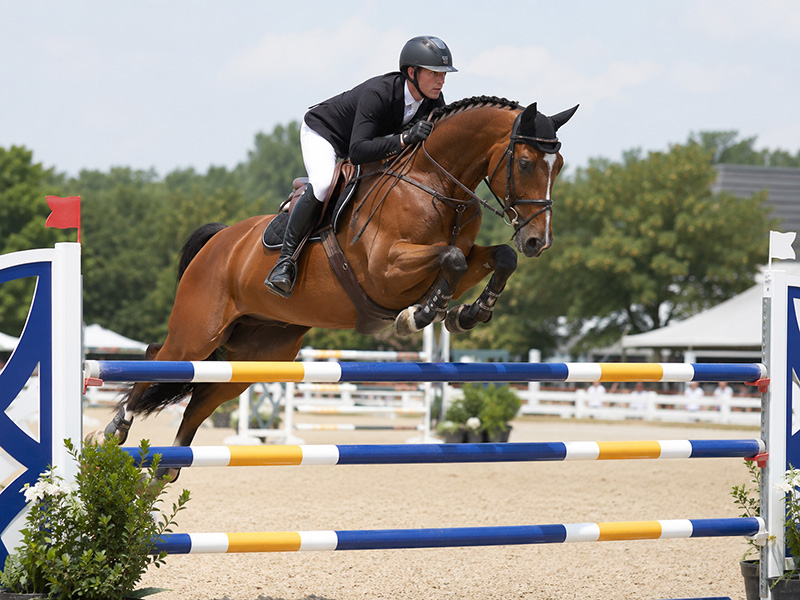
Finally, the horse jumps a course of rails in an arena are the kind of jumps that fall down when hit.
After the flat-out effort of cross-country, show jumping asks a different question:
Is your horse still careful?
Is he still listening?
Is he still sound enough to jump clean the next day?
That is the old cavalry test hiding in plain sight.
A horse had to be obedient on the parade ground, brave across country, and still useful the morning after. Eventing still carries that idea.
Add up the penalties from all three phases. Lowest score wins.
Simple to score.
Hard to do.
Where Eventing Came From
Eventing was born in the military.
Cavalry officers needed a horse that could do three things:
A good cavalry horse had to be obedient and precise on the flat. He had to be brave and fit enough to carry a soldier across rough country. And he had to be sound and rideable again afterward.
Those three needs became the three phases of eventing.
That is why eventers often call their horses “the complete horse.” The sport was literally designed to test completeness.
Once you understand that history, the whole sport suddenly makes sense.
Dressage proves obedience.
Cross-country proves courage and stamina.
Show jumping proves carefulness and soundness.
That is eventing.
Is Eventing Dangerous? Let’s Talk Straight.
I will not insult you by pretending cross-country carries no risk.
Galloping at solid fences never will be risk-free. Horses are powerful animals. Speed adds danger. Mistakes can matter.
But the sport has changed enormously, and mostly for the better.
Years ago, upper-level eventing included what people now call the “long format.” Before the main cross-country course, horses also completed roads and tracks and a steeplechase phase. It was a true endurance test.
In the early 2000s, the sport moved away from that older format at the highest levels. The modern short format, without the old roads-and-tracks and steeplechase phases, became the international standard. The 2004 Athens Olympics was the first Olympic Games to use that modern format.
Today’s eventing is shorter, smarter, and much more focused on horse welfare and safety.
Modern cross-country courses also use frangible technology on certain fences. That means parts of some obstacles are designed to break away or drop if a horse hits them hard enough, instead of trapping the horse’s legs.
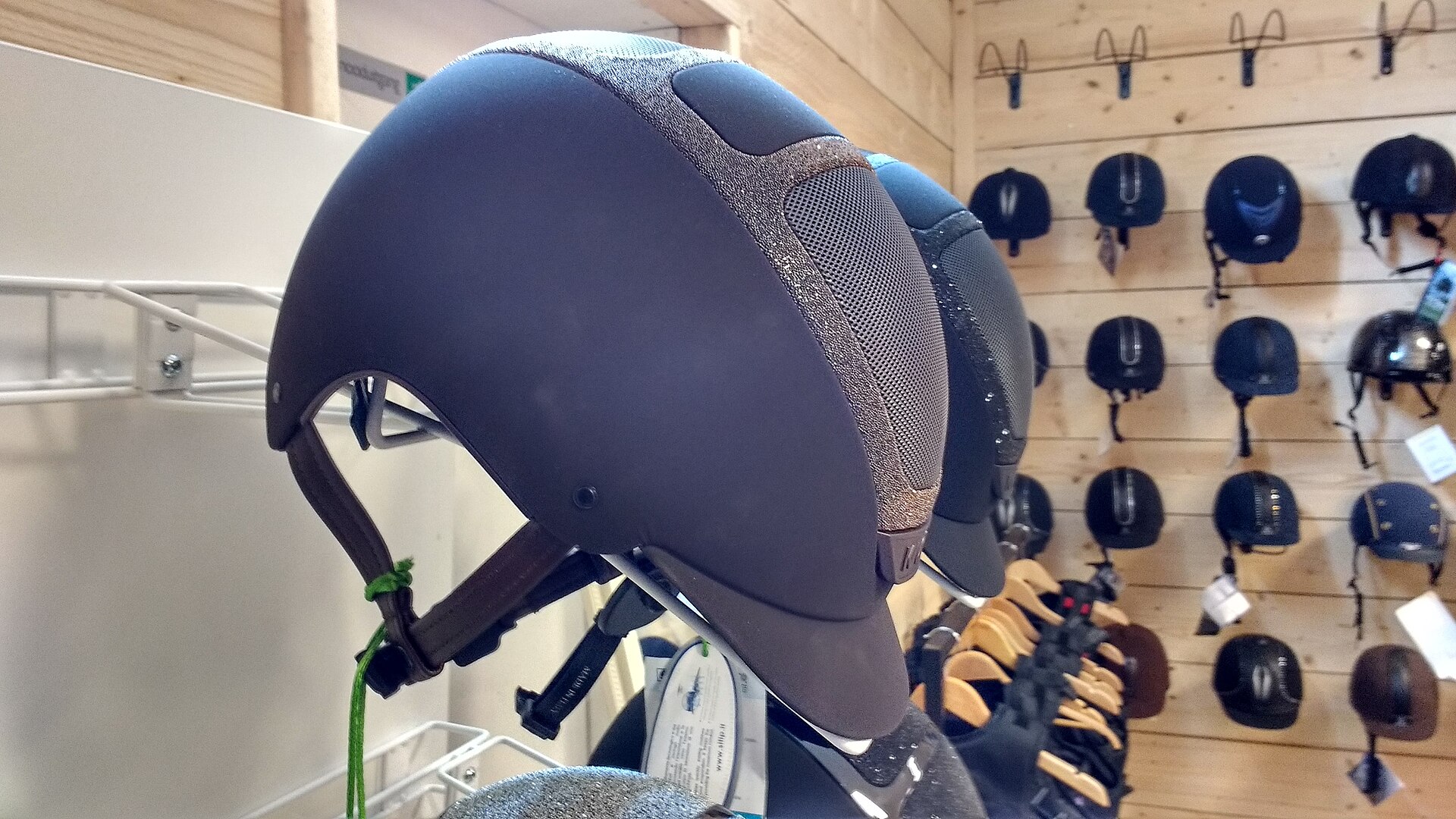
Riders wear protective vests. Many wear inflatable air vests. Helmets are required. Course design has become a serious profession, with a strong emphasis on building questions that are fair, readable, and appropriate for the level.
Good cross-country is not supposed to trick a horse.
It is supposed to show what a horse and Rider team can do.
The Lower Levels Are Not Supposed to Be Terrifying
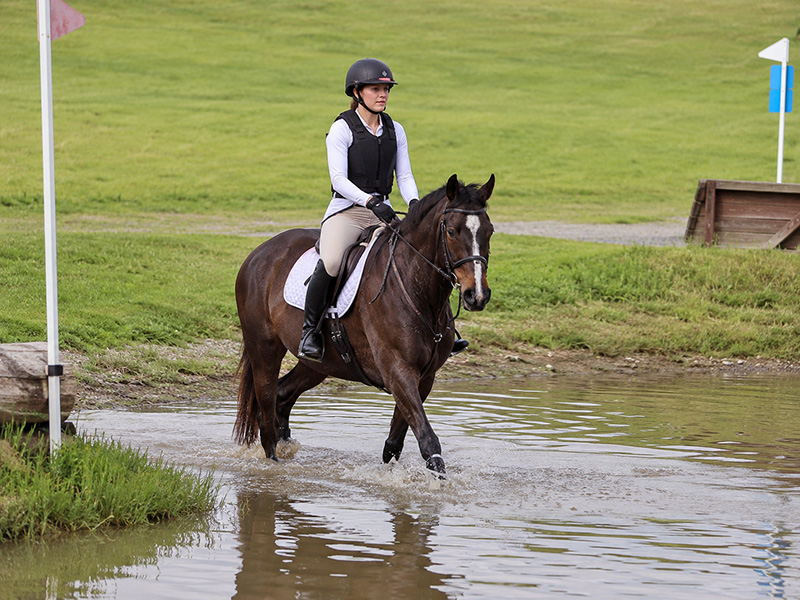
This is important, especially for parents, new riders, and adult beginners.
The lowest levels of eventing are built to be inviting.
Nobody is throwing a beginner at a terrifying drop into water. That is not how anyone starts.
At the entry levels, fences are small, straightforward, and confidence-building. A beginner may see simple logs, little coops, inviting boxes, small banks, and very friendly water crossings — if water is included at all.
The purpose is not to scare people.
The purpose is to teach horse and rider how to think, go forward, stay balanced, and build trust.
That is one of the things I respect about eventing. Done correctly, bravery is not demanded on day one. It is earned one good ride at a time.
How Do You Get Started — and at What Age?
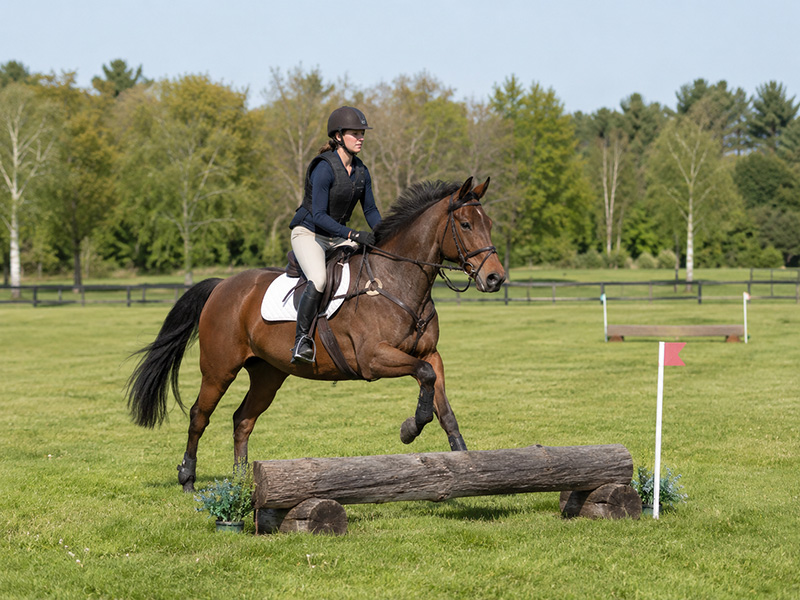
Here is the good news: eventing has one of the most welcoming on-ramps in all of English riding.
There is no minimum age to begin learning the basics. Children often start young through lesson barns and Pony Club, which has been the backbone of youth eventing for generations.
Adults start all the time too.
It is genuinely a sport you can pick up later in life at the lower levels, especially with the right horse, the right instructor, and a sensible step-by-step approach.
Competition starts at the bottom, no matter your age.
In the United States, the recognized levels now include:
Intro
Starter
Beginner Novice
Novice
Training
Modified
Preliminary
Intermediate
Advanced
Starter became a Usea-recognized level for the 2024 eventing season, and Intro is being added as an even lower confidence-building entry point. These first levels exist for a reason. They are designed to help horses and riders learn the sport safely and gradually.
At the earliest levels, the jumps are small and the questions are simple. Intro is designed to be especially welcoming, with very small fences and no complicated cross-country questions. Starter is also meant to be friendly, with simple logs and inviting obstacles.
Everybody starts somewhere.
A 45-year-old re-rider and a 12-year-old on a pony may both be learning over the same kind of friendly little fences.
You climb the ladder only as fast as you and your horse are ready.
The lower levels are there to build confidence and mileage. The upper levels require proven results before moving on. By the time a rider is aiming for Modified, Preliminary, Intermediate, or Advanced, the sport requires minimum eligibility results and proof that horse and rider have successfully handled the level below.
That is how it should be.
The bravery in eventing is not supposed to be fake. It is supposed to be built.
Do Kids Really Do This?
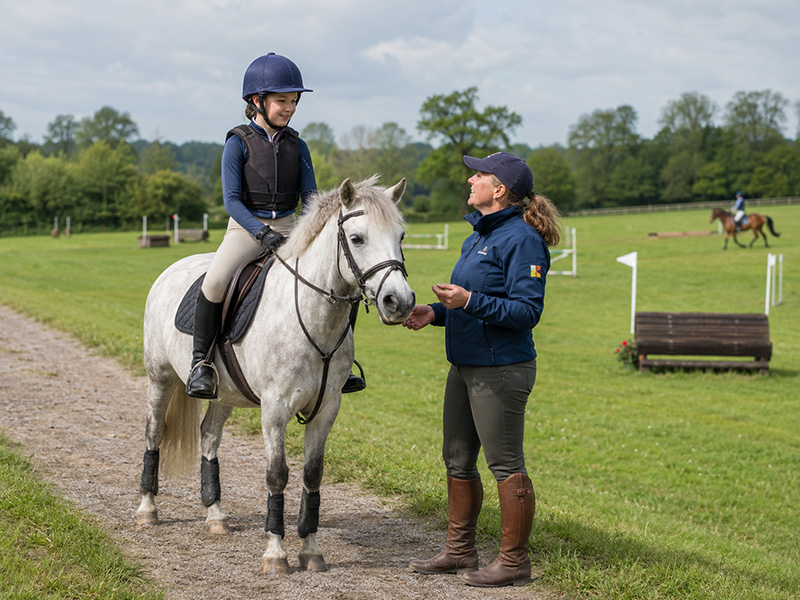
Yes, they absolutely do.
And when it is done correctly, it is one of the most heartening things in the horse world.
Kids learn eventing through lesson barns, local horse trials, Pony Club, camps, clinics, and youth programs. There are also dedicated young rider pathways and junior championships where teenagers compete at a very high level.
But what makes the sport work for kids is not that children are somehow fearless.
It is that the lower levels are designed to be appropriate.
Small fences.
Slower speeds.
Straightforward questions.
No tricks.
No traps.
No need to be a hero.
At the bottom of the sport, the goal is to build a brave, confident partnership — not survive a big course.
That is an important distinction.
Good eventing teaches kids that courage and caution are not opposites. They are partners.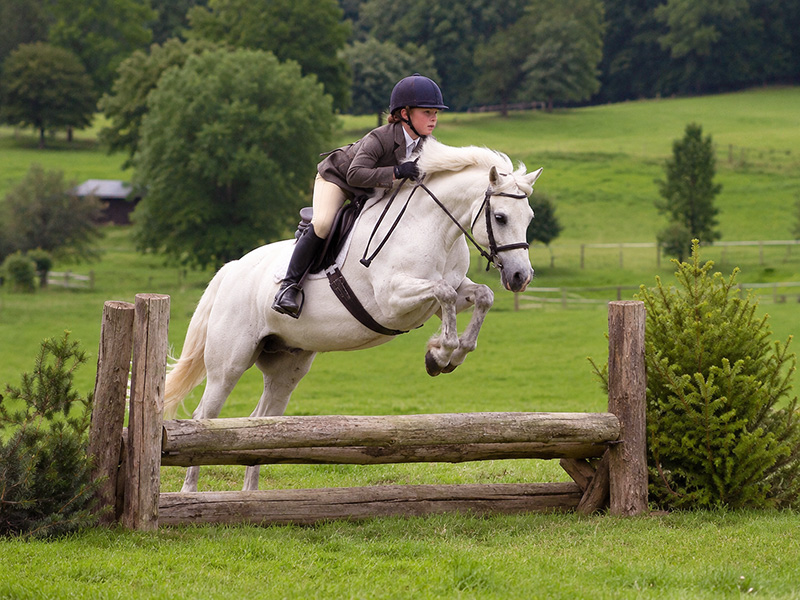
A good young event rider learns to be brave, but also thoughtful. Forward, but not reckless. Determined, but still kind to the horse.
That is a good lesson, on a horse or off one.
What Kind of Horse Wins at the Top?
This is where eventing tells you exactly what it values.
At the upper levels, you need a horse with stamina, heart, athletic ability, and a real gallop. That is why the Thoroughbred has always had such an important place in this sport.
Off-track Thoroughbreds and Thoroughbred crosses show up everywhere in eventing because the breed was built to run and keep running. A good Thoroughbred has engine, grit, courage, and the ability to cover ground.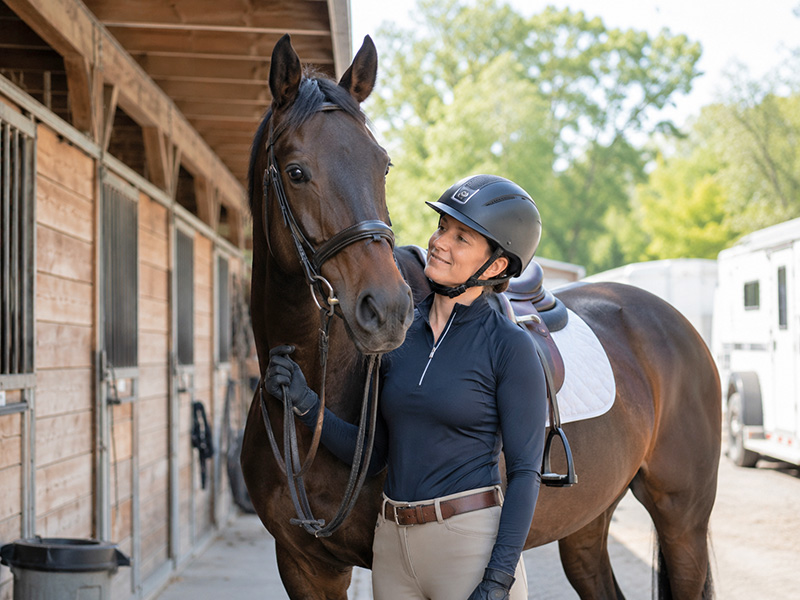
At the very top, many riders still want a strong percentage of Thoroughbred blood in the horse. That does not mean every good event horse has to be a Thoroughbred. But it does tell you what the sport rewards: stamina, speed, and heart.
Warmbloods are the big European sport horses and bring power, scope, and fancy movement, which can help in dressage and show jumping. Many top event horses today are warmblood-Thoroughbred crosses, blending the warmblood’s movement and jumping ability with the Thoroughbred’s engine and grit.
And for kids and smaller riders, do not overlook the Connemara pony and Connemara crosses.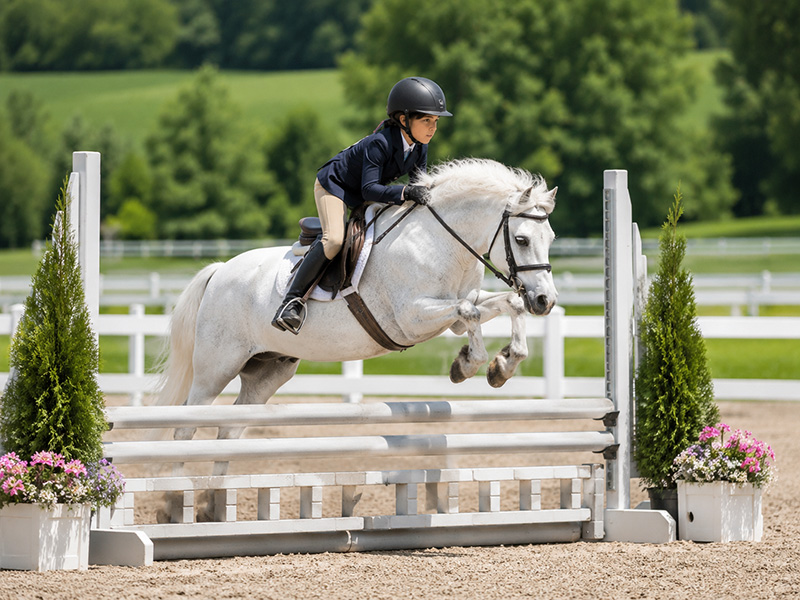
They are tough, clever, brave, and often far more capable than their size suggests. One of the most famous examples is Stroller, a 14.2-hand Connemara-Thoroughbred cross who won individual Olympic silver in show jumping in 1968.
That is the kind of story horse people love.
In eventing, height helps.
Heart matters more.
The Off-Track Thoroughbred and Eventing
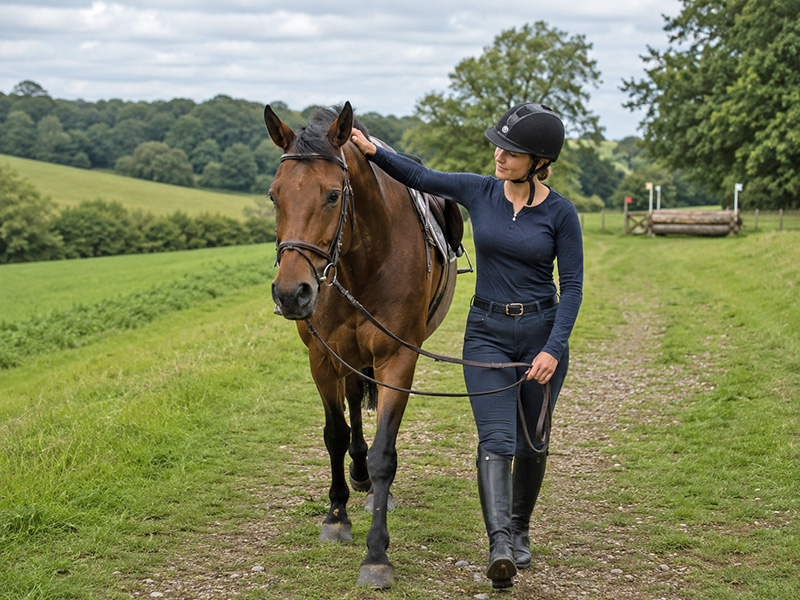
If you have ever wondered where a good off-track Thoroughbred can go after racing, eventing is one of the best answers in the horse world.
Not every racehorse is suited for it, of course. No breed and no background guarantees a good event horse.
But when the right Thoroughbred finds the right rider and the right training program, eventing can give that horse a second career that makes beautiful use of what he was bred to do.
Run.
Try.
Think forward.
Keep going.
That racehorse-to-event-horse story is one we will be telling more of here at The Bridleway.
Because it is a good one.
Why Eventing Looks So Different From the Rail
If you are new to English riding, eventing can be confusing at first.
One moment the horse is doing quiet, precise dressage movements in a small arena. The next day, that same horse is galloping over logs and through water. Then he comes back and jumps bright-colored rails in a show ring.
It almost looks like three different horses should be doing those jobs.
But that is exactly the point.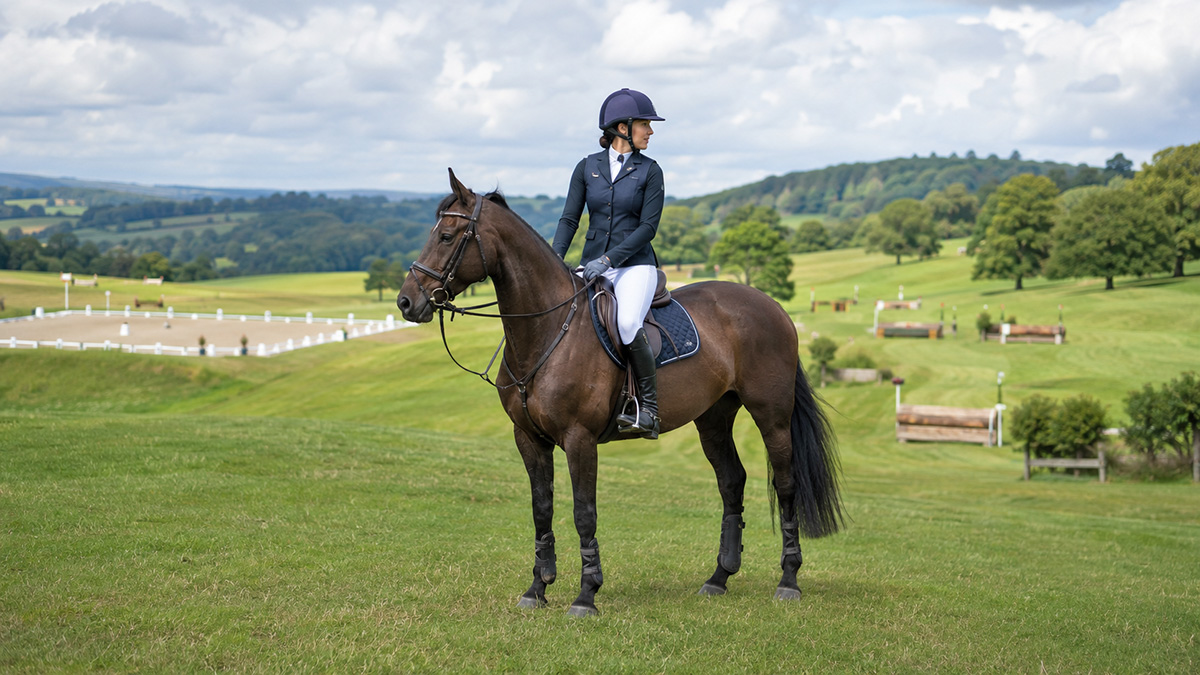
Eventing asks one horse to be many things.
Quiet enough for dressage.
Brave enough for cross-country.
Careful enough for show jumping.
Fit enough to recover.
Kind enough to trust.
Trained enough to listen.
That is why eventers are so proud of their horses.
A good event horse is not just athletic.
He is generous.
The Bottom Line
Eventing looks scary because it is honest.
There is nowhere to hide across three phases. Your horse has to be obedient, brave, careful, fit, and sound and all in the same competition.
But that same honesty is what makes the sport beautiful.
And for beginners, parents, kids, and adult re-riders, the most important thing to understand is this: eventing does not begin with giant fences and Olympic-level courage.
It begins small.
It begins with a good instructor, a suitable horse, and simple questions that build confidence.
Start small.
Start slow.
Let the bravery be earned.
That is not just how you compete in eventing.
That is how the whole sport is built.
Welcome to English riding.
The Bridleway is here to keep making it make sense - one honest explanation at a time.
English Riding Articles
Hunter vs Jumper - What's the Difference?
Dressage in Plain English - The Training Language of Dressage