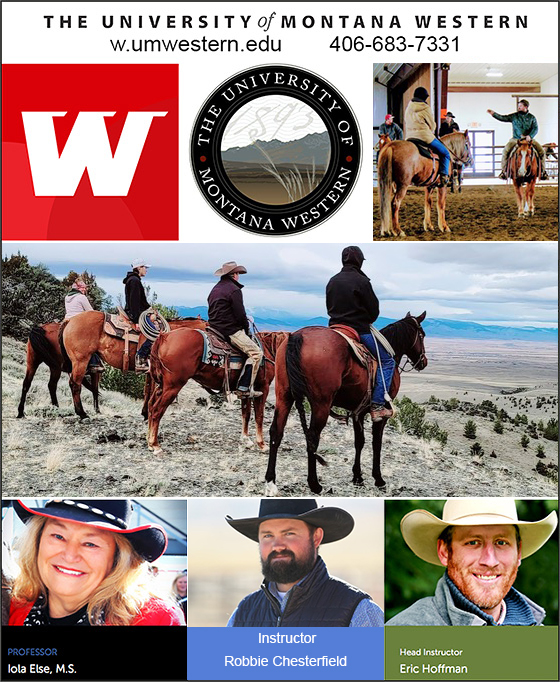

If you have been searching for an all natural horsemanship school that awards a real, accredited four-year degree, University of Montana Western is the answer most students have never heard of. Located in Dillon, Montana, Montana Western is the only public university in the United States that awards a Bachelor of Science degree in Natural Horsemanship — a full all natural horsemanship school built around the methods of clinicians, working ranchers, and horse-industry professionals.
Whether you want to ride and train colts every day or build a horse business that lasts a career, the curriculum at this all natural horsemanship school matches you with one of four areas of emphasis: Natural Horsemanship, Equine Studies, Business Administration with an Equine Management option, or Psychology with an equine-assisted learning focus.
A bachelor’s degree in Business Administration with an Equine Management option is also offered for students wanting to start or manage their own equine-related business.
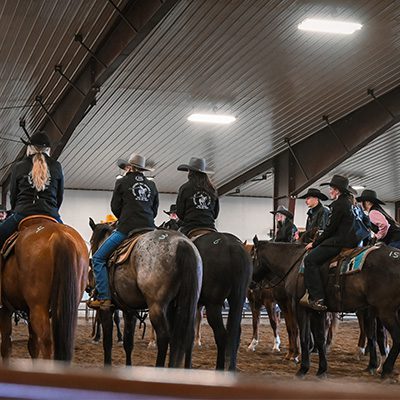
The Equine Studies Department at UMW offers the only bachelor’s degree in Natural Horsemanship in the U.S., with options in equine management, psychology, science, and instruction. A bachelor’s degree in Business Administration with an Equine Management option is also offered for students wanting to start or manage their own equine-related business.
Students majoring in equine studies or natural horsemanship at Montana Western must select one of the four areas of emphasis beyond the general education and equine core classes.
The management option aids students in preparing to run their own training or boarding facility, run a small business in an equine-related area or manage the equine aspects of larger business or other enterprise.
The psychology option is geared toward individuals with an interest in equine assisted learning and/or equine-assisted therapy. Graduates may choose to go on to graduate school in clinical therapy or become horse specialists through organizations such as the Equine Assisted Growth and Learning Association (Egala).
The science option is geared toward a student interested in science and a greater understanding of the biology of a horse. These students may be contemplating veterinary school or graduate school in some aspect of equine science.
The instruction option is designed for students preparing to instruct others in horsemanship methods and techniques. Graduates may choose to teach at clinics, barns, colleges or pursue further studies with organizations including the Certified Horsemanship Association (CHA).
To apply to the University of Montana Western and begin your journey with Equine Studies and Natural Horsemanship, visit the UMW Admissions page. For more information about Equine Studies and to apply to the Natural Horsemanship program, please visit the Department website.
This four-year degree program provides students the opportunity to learn the skills of natural horsemanship and obtain a career among the many equine-related fields. Natural Horsemanship majors often double major in other areas including business, biology and psychology, based on the interests and future goals of the student (i.e. specific career field or applying to graduate school in various areas of study including veterinary science).
This degree prepares students to start or manage an equestrian-related business.
This two-year degree is designed to provide students with a background for pursuing a career that draws on their passion for horses. Most of the courses completed in this degree also apply towards the Bachelor of Natural Horsemanship degree if a student desires to advance beyond their two-year degree.
This two-year degree program gives students the opportunity to learn the basics of the skills of natural horsemanship and obtain a career in many equine-related fields. All of the courses completed in this degree also apply towards the Bachelor of Natural Horsemanship degree if a student desires to advance beyond their two-year degree.
Since 2004, Montana Western has operated the unique Natural Horsemanship program employing the La Cense Method, a world-renowned methodology in natural horsemanship education developed under Mr. William Kriegel. This program teaches students to work with horses using cooperative methods based on the principles of equine behavior.
Students accepted into the program will initially work towards an associate of applied science (A.A.S.) degree.
Students wishing to pursue a bachelor’s degree must satisfactorily pass qualifying exams after the second year to continue study into the third and fourth years and must maintain a “B” average in this program to progress. Students must also have a horse to be admitted in the natural horsemanship programs.
Students learn directly from Montana Western’s Equine Studies faculty — working horsemen and horsewomen who teach the La Cense Method in the saddle every block.

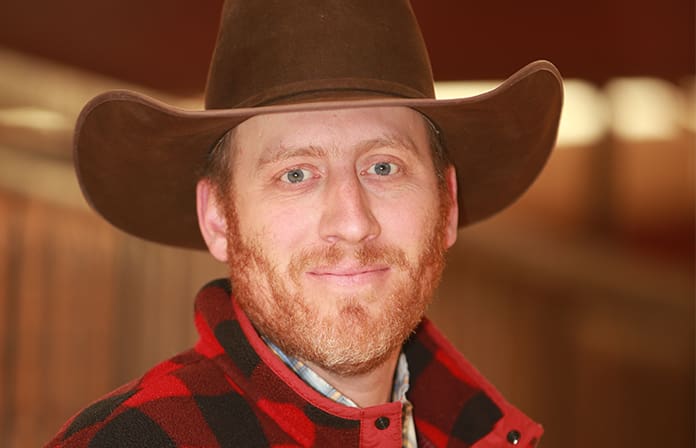
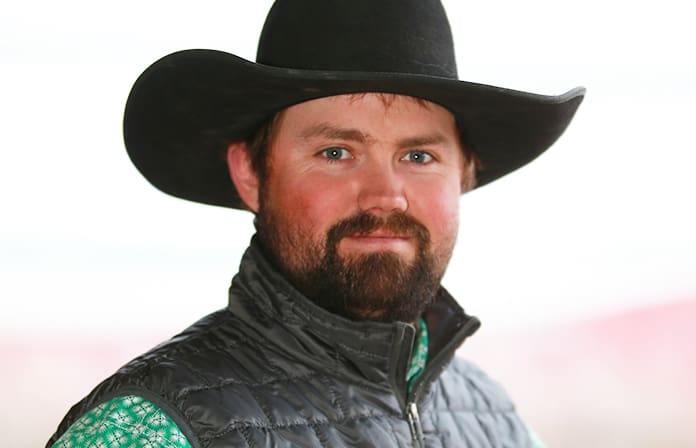
This broad-based introductory degree provides a solid foundation for a student interested in a future with horses. The basic elements of the degree include general education classes and the equine core classes.
This degree is the best option for a student interested in a future career in some aspect of equine business or management. Montana Western’s Business Department provides a well-rounded bachelor’s degree with an equine emphasis that allows a student to mold business studies toward a range of topics including finance, tourism and equine facilities management.
To maintain the highest quality instruction and ensure a thriving future of its equine programs, Montana Western entered into a partnership with the Montana Center for Horsemanship (MCH) in 2011.
The partnership provides access to a state-of-the-art equine facility for program instruction and the boarding of horses. The facility provides a comfortable, safe and secure environment for students and their horses. Horses are fed and their pens cleaned by MCH staff. Facility features include a brand new 200’ x 300’ arena building with a 135’ x 300’ indoor riding arena, an 80’ x 140’ Coverall arena, a 150’ x 300’ full-size outdoor arena, individual horse boarding in a 20’ x 60’ (12’ x 20’ covered) pen, individual tack lockers under the covered pen, and long-term trailer parking and short-term vehicle parking.
There is a $1,850 per semester special program tuition for resident and non-resident natural horsemanship majors seeking an A.A.S. or B.S. degree. This special tuition helps cover the costs of instruction, equipment, facilities, boarding, feeding and cleaning stalls.
This special event is an annual colt competition and sale that advocates the education of students in all aspects of the horse industry. This event is the result of two courses: Sales Preparation I and II, which are capstone courses for the Natural Horsemanship program. In these classes, colts are donated by local and regional ranches that have been raising horses focusing on performance and cow-horse bloodlines.
For six months, students learn how to work with the colts in a ranch atmosphere. In the spring, students will compete on their colt for scholarships and prizes. The following day, the colts are sold to raise money for scholarships in the Natural Horsemanship program — make sure to support this wonderful sale and learn more about the Colt Challenge and Sale.
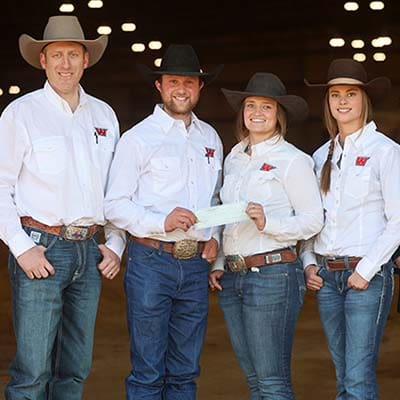
Students travel over to Germany and teach horsemanship methods and techniques to foreign students in the western discipline for two weeks. This is an internship opportunity for instruction majors.
Students travel to southern France for a semester-long program teaching young students about the methods and techniques of natural horsemanship. This is an internship opportunity for instruction majors.
The Western Undergraduate Exchange (WUE) is a scholarship program in which students in eligible states can receive a scholarship valued at over $7,500 annually.
WUE is administered by the Western Interstate Commission for Higher Education (Wiche). Wiche states include Alaska, Arizona, California, Colorado, Hawaii, Idaho, Montana, Nevada, New Mexico, North Dakota, Oregon, South Dakota, Utah, Washington, Wyoming, and the Commonwealth of the Northern Mariana Islands.
At Montana Western, WUE scholarships are automatically awarded to high school students with a minimum cumulative GPA of 3.0. Transfer students with a minimum cumulative GPA of 2.7 will also be considered for this scholarship. Students must be fully admitted to Montana Western by July 1 to be eligible for a WUE scholarship. For more information, visit the WUE website.
In addition to the various degree options, students may join one of our extracurricular equine organizations. An equine-related major is not required to participate in these programs.
The Equestrian Club competes under the auspices, rules and regulations of the Intercollegiate Horse Show Association (Ihsa) and the Intercollegiate Dressage Association (IDA), recognized members of the U.S.A. Equestrian Federation. Members may have experience in the sport or may be beginning horse enthusiasts. Members may ride Western or English and owning a horse is not required. The Ihsa’s competitions are affordable because individual colleges/universities host each event and provide the horses. Riders are not allowed to use their own horses and personal tack and schooling/warm-ups are not permitted.
The University of Montana Western Horseman’s Club strives to promote and enhance the art of horsemanship. Club members foster camaraderie between enthusiasts of all horsemanship disciplines.
Promoting interest, understanding, and appreciation of the western way of life and culture is one of the club’s primary goals. We encourage the humane treatment of livestock while enjoying the art of horsemanship. As a member you will participate in activities that will further your horsemanship expertise.
The Draft Horse Driving Club’s purpose is to promote draft horse driving as an organized and standard sport. Club members seek to generate interest, understanding, appreciation, and vigilance over the Western way of life, culture, and Western affairs. They encourage the humane treatment of animals and would like to encourage students and community members to embrace activities of the West.
The purpose Collegiate Stockgrowers Club is to educate students on opportunities and careers in agriculture. Club members participate in organizing the local farm fair, attend the annual Stockgrowers meeting, and attend the Denver National Stock Show.
This club provides an opportunity for students to engage with each other and faculty members who share an interest in veterinary medicine, science, and related techniques. Club members work with both large and small animals in an experiential learning environment.
The UMW Rodeo Team is part of the National Intercollegiate Rodeo Association (Nira) and enjoys a long history of success. Former team members include Jess Martin, Ryan Mapston, Jesse Peterson, Jake Hayworth, Bry Worthen, Jarrett Monroe and many more. For more information and the upcoming competition schedule, visit the Rodeo Team website or contact head coach Kody Lahaye. The Rodeo Club provides support for the Montana Western rodeo teams and hosts several functions each year, including the holiday food drive, Heritage Days, and Dillon college rodeo. The club also hosts the Rodeo Team’s Annual Community Appreciation Banquet.
The purpose of this organization is to further communication among people with an interest in agricultural issues, to educate students about the work of an agricultural organization, and to provide experience with local, state, and national government through active participation in legislative activities. As a member, you will learn about Farm Bureau policies and activities and promote occupations related to agriculture. The club also attends the National Convention each year.
Montana Western’s School of Outreach also offers a variety of additional workshop and weekend courses. Visit the School of Outreach website for more information.
To apply to the University of Montana Western and begin your journey with Equine Studies and Natural Horsemanship, visit the UMW Admissions page. For more information about Equine Studies at the University of Montana Western and to apply to the Natural Horsemanship program, please visit the Department website.
*Natural Horsemanship majors must first be admitted to the university and then apply to the Natural Horsemanship program.
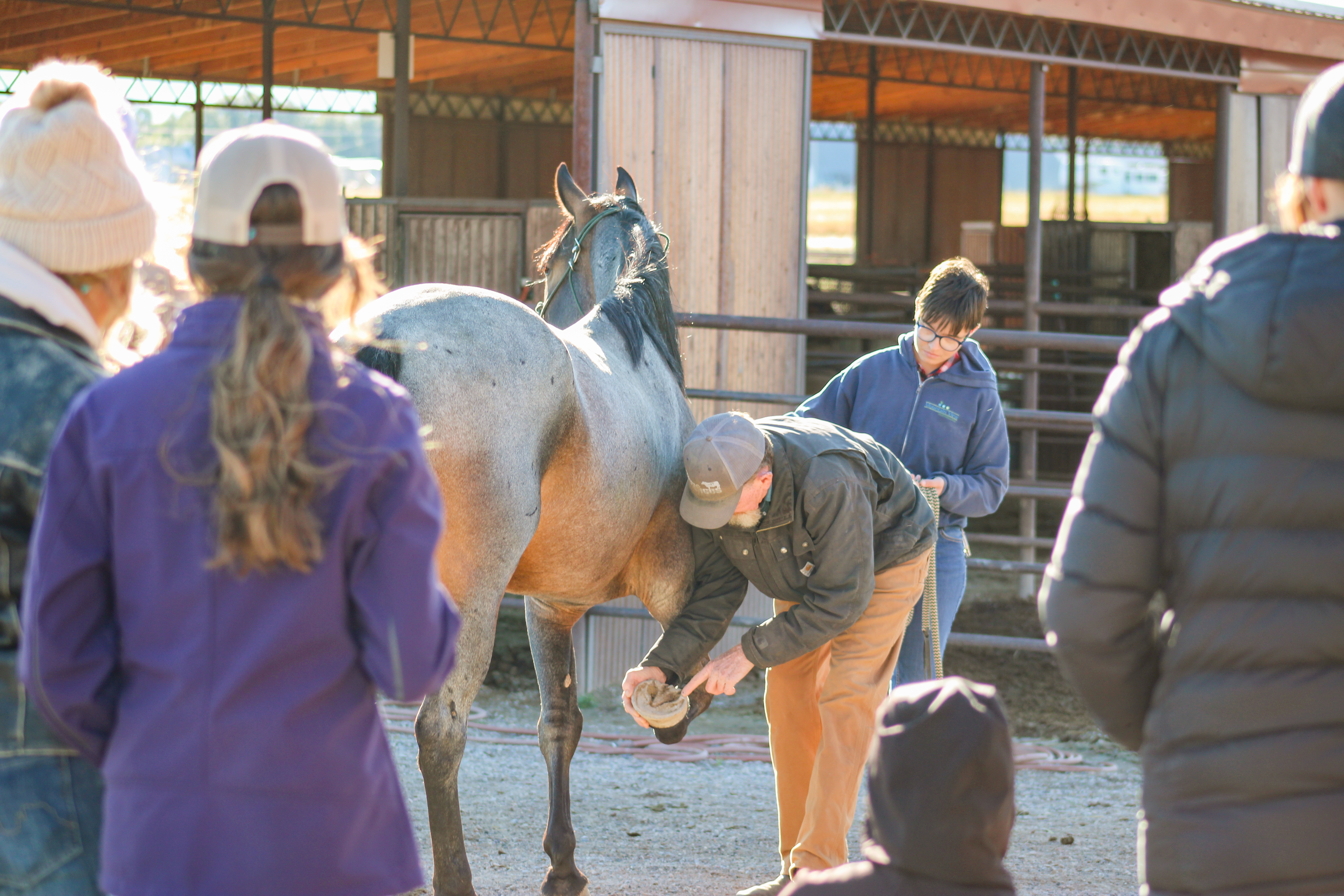
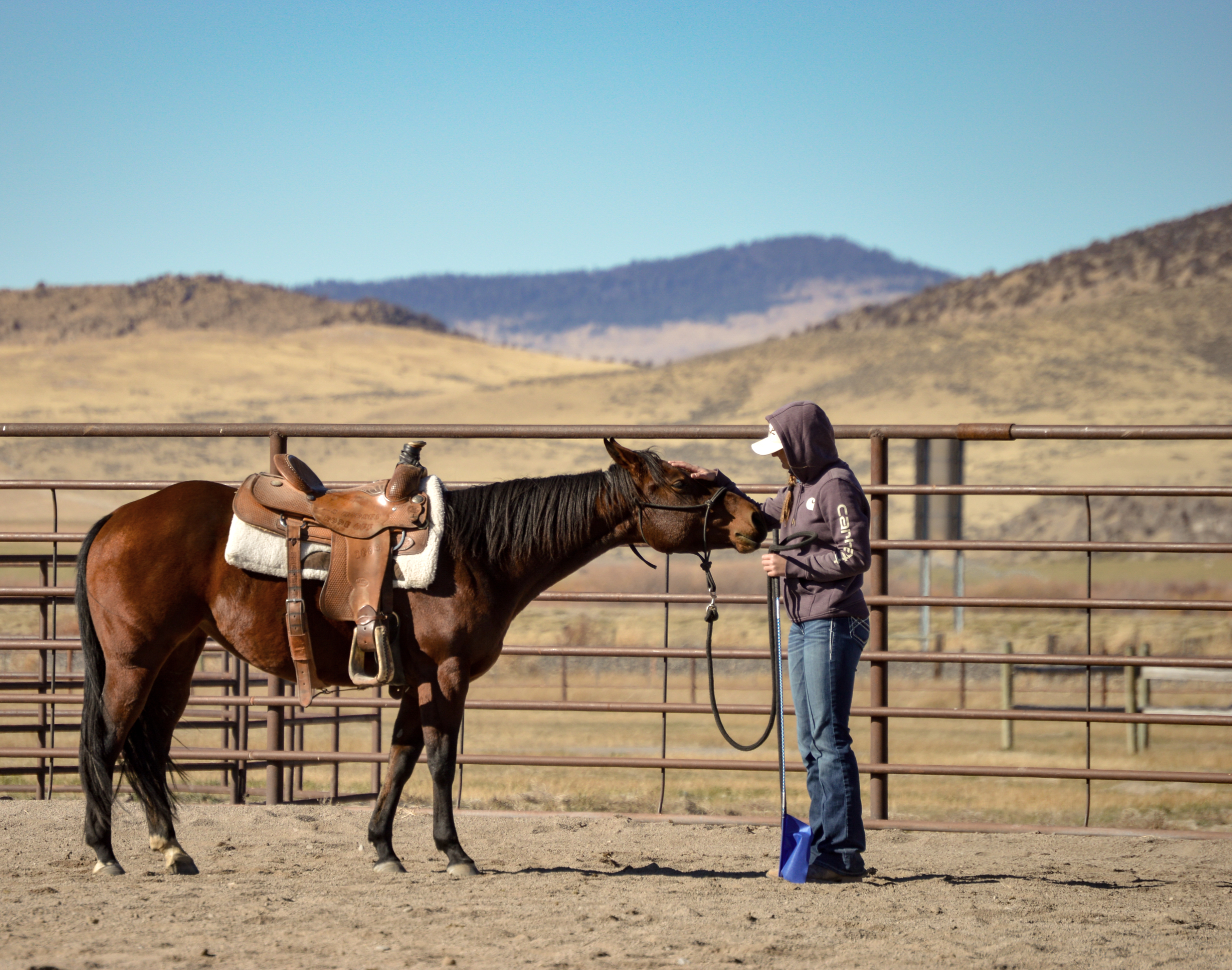
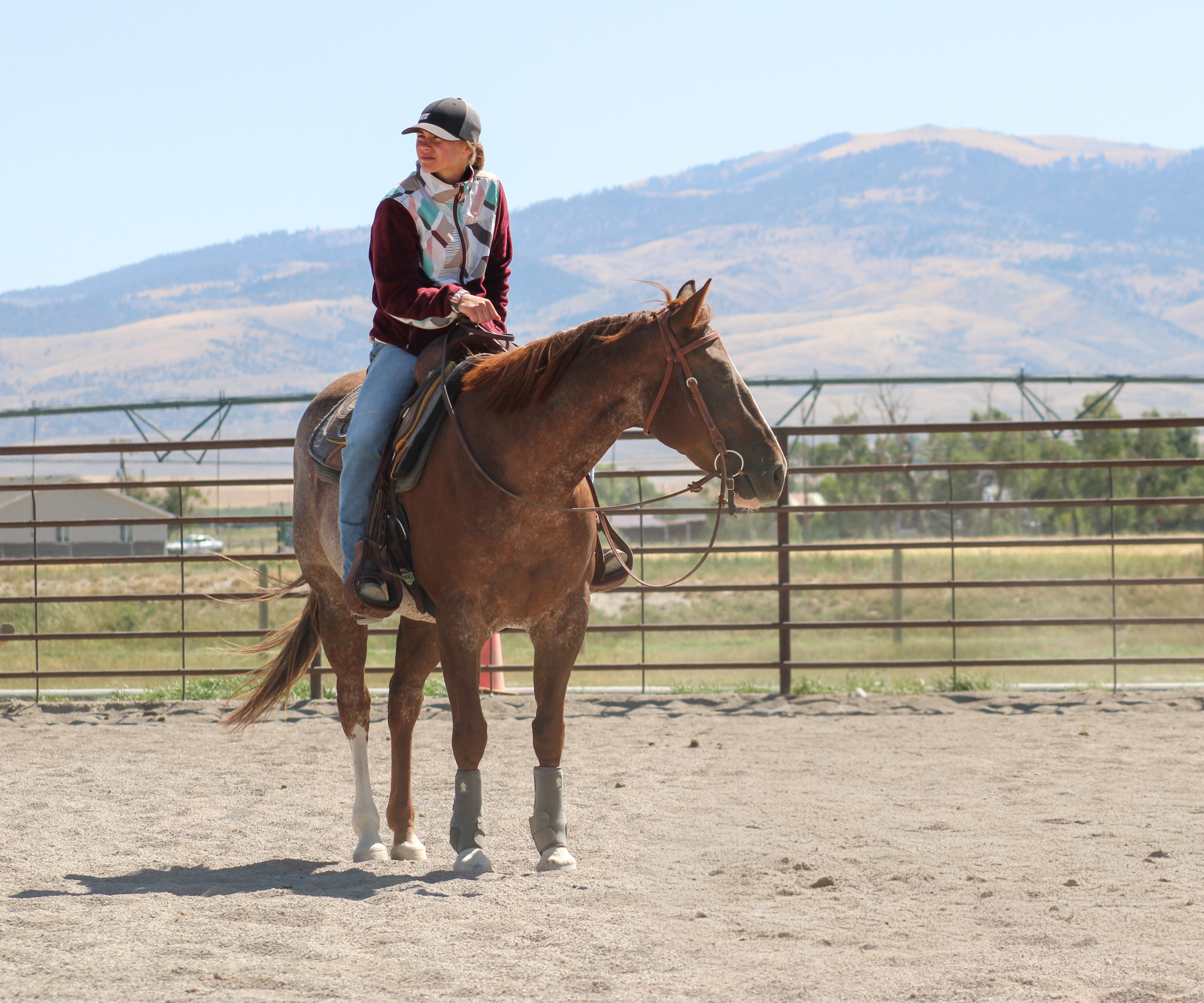
The Equine Studies Department offers the only bachelor's degree in Natural Horsemanship in the U.S., with four areas of emphasis — equine management, psychology, science, and instruction. A bachelor's degree in Business Administration with an Equine Management option is also offered for students who want to start or manage their own equine-related business. Students majoring in equine studies or natural horsemanship must select one of the four areas of emphasis beyond the general education and equine core classes.
Natural Horsemanship majors must first be admitted to the university and then apply to the Natural Horsemanship program separately.
Since 2004, Montana Western has operated its Natural Horsemanship program using the La Cense Method, a world-renowned methodology developed under Mr. William Kriegel that teaches students to work with horses using cooperative methods based on the principles of equine behavior. Students initially work toward an A.A.S. degree; those pursuing a bachelor's must pass qualifying exams after the second year and maintain a “B” average to progress. Students must have a horse to be admitted to the natural horsemanship programs.
In 2011, Montana Western partnered with the Montana Center for Horsemanship (MCH), which provides a state-of-the-art equine facility for instruction and horse boarding — horses are fed and pens cleaned by MCH staff. Features include a 200’ x 300’ arena building with a 135’ x 300’ indoor riding arena, an 80’ x 140’ Coverall arena, a 150’ x 300’ outdoor arena, individual 20’ x 60’ boarding pens (12’ x 20’ covered), tack lockers, and trailer parking. A $1,850 per-semester special program tuition for resident and non-resident natural horsemanship majors helps cover instruction, equipment, facilities, boarding, feeding, and stall cleaning.
Explore more from the InfoHorse.com directory



Explore expert guides on topics related to your business
By Bob Pruitt
By Bob Pruitt
By Ann Pruitt
By Bob Pruitt
By Horse Owners
By Ann Pruitt