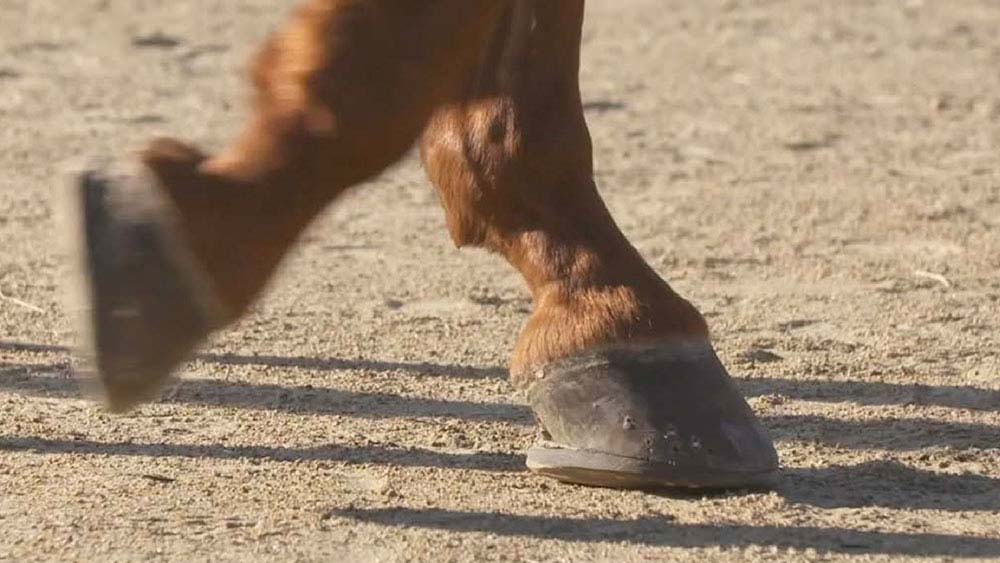
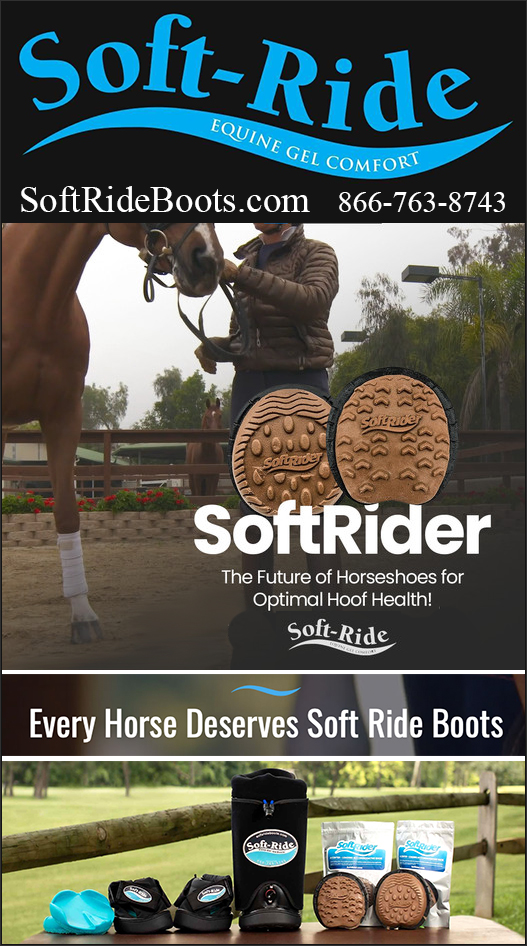

The SoftRider is a next-generation horse shoe from Soft Ride built around a patented dual-density construction that changes where a shod horse carries its weight. Instead of concentrating the load on the perimeter of the hoof wall the way a traditional steel shoe does, the SoftRider is center-loading: its base rests against the sole so weight is distributed across the entire hoof.
A rubber tread gives multi-directional traction, and the design lets the sole load and unload with each step — the same circulation principle behind Soft Ride's well-known gel orthotic boots. It is installed by a farrier or veterinarian and can be nailed, glued or cast on, which makes it usable on horses that cannot take a conventional nail-on shoe.
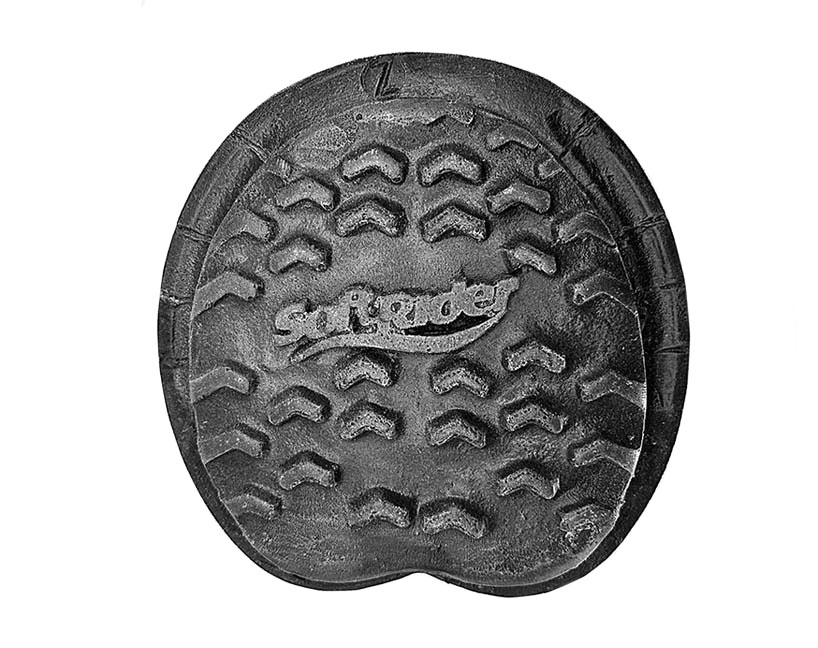
The SoftRider is a complete shoe, not a pad or a hoof boot. Its dual-density body combines two materials that work together to isolate concussive impact from the skeletal system while easing strain on the soft tissue of the lower leg. Because the shoe sits center-loaded against the sole, it creates a stable platform that loads and unloads as the horse moves — stimulating blood flow throughout the hoof and leg. The tread is engineered for multi-directional breakover, so the foot can roll over naturally in any direction rather than being forced to pivot off a single point, which reduces tension on the deep digital flexor tendon and the ligaments of the lower limb. It comes in several models: the SoftRider Gel Max with a high convex profile and 0–19° wedge potential for the most compromised feet, the lower-profile SoftRider Gel Arena with a more aggressive tread for casual and competitive riding, the SoftRider Carbon Fiber Arena built from a carbon-infused polymer with a 270° perimeter breakover edge for sound performance horses, and the SoftRider Draft Carbon Max sized for large warmbloods and draft horses.
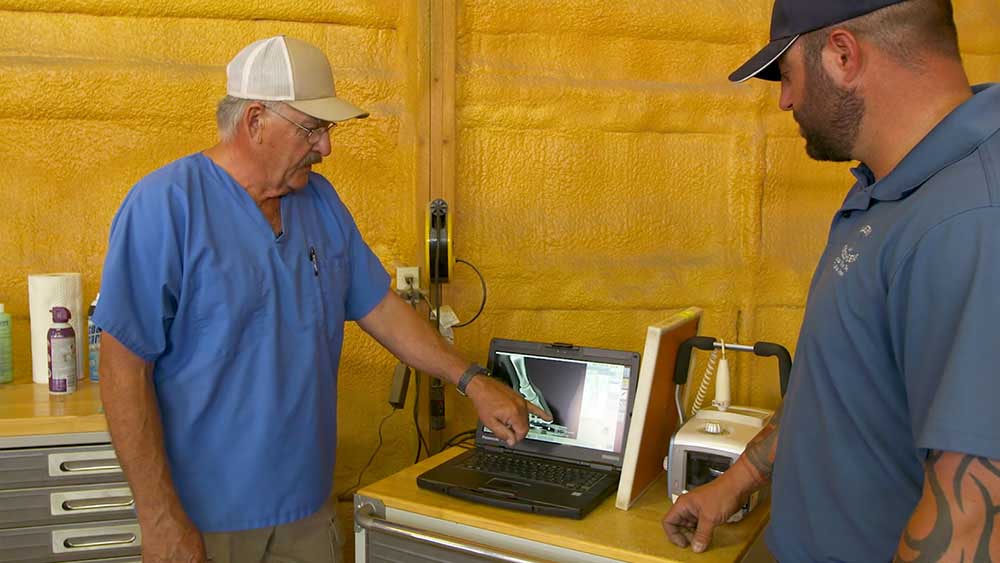
A traditional shoe carries the horse on the rim of the hoof wall and largely takes the sole out of the equation. The SoftRider does the opposite: by supporting the whole foot and engaging the sole, it is designed to increase blood flow to the hoof, reduce strain on the coffin bone and the navicular region, and absorb concussion that would otherwise travel up the leg. That makes it a candidate for horses dealing with navicular syndrome, laminitis, ringbone and arthritis, for aging horses that have grown foot-sore, and for performance horses across disciplines — barrel racing, team roping, dressage, jumping and trail — that benefit from better traction and a kinder breakover.
Soft Ride reports that horses fitted with the shoe often stop pointing a sore toe and move with renewed freedom. As equine veterinarian Dr. Joe Stricklin puts it, “SoftRiders aren't just for a sore horse… time after time I've found that horses have responded terrifically to these shoes.”
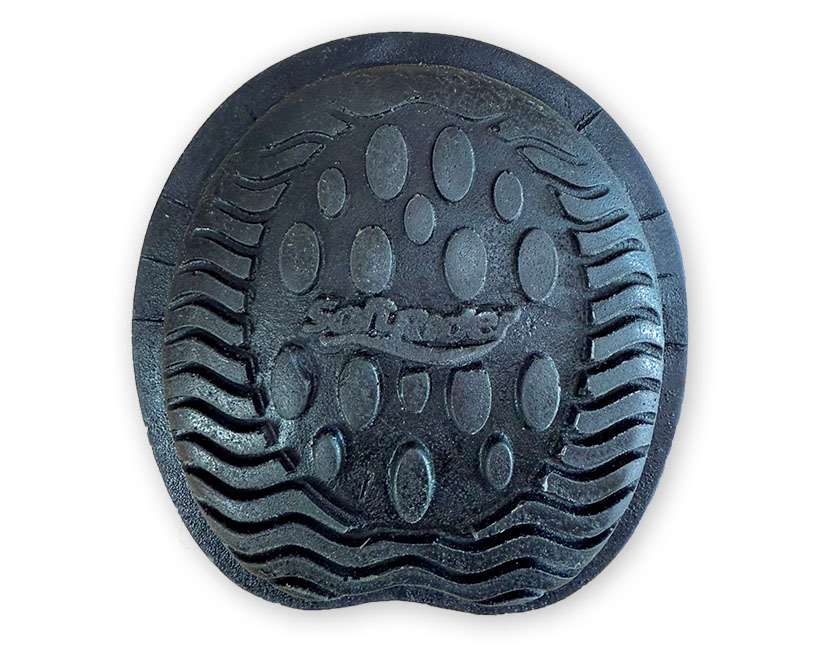
The SoftRider is meant to be fitted by a farrier or veterinarian, and one of its strengths is that it can go on several ways. It can be nailed through pre-drilled holes and sealed at the back with farrier silicone; it can be glued using a kevlar cuff secured to the hoof wall; or it can be cast on with traditional casting tape over impression material — a nail-free option ideal for laminitic or thin-walled feet that cannot tolerate nailing. The frog area is left open in every method so the foot can keep functioning naturally. Soft Ride is based in Bacliff, Texas, and the SoftRider line is sold direct through softrideboots.com, where you can review each model, find sizing, and order. Because correct fit and application matter, the company recommends working with your hoof-care professional to choose the right model for your horse.
A regular steel shoe carries the horse on the rim of the hoof wall. The SoftRider is center-loading — its dual-density base rests against the sole so weight is spread across the whole hoof. That lets the sole load and unload with each step to stimulate circulation, and the rubber tread allows multi-directional breakover instead of forcing the foot to pivot off one point.
Soft Ride positions the SoftRider for horses with navicular syndrome, laminitis, ringbone or arthritis, for aging or foot-sore horses, and for sound performance horses across disciplines such as barrel racing, team roping, dressage, jumping and trail riding. The Gel Max model is aimed at the most compromised feet, while the Arena and Carbon models suit casual and competitive riding.
It is fitted by a farrier or veterinarian and can be nailed, glued or cast on. Nailing uses pre-drilled holes sealed with farrier silicone; gluing uses a kevlar cuff attached to the hoof wall; casting uses traditional casting tape over impression material. The frog is left open in all methods so the foot keeps working normally.
Yes. The casting and glue-on methods let the SoftRider go on without nails, which is especially useful for laminitic or thin-walled feet that cannot tolerate nailing. Soft Ride's instructional video with Stuart Muir demonstrates a nail-free application of the SoftRider Max on laminitis horses.
The line includes the SoftRider Gel Max (high convex profile, 0–19° wedge potential, for laminitis and navicular cases), the SoftRider Gel Arena (lower profile, aggressive tread, for casual and competitive riding), the SoftRider Carbon Fiber Arena (carbon-infused polymer with a 270° perimeter breakover edge for sound competition horses), and the SoftRider Draft Carbon Max (sized for large warmbloods and draft horses).
Because the shoe is center-loaded against the sole, the sole loads and unloads as the horse moves, which Soft Ride says stimulates blood flow throughout the hoof and leg. The tread is built for multi-directional breakover, letting the foot roll over naturally in any direction and easing tension on the deep digital flexor tendon and lower-leg ligaments.
Yes. The SoftRider uses the same load-and-unload circulation principle that Soft Ride built its gel orthotic comfort boots around, applied here as a permanent, ride-on shoe rather than a removable boot. Both come from Soft Ride, the equine comfort-boot company based in Bacliff, Texas.
The SoftRider line is sold direct through softrideboots.com, where each model and its sizing are listed. Soft Ride recommends having the shoe selected and applied by your farrier or veterinarian to ensure correct fit and the best result for your horse's specific condition.
About this listing: Product and service details on this page, including any results described, are provided by The SoftRider Next Generation Horse Shoe. InfoHorse.com verifies the business behind every listing — for decisions about your horse's health, talk with your veterinarian.
Explore more from the InfoHorse.com directory




Explore expert guides on topics related to your business
By Bob Pruitt
By InfoHorse Editorial Team
By Bob Pruitt
By Bob Pruitt
By Ann Pruitt
By Bob Pruitt