

Keeping Your Barn Clean is Important for Our Horse's Health
Cleaning assists our horse's immune systems by decontaminating and removing the pathogens that have accumulated! Article from Elgee Industrial and Commercial Vacuums
A clean barn protects your horse’s health by removing the pathogens that accumulate in stalls and aisles—bacteria grow quickly on manure and dropped feed in summer, while salt, snow, and slush make dirt and dust build up even faster in winter. Regular sweeping and mucking also cuts down on ammonia, and it matters most during seasonal changes, when horses are re-adjusting to new temperatures and are more susceptible to bacteria and viruses. Year-round housekeeping keeps horses healthy, strong, and prepared for prime riding season.
It’s important to keep your barn clean all year-long, every season brings challenges for maintaining a healthy horse environment! During these hot Summer months bacteria will grow on manure and dropped feed very quickly. During the winter months, most people tend to skimp on cleaning, thinking that because we don’t have our doors and windows open, there is less dirt and dust.
On the contrary, dirt can be tracked indoors at any time of year, but because of salt, snow and slush, dirt and dust accumulate more quickly during the winter months, making “spring cleaning” the necessary catch phrase but we need to make an effort the entire year to maintain the safe and clean environment our horses need for optimal health and performance.
All cleaning assists our horse’s immune systems by decontaminating and removing a lot of the pathogens that have accumulated over the months. Just like us, our horses and animals are more susceptible to bacteria and viruses during seasonal changes because they are re-adjusting to new temperatures while also trying to fight off disease-causing organisms that have set up camp in their stalls. This is why it is so important to keep your stables clean all year round. That way, your horses are healthy, strong and prepared for prime riding season!
Here are some barn management and cleaning tips from your local barn owners: Fire Blue Farm of Hillsborough, NJ owner Deborah Ash recommends keeping your stalls and barn clean. “You want to cut down on the ammonia by keeping things swept, clean, keeping garbage away and just good housekeeping,” says Ash. She suggests using general pitch forks, “depending on the bedding,” to clean out horse stalls and free bedding of manure, debris and urine.
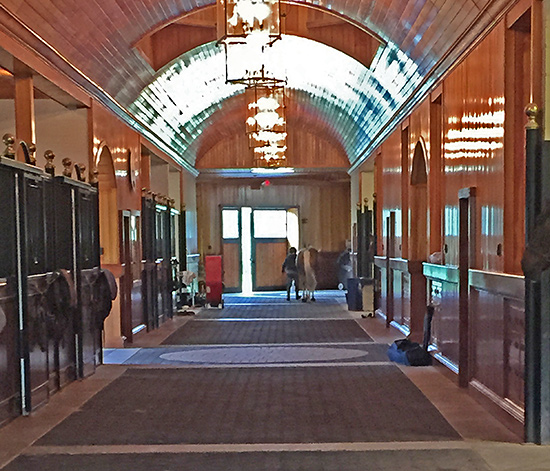
“Most higher-end stables have rubber mats” in the stalls, “so not as much bedding is needed,” making clean-up easier. Ash prefers tree by-products such as sawdust, wood pallets and other shavings, instead of large chips and hay, because they provide more urine absorption.
Ash also recommends using a non-toxic deodorizing powder. She uses Sweet PDZ powder sparingly in her horses’ stalls and then covers it with bedding. By layering the bedding on top of the powder, you are decreasing your animals risk in inhaling or ingesting the powder, though PDZ is said to be safe, non-toxic and non-hazardous.
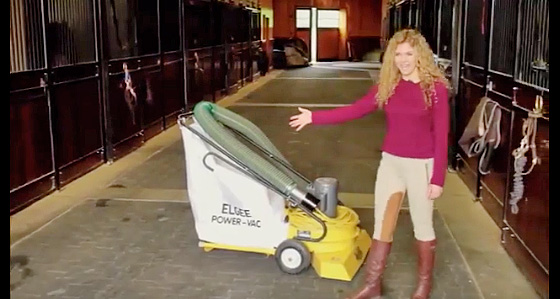
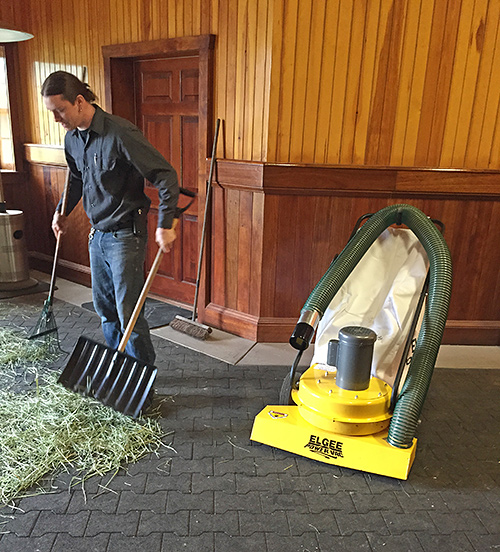
To keep aisles clean, Ash uses a simple broom for aisle clean-up, however other stable owners and employees find industrial vacuums and leaf blowers to be more timely and effective. Aaron and Bob Lobel of Raven’s Wood Farm Sports and Recreation in Bedminster, NJ have been the proud owners of an Elgee Power Vacuum for twelve years! When we saw his electric-powered vacuum, it was covered in dirt and dust; however Lobel explained that the vacuum’s force and the man -power it saves is what we really need to be looking at.
“They don’t exactly take care of it,” referring to his employees. “So it’s lasted for quite a while. It’s a well-built piece of equipment!” Lobel’s employees start by cleaning out the stalls in the morning and then run the vacuum to clean up debris in the aisles. The vacuum is then used two more times in the afternoon. “So for the last eleven years, three times a day.
That’s pretty good for twelve years or whatever,” laughs Lobel.
Aaron Lobel recommends the Elgee Vacuum to all stable owners, but specifically to those, like the Lobel’s stable at Raven’s Wood Farm, who have asphalt, rubberized or concrete bricks for aisle flooring. “This is semi-porous, with the cracks,” Lobel explains about the asphalt. You can’t really sweep this because it's rubber and it catches the broom when you sweep. The vacuum works great, as you can see, and keeps this place pretty clean.
Lobel says The Elgee Vac is also great for concrete brick, because even though concrete doesn't catch, debris gets caught in the grooves, making it impossible to sweep. The vacuum pulls out all of the debris, fine dust and dirt, making your horses’ living environments that much cleaner and safer!
It also cuts down on time and man-power. Having to sweep the floor would take a considerable amount of manpower and time, says Lobel. The vacuum cuts that down to one man, taking only half an hour to do the floor. It saves an amazing amount of time!
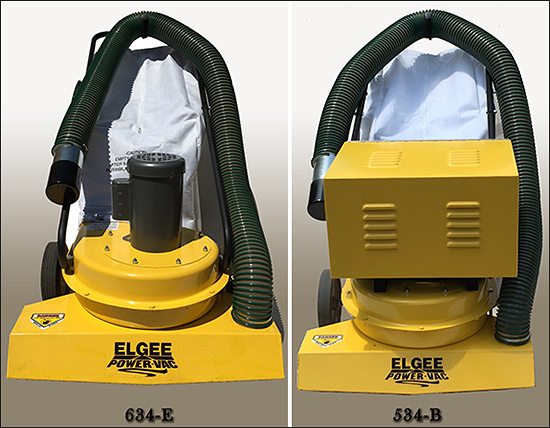
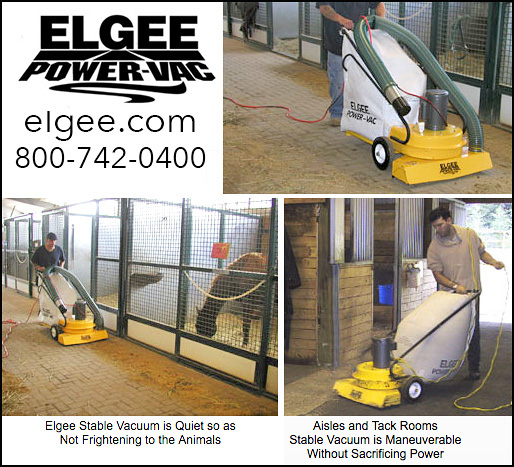
The Elgee 1.5 horse-power electric vacuum is powerful enough to pick up sawdust, straw, grains, manure chips, metal, glass, nails and even water bottles. It uses an electric outlet, allowing it to run quickly and quietly without exerting fumes or loud noises that can harm your animals. The Elgee 1.5 H-P also comes with a hose attachment option for the hard-to-reach corners in horse stalls, barns and tackle rooms.
Elgee Mfg. Co., Inc. has been making high quality vacuums for barns, horse stalls, public facilities, living areas, and keeping them all clean, since 1961. Although the engines are available in electric, gasoline, battery and propane, many stable owners, like the Lobel’s, have gone with the Elgee 1.5 horse-power electric vacuum and are extremely pleased.
For more information
on how to purchase an Elgee Vacuum, contact 1-800-742-0400 or visit elgee.com.