

What's Up With Cowboy Dressage?
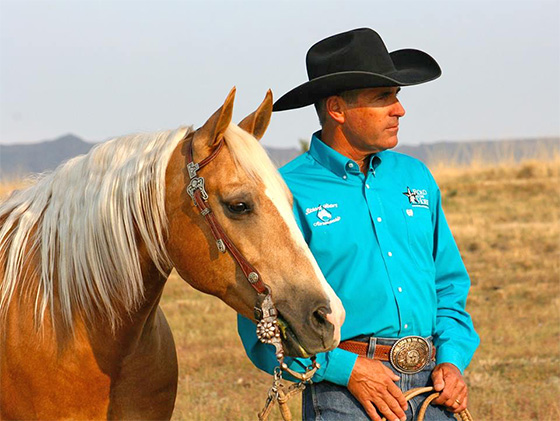
Cowboy Dressage has added a new dimension and challenge to my own horsemanship. With Richard Winters Horsemanship
Cowboy Dressage is a horsemanship discipline with roots in Classical Dressage that has evolved into something specific unto itself, with its own unique set of principles, guidelines, courts, and tests—and its organizers are clear it is not “Western dressage.” Riders are judged on precise transitions, bending, and straightness, and just as importantly on “soft feel”—riding with light contact without over-flexing the horse. Classes exist for every level of horse and rider, and every competitor agrees to the Cowboy Dressage Handshake, a promise to put the horse’s welfare above any competition or goal.
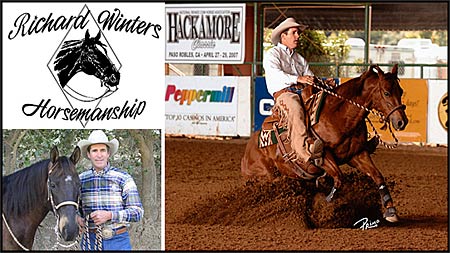
As I write this article, I'm sitting at a horse show. Last night I rode with over thirty other riders in the preliminary round of the Top Hand Competition. I know that I have qualified as one of the top 10 riders. We are now waiting to see who will make the top 5 cut and ride in the finals tomorrow night. I wasn't judged on how far my horse slid or how fast he could spin. I don't believe there was even one cow on the premises. This weekend, I've tried something brand-new, Cowboy Dressage.
This new horsemanship discipline is really taking off. At this show there will be over 900 individual goes with three arenas continuously active for three days. Although this event has its roots in Classical Dressage it has evolved into something very specific unto itself. Its organizers would also want to clarify that this is not "Western dressage". Cowboy Dressage has developed its own unique set of principles, guidelines, courts and tests. It's been a huge learning experience for me and has challenged my own horsemanship skills. Below are just a few things that I've learned.
It's All About Transitions There were probably over twenty different transitions that I had to execute during my test. Transitioning from the working walk to the free walk, on to the working jog then the free jog, asking for the lope and back down again. And of course, all of these transitions had to happen at a very specific mark on the course.
Bending And Straightness Every circle was judged on how well the horses were bent and how consistently they traveled in the circle. Then aligning the horse’s body on straight-lines was also closely scrutinized. "Kind of, Sort of" just didn't cut it. I really had to strive for perfection.
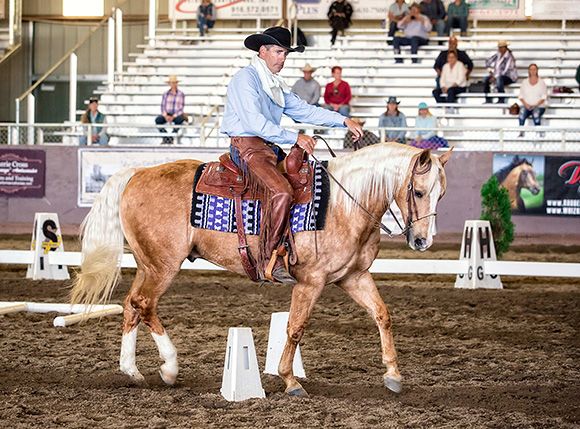
Poles And Cones In many of the challenge tests, poles and cones were set up for the rider to navigate in different gaits. This was helpful in some ways in that it gave us a frame of reference of where to ride. In other ways, it was tricky to keep my horse riding correctly over polls that were spaced at different intervals.
Callers Although it was important to be familiar with the particular test that I was riding, every rider was allowed a caller to announce the next maneuver in the test. Having a good caller, that stayed in the rhythm and flow of your ride was vital for success. It also relieves a lot of pressure of trying to memorize a test that can last up to seven or eight minutes. Should a rider go off course, a cowbell is rung and the judge helps the rider find a new starting point. This makes the event very rider-friendly. There's only a small penalty for this happening twice but getting lost a third time is a dismissal.
Bits And Headgear Unlike other disciplines, Cowboy Dressage allows you to ride a horse of any age in a Bosel, Snaffle or Leverage Bit. It is strictly the rider’s preference. You can also ride with a Leverage Bit using two-hands. However, if you start two-handed you must ride the entire test with two-hands. If you begin your test one-handed you must ride the whole test one-handed.
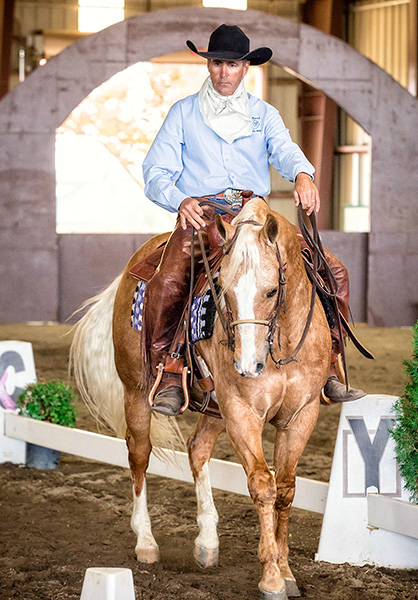
Levels For Everyone This weekend I competed in the "Top Hand" Division. This perhaps was the most challenging and difficult test of the weekend. However, there are classes for every level of horse and rider. Youth classes, Novice classes, Amateur and Open classes. There were many classes offered for just those who wanted to walk and jog. Then many more that also included the lope and more challenging maneuvers.
Cowboy Dressage Handshake This is an agreement that every rider makes: They will always put the horse’s welfare above any competition or goal. The show management insists, and enforces, that no equipment can be used, or training techniques implement, in the warm-up pen that would not be allowed in the show arena. Although almost every club and association talks about and attempts to put the welfare of the horse first, I have not seen any group practice what they preach any better than Cowboy Dressage
Soft Feel Although the technical aspects of each test are critical, there is also a more subtle area that is judged just as importantly. Riders are judged on the "soft feel" that they exhibit while executing each maneuver. That means; riding with light contact without over-flexing the horse. If a horse’s head and neck get too low, or a horse’s nose gets behind the vertical, penalty points are assessed. Without the soft feel that exemplifies harmony, balance and partnership, it is difficult to do well in Cowboy Dressage.
Personally, I love the tradition, athleticism and discipline of the Reined Cow Horse. However, Cowboy Dressage has added a new dimension and challenge to my own horsemanship. This weekend I observed riders of many levels riding many different breeds of horses. The common denominator was that each rider was trying to ride with more finesse, feel and accuracy. This is the first Cowboy Dressage show that I have ever attended and I think I can share a pretty objective opinion.
It appears to me that horses and riders are both winners in this deal. Cowboy Dressage is an opportunity for any rider, at any level, to bump up their horsemanship game and refine their skills. It's also a place where each horse can step up to a higher level of performance without being compromised physically or mentally.
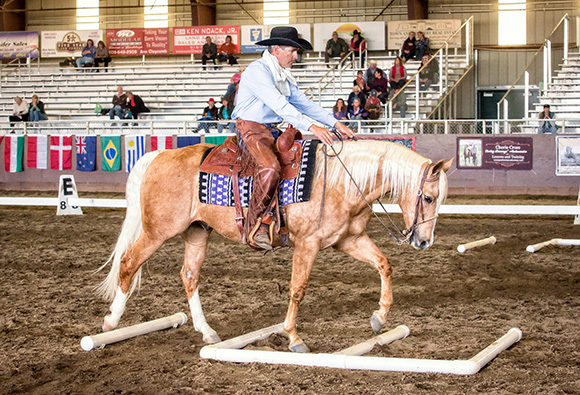
Here’s the rest of the story: I did indeed make it back to compete in the top 5! We rode a mystery test and then had to switch horses with another top 5 contestant and re-ride the test. My horse Whiz secured the Championship win for a veteran Cowboy Dressage competitor, which was beautifully executed. Whiz and I placed fourth, which my wife assures me is more than respectable for my first endeavor with a brand new discipline, having entered the toughest class, at their year-end finals.
I had fun this weekend and learned a lot. Hopefully I'll get a chance to do it again.
Richard Winters Horsemanship WintersRanch.com