

Your horse grows a completely new hoof every year. Here is what is happening inside it, and what you can do to help.
I have been around horses for more than fifty years. In all that time, I have never met a horseman who argued with the old saying. No hoof, no horse. Everybody nods. Then most of us go right back to worrying about saddle fit and feed programs and whether the trailer tires are getting old.
The foot deserves better than a nod. So let me tell you what is actually going on down there, in plain language, and what you can do about it starting this week.
The hoof you are looking at started growing last year
 Here is the fact that changes how you think about feet.
An adult horse grows roughly a quarter to three eighths of an inch of new hoof wall every month. The average hoof is three to four inches long. Do that math and you land somewhere remarkable. Your horse replaces his entire hoof about once a year.
It gets more interesting when you break it down by where you are standing. At the toe, new horn takes nine to twelve months to travel from the coronet band down to the ground. At the quarters, six to eight months. At the heels, only four to five months, because the distance is shorter.
That means the horn at your horse's heel is younger than the horn at his toe. Younger horn holds more moisture and has more give to it. Same foot. Different age. Different behavior.
Young horses grow foot faster than old ones. A nursing foal puts on better than half an inch a month. A yearling is close to that. A horse under a year old grows hoof about twice as fast as a horse over twelve. Growth also picks up in the fall, which is worth knowing when you are setting your farrier schedule.
Now here is why this matters to you. Whatever you see wrong with your horse's foot today started months ago. And whatever you fix today will not show up at the ground for the better part of a year. Hooves do not do quick fixes. Anybody who tells you different is selling something.
What the hoof wall is actually made of
Most people picture the hoof wall as a solid block of horn. It is not.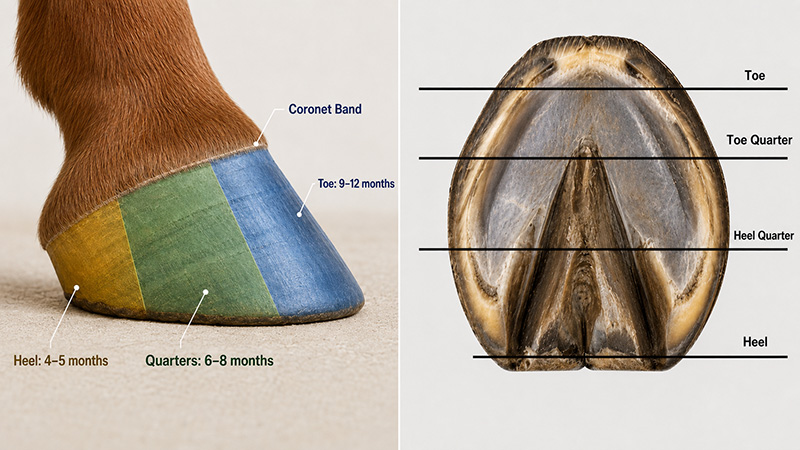
Run a magnifying glass over a cross section and you find thousands of tiny tubes running from the coronet band down toward the ground, packed into a matrix that glues them together. Both parts are keratin, the same protein as your fingernails, but arranged in a way engineers have studied for years because it handles impact better than most things humans have built.
Those tubes are why cracks behave the way they do. A crack running up and down the wall, parallel to the tubes, meets far more resistance than a crack running sideways between them. That is roughly a threefold difference. It is the structural reason a vertical crack and a horizontal one are two different conversations with your farrier.
Moisture changes everything about this material. Wet keratin bends. Dry keratin snaps. That is not a small effect, and it is the reason the same horse can chip in August and hold together fine in March.
The back of the foot is where the horse is made or lost
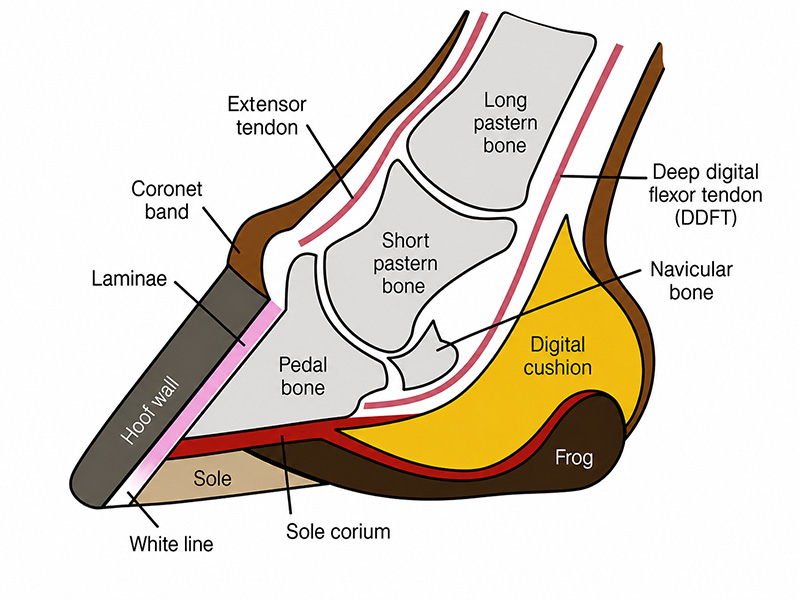 If you take one thing from this article, take this one.
Under the back half of the hoof sits a wedge of tissue called the digital cushion. In a young horse, it is soft and fatty in every horse alike. But somewhere after about age five, horses split into two groups. In some, that cushion turns into dense fibrocartilage, tough as a shoe sole. In others, it stays fatty and weak.
The horses that develop the tough version also carry thicker cartilages on either side of the foot, better blood supply, and a firm, wide frog. They tend to land slightly heel first when they move. They stay sound longer.
The horses with the fatty version do not.
Here is the part that ought to get your attention. That tissue is not something a horse is born with. It is built by movement. Every step loads the back of the foot, the frog contacts the ground, the structures compress and release, and the tissue responds by getting stronger. Take the movement away and it never develops. Once the window closes, it does not reopen easily.
A horse standing in a stall twenty two hours a day is not resting. He is failing to build a foot.
So what can you actually do?
Let him move.
This is free, and it is the most powerful thing on the list. Turnout, and plenty of it. Not an hour in a small pen. Real space where a horse walks and covers ground. Interestingly, research tracking horses with GPS collars found they take about the same number of steps year round. In good weather they roam farther out. In bad weather they stay near shelter but keep moving. They want to walk. Let them.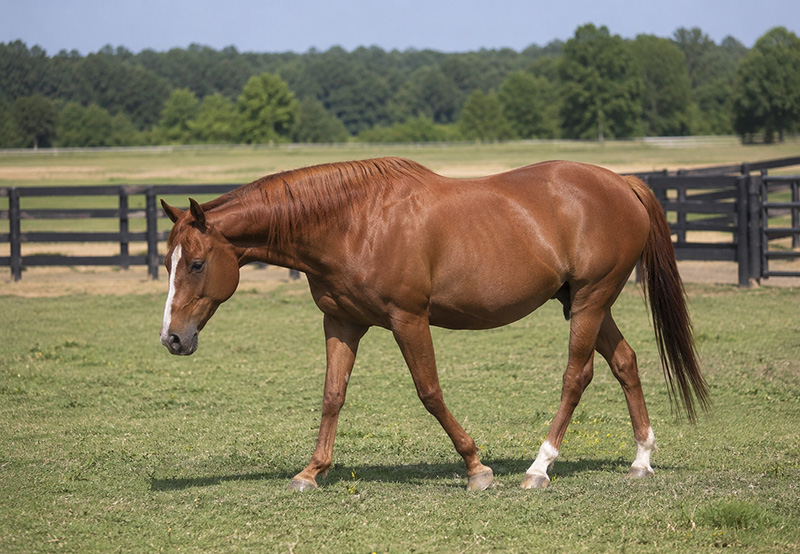
If your setup limits turnout, get creative. Spread hay in several piles so he has to travel between them. Put water at the far end. Hand walk. Ride. Movement is the whole game.
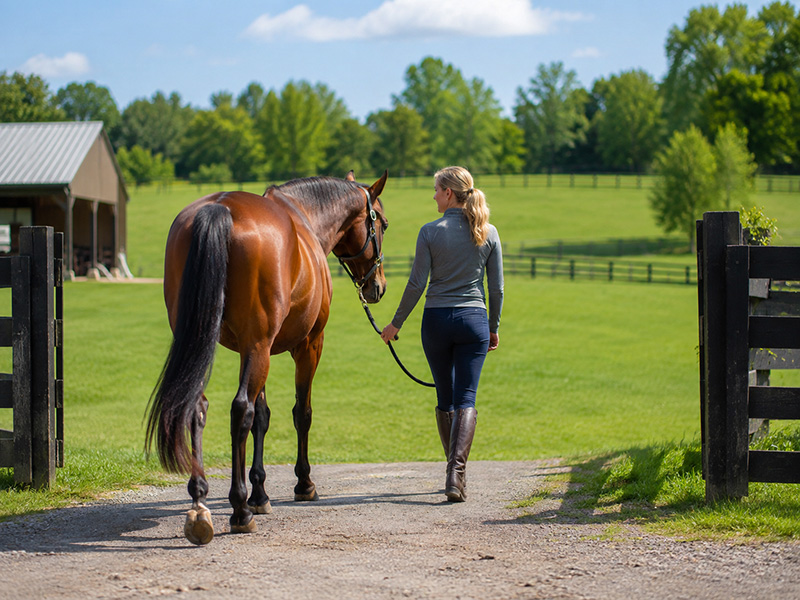 Manage the ground he stands on. Constant wet softens the foot and lets bacteria in. Thrush is the most common hoof problem there is, and the main culprit is an oxygen hating bacteria that thrives in a deep frog cleft packed with mud and manure. It cannot survive where air reaches. That is your whole prevention strategy right there. Clean feet, dry footing, and a hoof pick used often enough that the cleft stays open.
Constant dry is its own problem. Cracks in a dry foot are doors, and organisms walk right through them. Down here in Texas we get both extremes in the same year, sometimes the same month.
Stay on schedule.
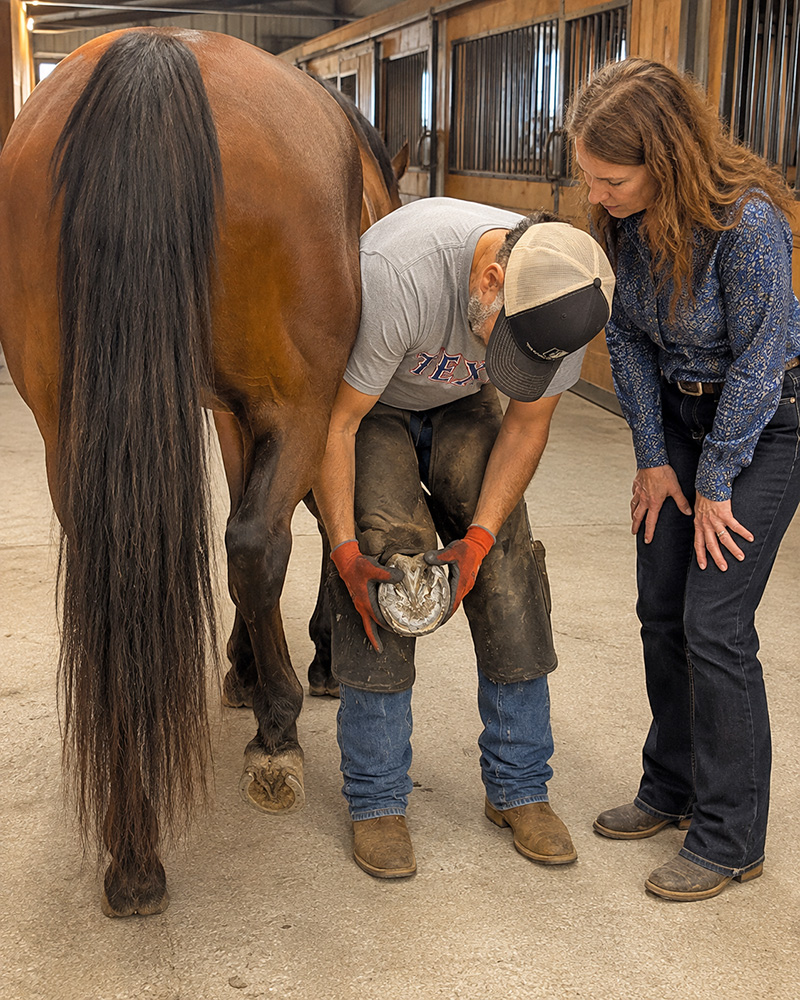
One study found that eighty five percent of horses had at least one hoof issue turn up at a routine trim. 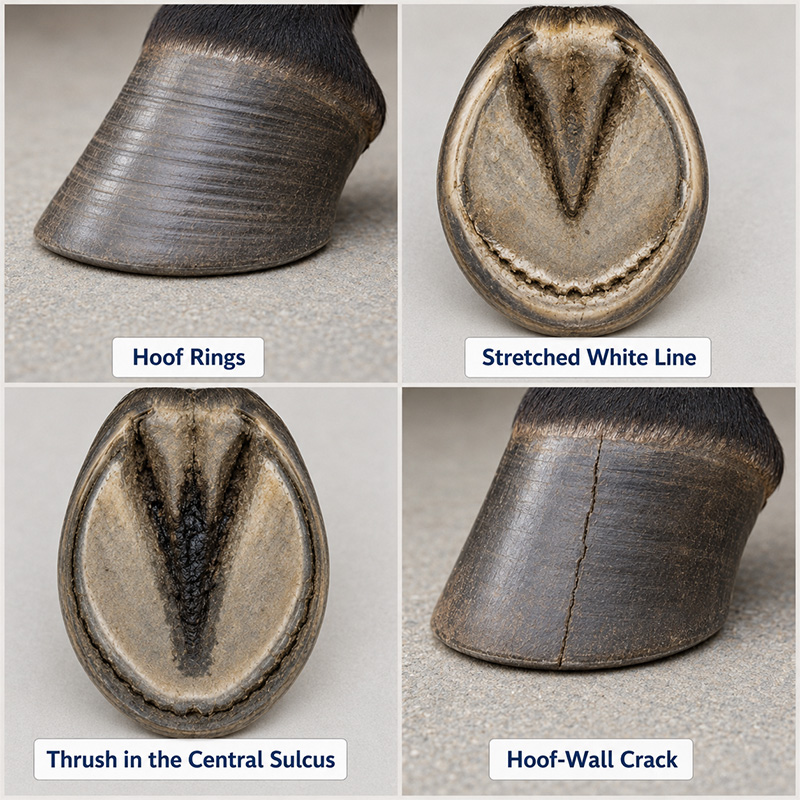 Not lame horses. Routine trims. Most of what your farrier catches is something you would never have seen.
And if you want a number that will make you look at your horse differently, here it is. In a study of ninety racehorses examined after death, more than ninety seven percent had underrun heels to some degree. Low, collapsed heels are the most common hoof conformation problem there is, in front feet and hind. It is nearly universal, and most owners have no idea their horse has it.
Feed the foot, and be patient about it. Nutrition is where owners spend the most money and get the least honest information.
Here is what the research actually supports. Biotin, a B vitamin, at fifteen to twenty milligrams a day. That is the range studies have used. The longest trial on record ran three years at twenty milligrams a day and produced measurably stronger horn and a healthier white line. That is the dose the research used, which is why I am comfortable pointing you to it. Plenty of products on the shelf come in under fifteen. A few go well past twenty, which buys you nothing.
The minerals matter more than people realize. Horses on diets short in zinc and copper turned up more often with white line disease. Too much selenium causes trouble too. Balance beats piling on.
Now the honest part. Biotin only affects new growth. It cannot repair horn that is already damaged. Studies took six months to show a visible difference and nine months to show a statistically solid one. If somebody promises you results in two weeks, they do not understand how a hoof grows. Go back and read the growth clock again.
Shoes or barefoot?
I am not going to hand you a rule, because there isn't one.
What the research shows is modest and worth knowing. Over a seven week cycle, hoof angle went down slightly on shod horses and up slightly on barefoot ones. Another study found shod horses developed a thinner pad of tissue at the back of the foot over about five months. That fits with everything above about the back of the foot needing to be loaded to stay strong.
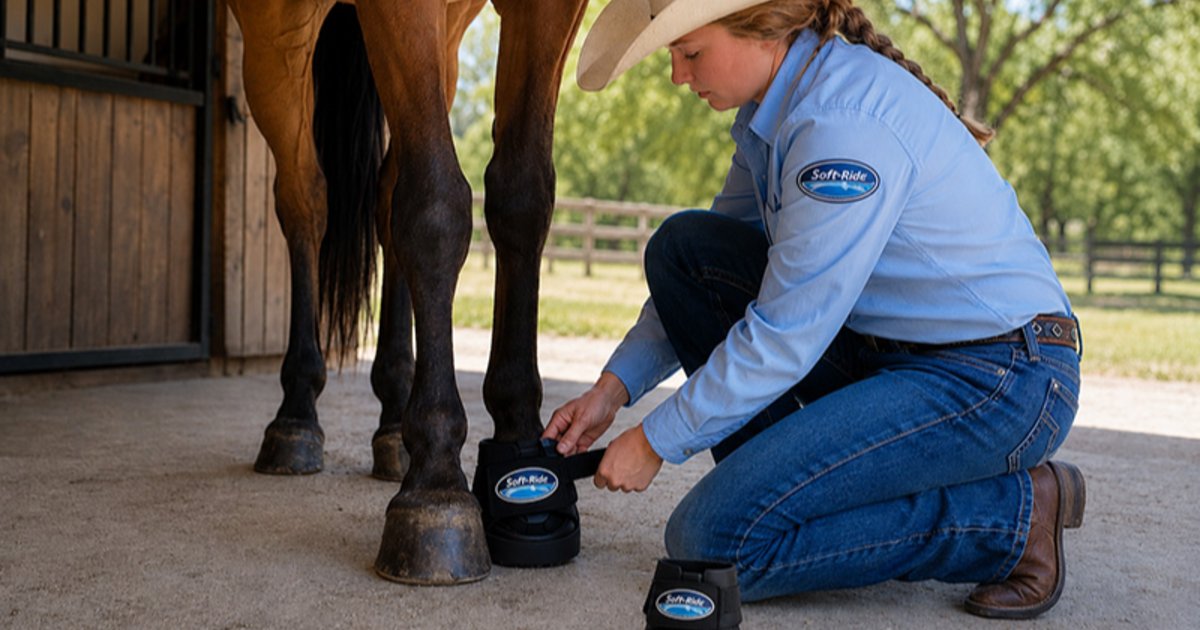
But most of these studies are small. Many look only at the walk. And a horse with a real conformation problem, or one working on ground that eats feet, may genuinely need protection. Hoof boots split the difference for a lot of people.
The right answer depends on your horse, your ground, and your work. Talk to a farrier you trust and be honest about all three.
What to watch for
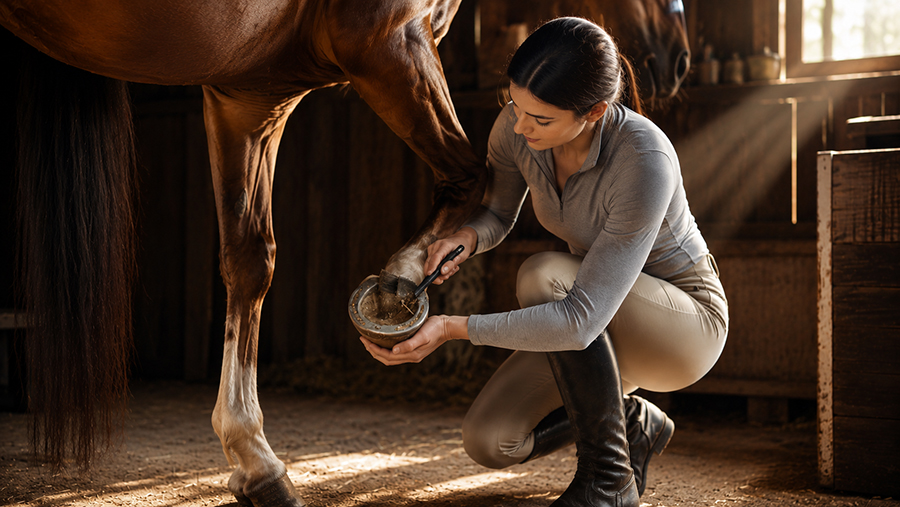
Pick out the feet, and while you are down there, look. Rings on the hoof wall that were not there last month. A white line that is stretching or crumbling at the toe. A frog that has gotten narrow and soft instead of wide and firm. Black gunk and a smell that turns your head. Heat. A digital pulse you can feel at the fetlock when you normally cannot.
A horse landing toe first instead of heel first is telling you something hurts.
None of that means panic. All of it means make a call.
The point
Your horse is growing a new foot right now. Not next spring. Right now, this month, at the coronet band, a quarter inch at a time.
Everything you do this week shows up in that horn. The turnout, the footing, the trim schedule, the feed. You will not see it for months. But it is happening whether you pay attention or not.
Might as well make it good.