

Horse Breaking vs. Horse Training by Ron Meredith
Breaking a horse means fighting him or holding him hostage until he gives in or gives up—no real communication takes place. Training, by contrast, is systematic and horse logical: because horses can only connect a cause-and-effect sequence of about two steps, each new lesson must flow naturally from the one just learned. Real training is about mental control, not strength—developing the horse’s attitudes until he enjoys playing the same games you do.
Many people who are training horses will ask them questions that the horse has no way of understanding or answering.
Then they will fight with the horse or hold him hostage until the horse either gives in or gives up. The so-called trainer walks away feeling like he or she has won the game because the horse finally did what they wanted him to do. But no actual communication took place. What happened was "breaking" not training.
When you break a horse rather than train it, you get a trained flea. What do I mean by that? Well, you start training fleas by putting them in a jar. You know they are going to jump and if they do that, they'll jump out of the jar. So you put a lid on the jar. Now when the fleas jump, they hit their heads on the lid. Being smart fleas, they learn not to jump so high. Now you can take the lid off and they won't jump out. Voila! You have trained your fleas not to jump so high. That is exactly what you do when you "break" a horse.
A lot of people train horses this way. They condition the
horse to random tasks one by one. They do not do it in a systematic way that is logical to the horse. Remember that horses have very simple minds. They can only connect a cause-and-effect sequence of about two steps. To be horse logical, the next thing you teach a horse can never be more than one step away from the thing you just taught him and not more than two steps away from the thing before that.
It should be easy for the horse to understand how to do the next thing you want to teach him because it should flow naturally from the last thing he learned. It should be horse logical for him to behave in a certain pattern. He shouldn't have to guess about what you want until he accidentally gets it right. He shouldn't have to stress himself mentally or physically until he learns to do the "correct" thing by avoiding the "incorrect" thing.
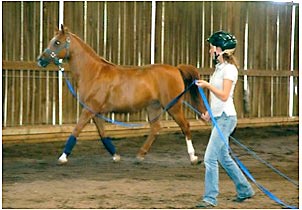
At Meredith Manor we teach our horses a "language" based on their body position, relative to ours.
The horse first learns on the ground that certain body language on our part calls for him to be in a certain position relative to our own. With this as a basis for understanding, we gradually shift the concepts of mirroring the trainer and working in a corridor of aids from ground work to under saddle work and eventually to whatever game we ultimately want the horse to play.
Horse showing is a game a lot of people like to play with their horses. Someone defines some rules, prescribes a set of mannerisms, and the guys whose horses come the closest to those prescribed mannerisms are the winners. When it gets too easy to win, the somebodies change the rules so it takes something different to win the game. And everybody's off again. Horse show rules are no more logical than the rules we make up for football or basketball. They're all just artificial rules that can get changed at any time.
We teach our horses to perform according to these prescribed mannerisms to make them competitive at the horse show game. When you are training, it is important to remember that producing a prescribed mannerism should not be your highest goal. The way you mentally and physically gymnasticize the horse is the real game. The horse show mannerisms are only a way for you to demonstrate that you and your horse are physically and mentally prepared.
If you've only learned to duplicate the mannerisms, you and your horse are going to be left behind when the somebodies change the rules. If your horse was properly trained, horselogically gymnasticized both mentally and physically, you'll be able to adjust to the new game rules. As your horse's trainer, you mentally take command of the horse's muscle and strength and use it to play whatever the game you want to play with your horse.
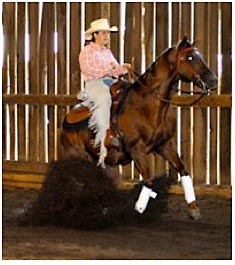
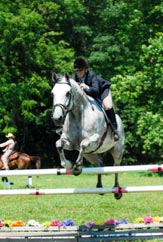
Whether it's polo, cutting, reining, jumping, pole bending, barrel racing or whatever other game you're playing, the real game is the interaction between you and the horse. It is about mental, not physical control. And that control has to be methodical and horse logical for you and the horse to play the game as well as you can.
Training horses is about developing the horse's mental attitudes to the point where they enjoy playing the same games that you do. That means taking mental control of your horse. The controlling factor is not strength, not size, not speed. The horse is ten times stronger, bigger and faster than we are.
Let other people be the ones who jerk on horses and slap them around or hassle them until they've "learned" something. You want to be the one who can communicate with the horse using horse logical emotions, horse logical shapes and change them from what they aren't into what they can be by using what they are to start with. Training is about what to do rather than about what not to do.
Meredith Manor International Equestrian Centre
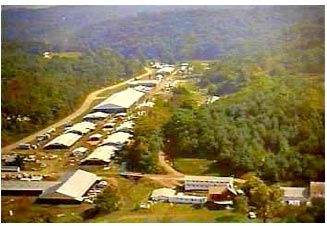
Meredith Manor is an Equestrian Career College dedicated entirely to producing professional riders, trainers, instructors, and farriers for the horse industry. All programs and courses are designed specifically to prepare you for a successful equine career. Our programs range in length from 3 to 18 months, and our students spend 6 hours a day in primarily hands-on, skill based classes with additional time spent in the barns and with the horses. Students don't have to excel in academic, classroom based classes to be successful in our programs, but they must have a passion for horses and a dedication to having a successful equestrian career.
Meredith Manor's name and reputation are known by serious horse people throughout the world. Students from the ages of seventeen to sixty-three have attended the School from every state and many foreign countries. Meredith Manor strives to provide a climate of learning in which each student may identify and accomplish his or her goals. We have continuously researched the horse industry, designed the facilities, and developed the educational programs that will give our students the training, experience, and confidence needed to have successful, life-long careers with horses!
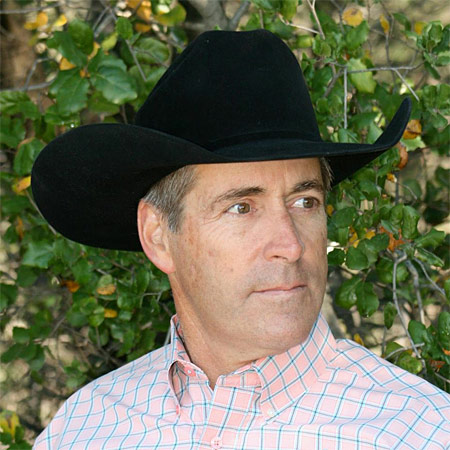
Ron Meredith has over forty years' experience as president of the school and has developed it from its humble beginnings of six students in 1963 to its current world class level. Because of his outstanding contributions to the horse industry and specifically to equestrian education, he has received a number of distinctive recognitions including an Honorary Doctorate of Equestrian Studies. Dr. Meredith has held seven AHSA judges' cards and has trained top level horses and riders in the cutting and reining world.