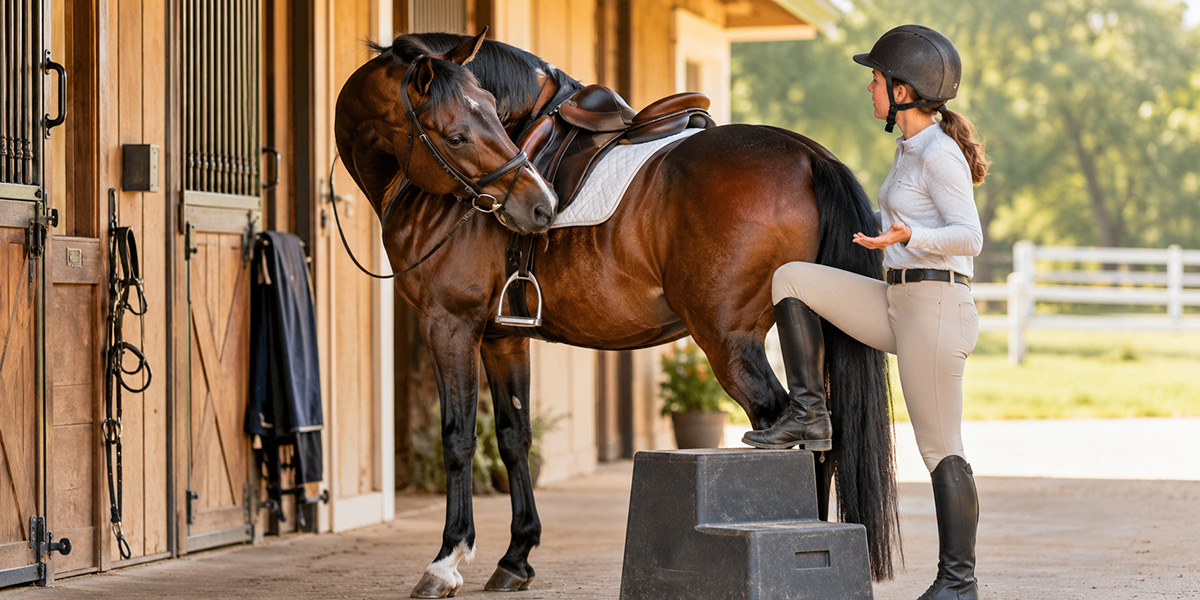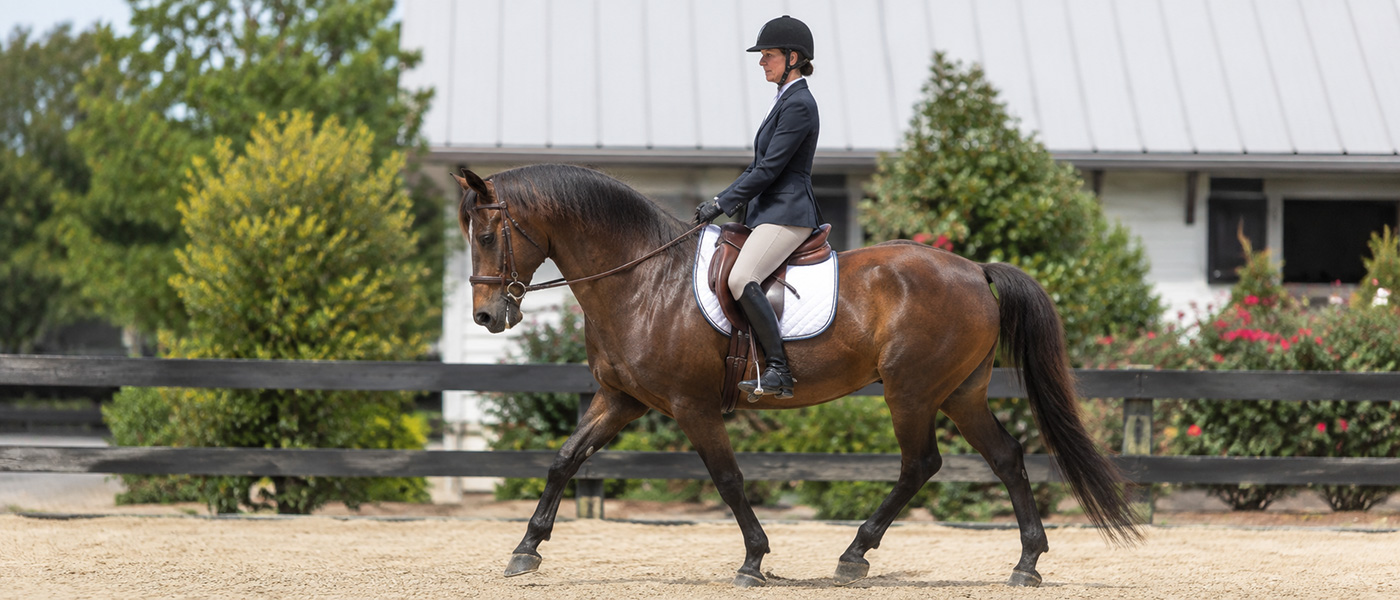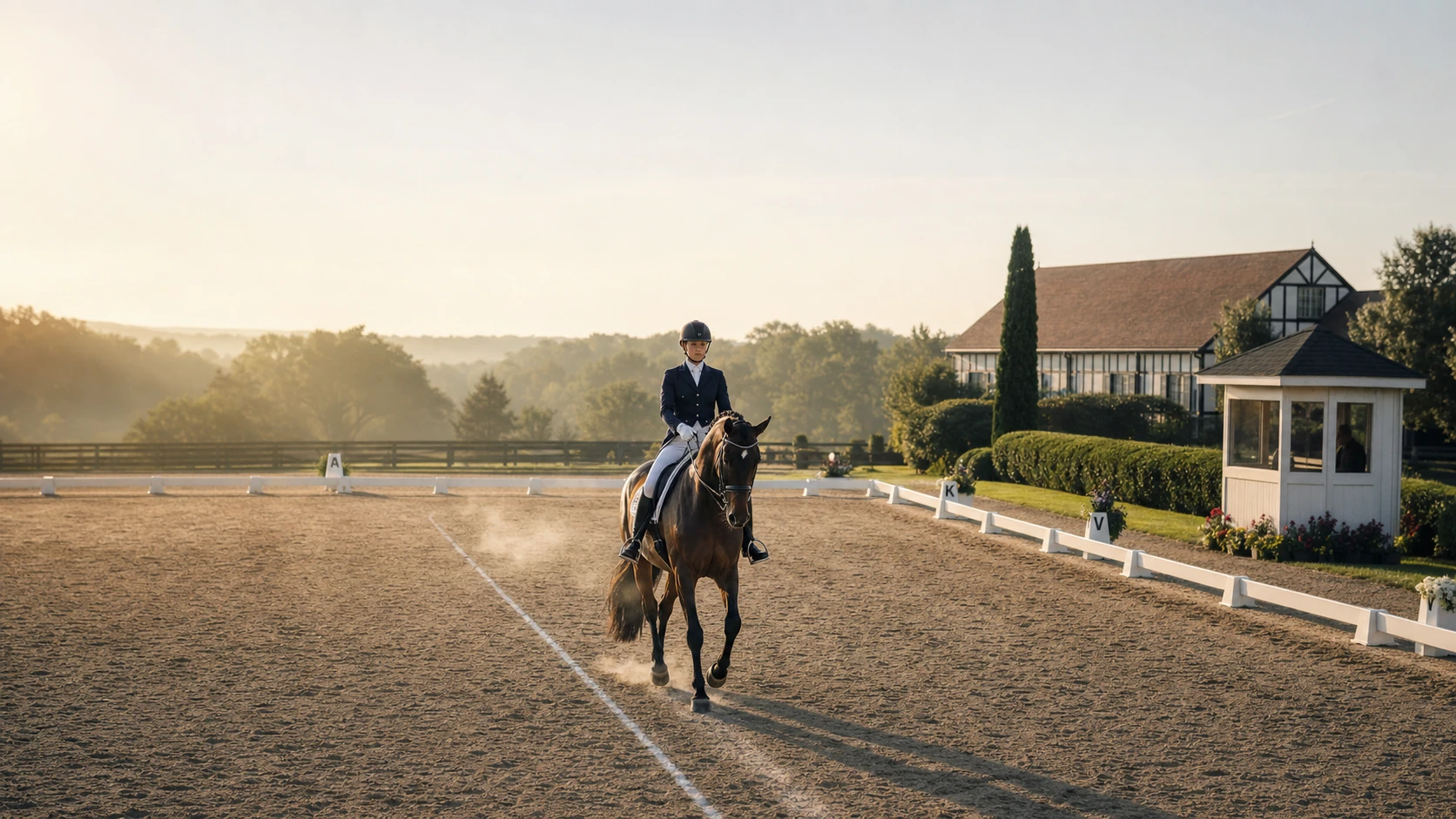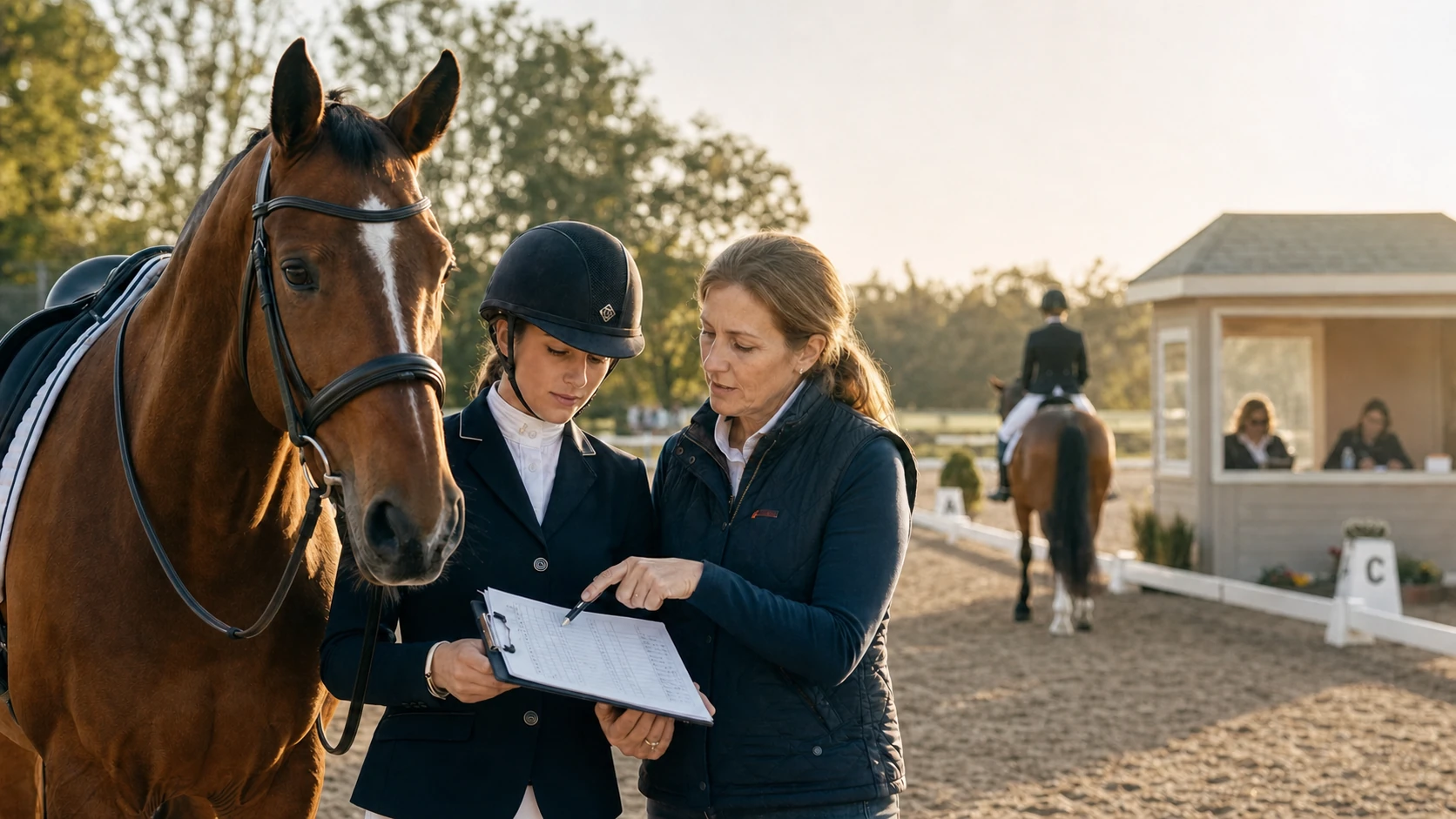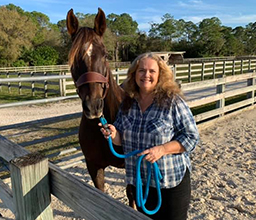



Dressage turnout should look composed before the judge ever notices the details. The best dressage turnout has restraint. The horse is clean, comfortable, and correctly presented. The rider looks prepared, not costumed. The tack is legal, fitted, and cared for. Nothing shouts for attention at the expense of the test.
This matters for adults and teens alike because presentation changes how the rider feels walking into the ring. It is easier to breathe when every detail has already been handled without fuss.
The Bridleway rule: In dressage, polished turnout should make the training easier to see, not compete with it.
Start with rules, then choose the look
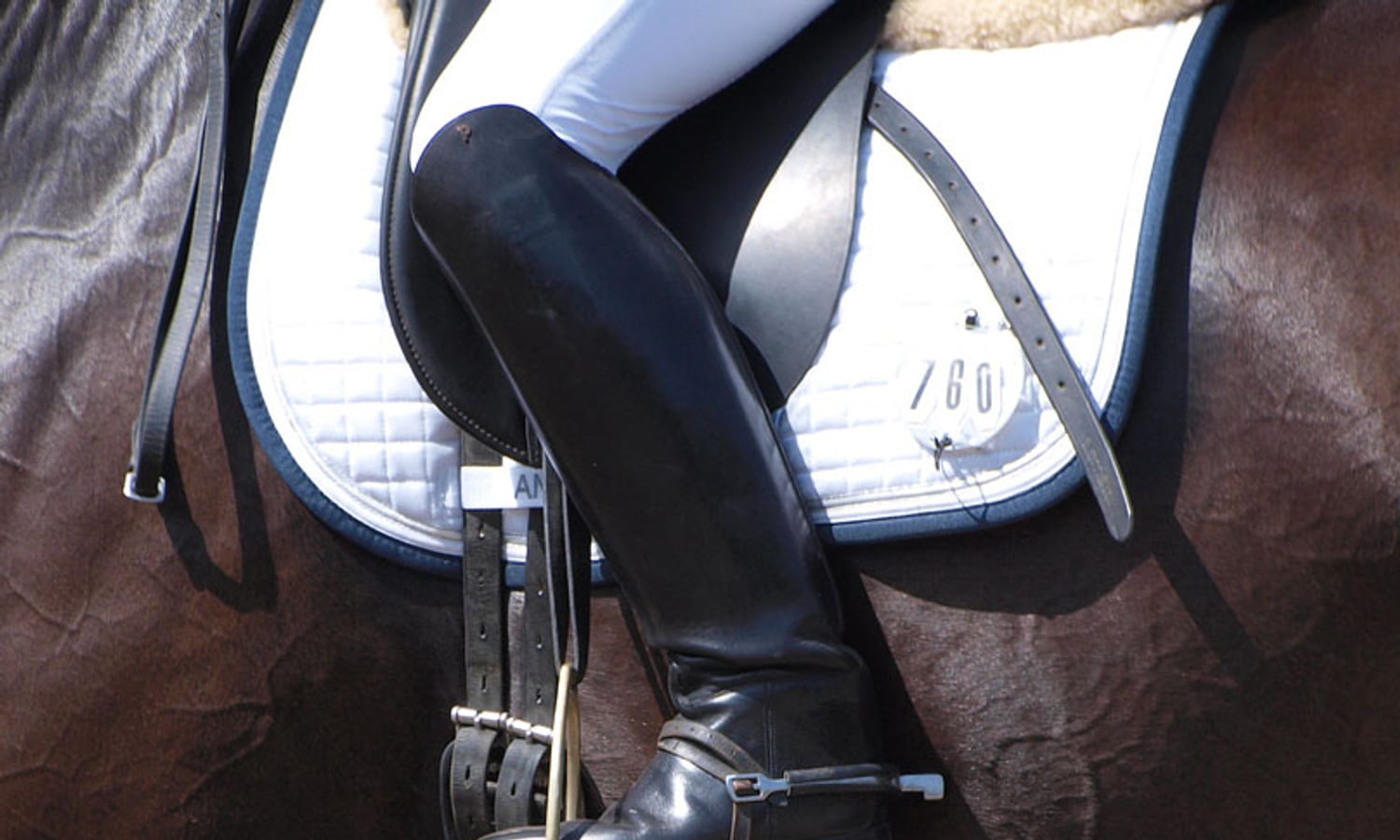
Dressage attire and equipment rules can change, and they can differ by level, organization, and show type. Before buying, check the current rulebook for coats, helmets, bits, pads, numbers, spurs, and accessories.
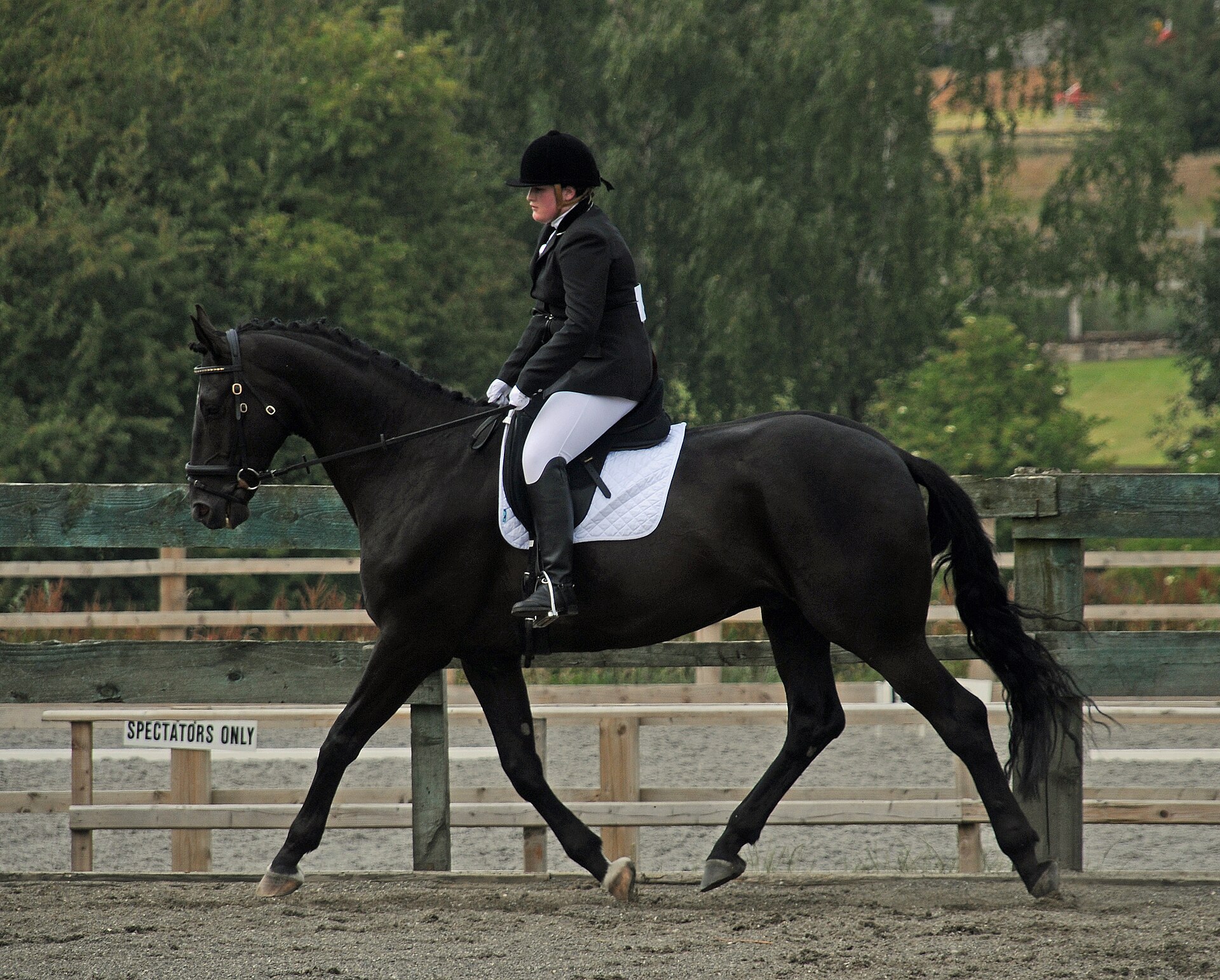
Once legality is clear, choose a look that supports confidence. A well-fitting coat, clean boots, secure hair, and gloves that feel good on the reins matter more than chasing every fashion cue.
Legal first.
Do not rely on a social-media photo to decide what is legal in the ring. Use the current show rules and trainer guidance.
The horse should look cared for, not lacquered
Clean coat, tidy mane, comfortable bridle, polished hooves if appropriate, and a white or discipline-appropriate pad create the familiar dressage picture. The horse should also be able to move, sweat, and focus without slippery product or irritated skin.
Braids should suit the mane, neck, level, and barn standard. A teen rider learning to braid is learning patience and horse handling, not merely decoration.
Show shine
Clean, conditioned, brushed, legal, and comfortable enough for the horse to work normally.
Overdone shine
Slippery reins, irritated skin, heavy product, or a rider more focused on gloss than the test.
Build a ring-ready order
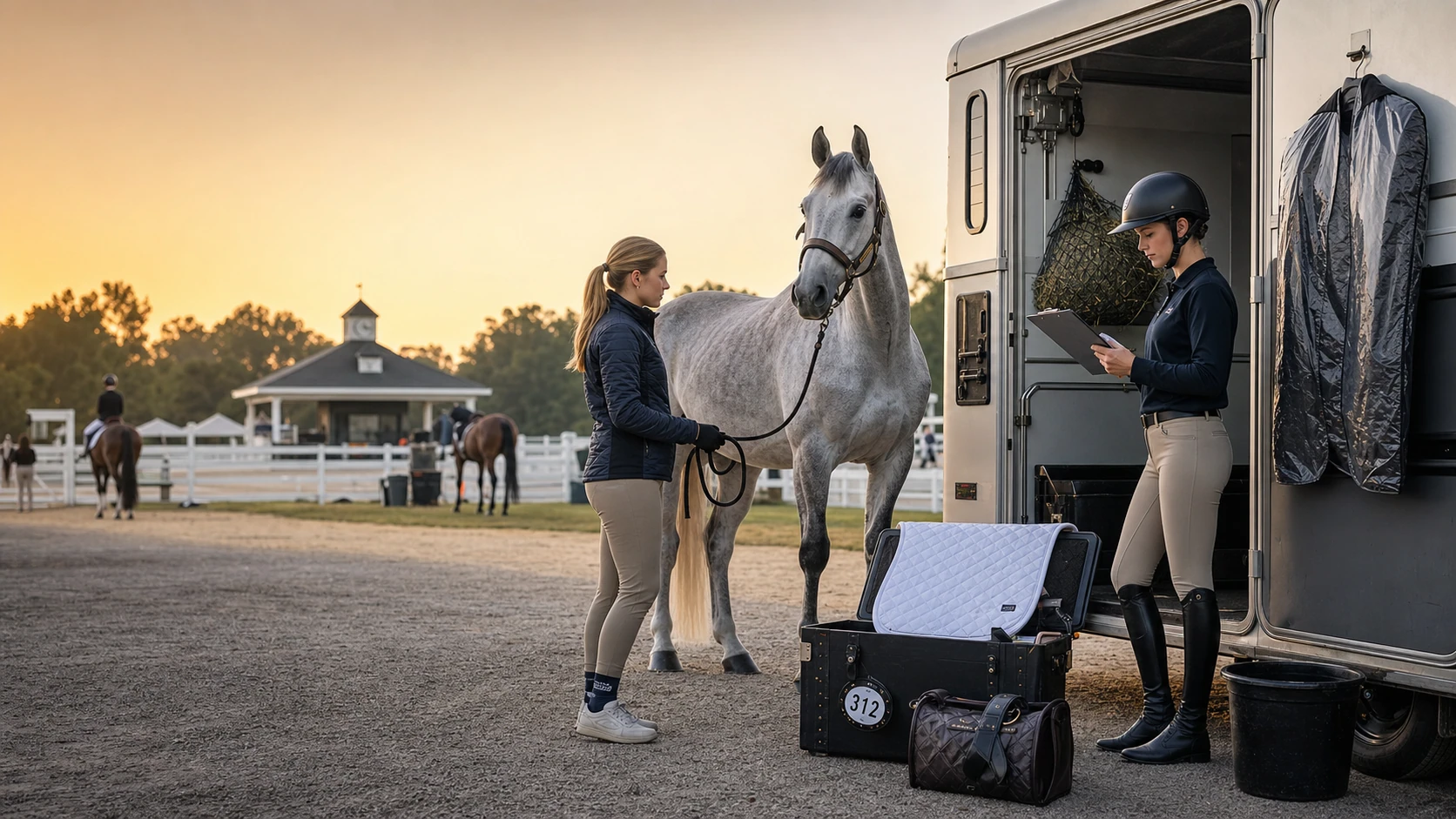
Show turnout gets easier when it has an order: bathe or deep groom, clean tack, prep pads and rider clothes, braid with enough time, final wipe, warm-up, then one last check before the ring.
A young rider should not be discovering a missing glove or dirty girth when the ride time is close. The point of elegance is calm.
| Turnout area | Best standard | Common miss |
|---|---|---|
| Rider | Coat fits, helmet secure, boots clean, gloves useful. | Beautiful outfit with uncomfortable gloves or loose hair. |
| Horse | Clean coat, tidy mane, comfortable tack, calm skin. | Too much product or last-minute harsh scrubbing. |
| Tack | Legal, clean, correctly adjusted, simple to inspect. | New item used without a schooling test. |
| Pad | Clean, well-fitting, discipline-appropriate. | Pretty pad that slips or bunches under saddle. |
Teen rider note: Learning to do one part of turnout well - boots, braids, tack cleaning, or packing - builds ownership. Adults can supervise without doing everything.
What riders are asking before they buy, show, or change the routine
The useful question is often more ordinary than the polished product copy. Riders and parents want to know what will help the horse feel better, what will keep the rider safer, what is worth paying for, and what can wait. The better buying habit is to translate each worry into a check you can repeat at the barn.
Keep these questions open
- What does good dressage turnout include?
- Should dressage riders always braid?
- How do I know if my show coat is appropriate?
- Can grooming products cause problems?
Quiet polish has confidence in it
A polished dressage picture says the rider respects the horse, the judge, the sport, and their own preparation. It does not have to be expensive to be excellent.
The useful standard is simple: clean, legal, comfortable, organized, and calm enough that the rider can think about rhythm and accuracy instead of the missing hairnet.
What judges should not notice
Rubs, loose numbers, dirty tack, flapping hair, slipping pads, heavy product, or a rider visibly distracted by presentation details.
What to ask the professional before you spend more money
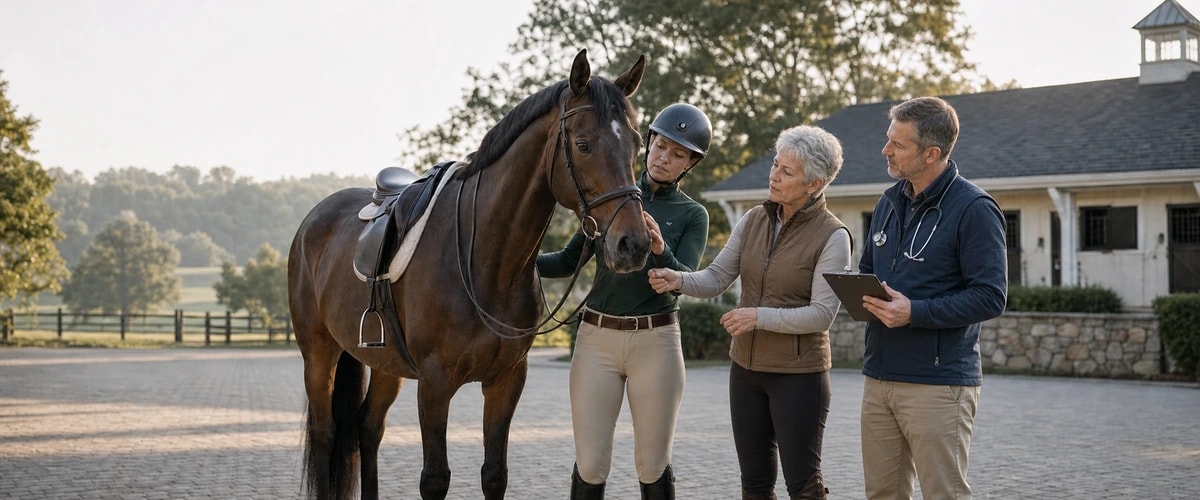
A polished English-riding decision still benefits from a second set of expert eyes. Before buying the upgraded version, changing equipment, adding a new product, or blaming the horse, bring a clean question to the trainer, veterinarian, fitter, farrier, barn manager, or product specialist.
| Ask | Why it helps |
|---|---|
| What problem are we solving first? | It separates comfort, safety, training, rule, and presentation questions. |
| What evidence would change the plan? | It keeps the decision from becoming brand loyalty or barn rumor. |
| How will we know this worked? | It turns the purchase or routine into an observable horse-care test. |
How to use this guide this week
Pick one checkpoint from this guide and use it before or after three rides this week. Write down what you saw, what the horse felt like, and whether the answer changed after a lesson, a harder school, or a show-day simulation. Good horsepeople do not need perfect guesses. They need repeatable observations.
Simple record: Keep a tiny note in your phone: date, horse, work, what changed, and what you will ask your trainer or professional next. Patterns are where ordinary barn notes become useful horsemanship.
Research note: This Bridleway guide was shaped from USEF Rulebook, Horse & Hound, FEI horse-sport education, r/Equestrian reader discussions. Forum and Reddit discussions were used only to understand common rider questions, not as veterinary, legal, or rule authority.