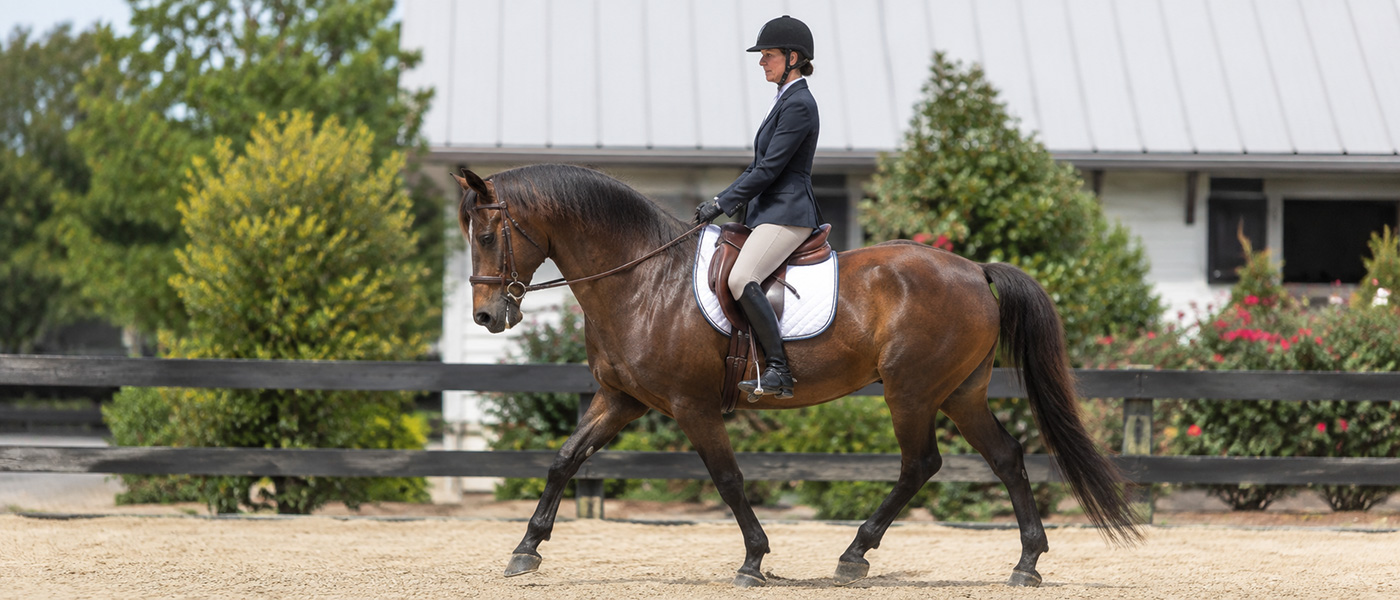


A first dressage show feels mysterious because ordinary barn jobs arrive in an unfamiliar order under a clock. The antidote is not bravado. It is a written timeline: when to park, who checks in, when the horse walks, when you tack, where the steward wants you, what the bell means, and who takes care of the horse while somebody goes hunting for the score sheet.
This guide gives you that operating plan. It does not promise a ribbon, perfect weather, or a horse who has read the same schedule. It gives you enough structure that one change does not collapse the whole morning.
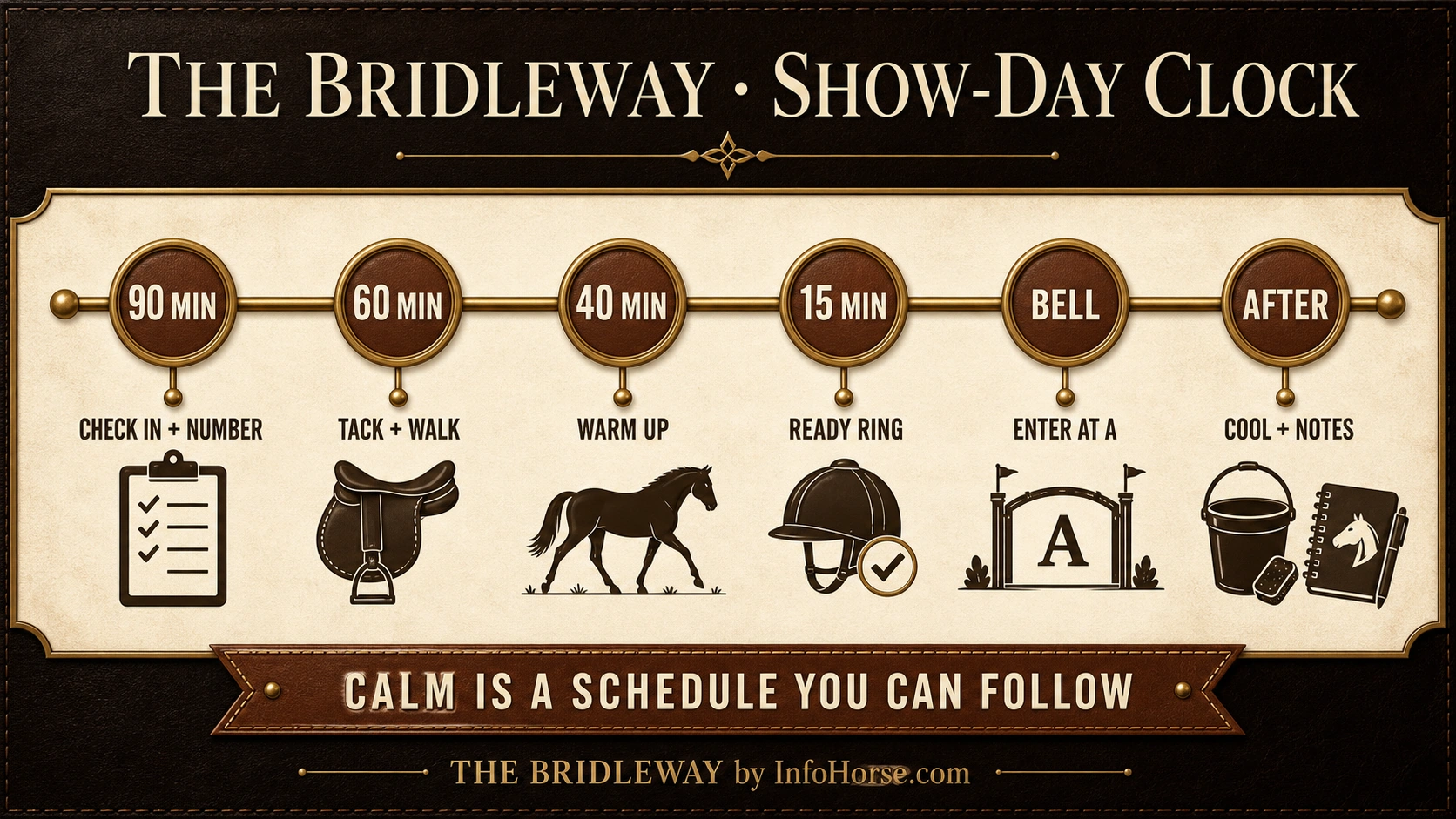
My favorite definition of show-day calm is not “never nervous.” Calm is knowing the next useful job. Check the horse. Find the office. Put on the number. Walk. Warm up. Report. Breathe. Enter at A.
The Bridleway rule: Build the schedule backward from the ride time, add a buffer, and finish each horse-care job before starting the next rider worry.
Seven days out: make the day legal before making it pretty
Open the entry confirmation and prize list. Confirm the show date, venue entrance, class, test edition, ring size if stated, ride time or posting method, stabling, parking, office hours, warm-up access, caller policy, equipment requirements, and contact for questions. Then open the current rulebook for the governing organization.
Do not assume a schooling show, USEF/USDF-recognized show, British Dressage competition, Pony Club rally, and local league use identical procedures. “Dressage rules” is not a single document floating above every arena. Requirements can change with federation, country, level, championship status, age division, and effective date.
- Use the current test. Print a clean legal copy and compare it with the organizer’s class listing.
- Check memberships and registrations. Know what is required for horse, rider, owner, and class.
- Confirm health paperwork. Vaccination, Coggins, passport, or movement-document requirements depend on location and event.
- Audit equipment. Bit, noseband, saddle, pad, whip, spurs, boots, helmet, coat, gloves, and number rules may differ.
- Check medications. Never guess about permitted substances, withdrawal, or documentation; use the governing body and veterinarian.
If something is unclear, ask the show secretary early and politely. That is considerably cheaper than debating a rule beside the warm-up ring with ten minutes left.
Three days out: run the show at home
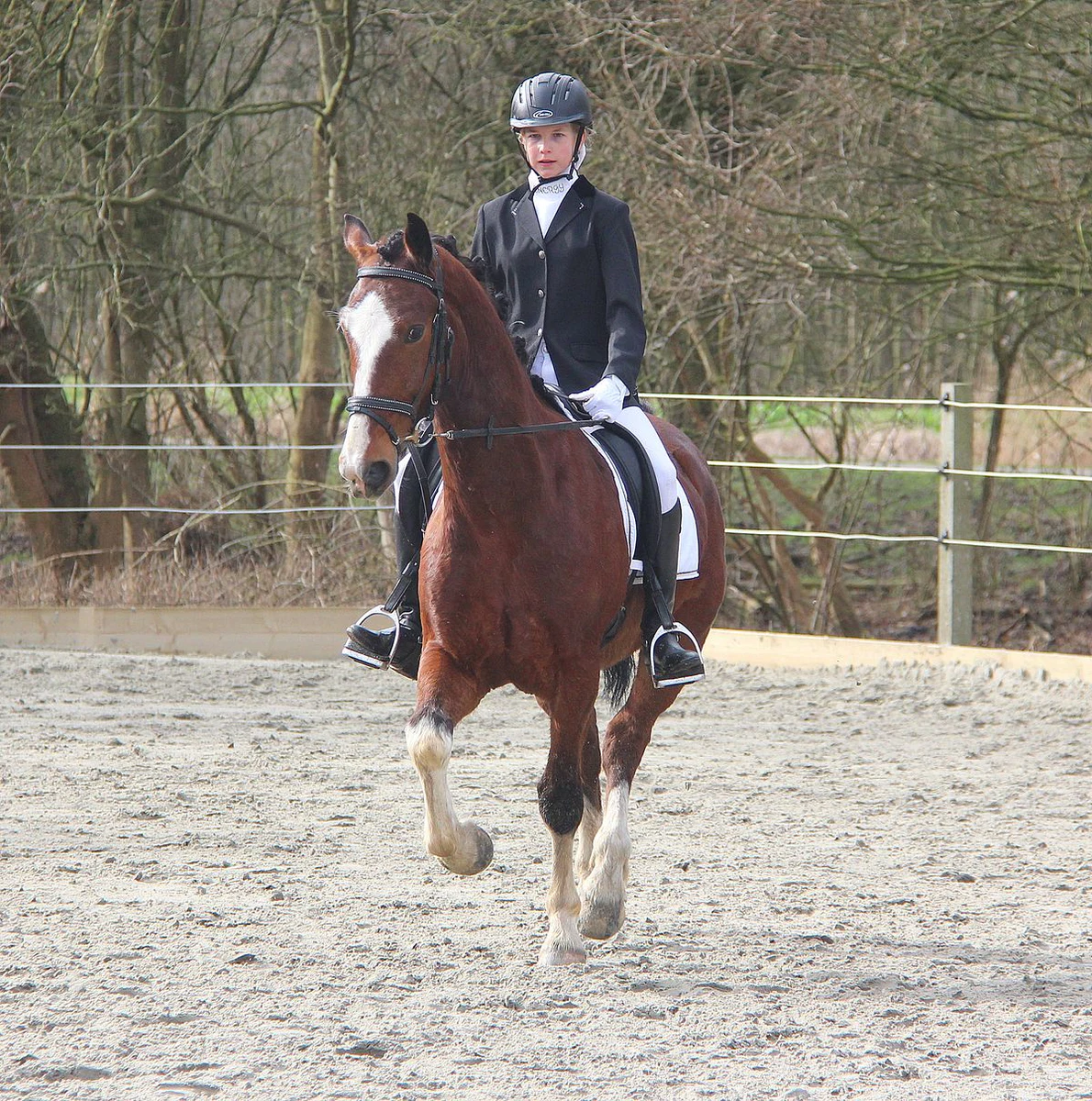
Ride a mock day without exhausting the horse. Put on the legal tack. Have the planned caller read from the same place and at the same pace they will use. Ring a bell. Practice riding around the outside, hearing the signal, establishing the entry gait, entering at A, halting, saluting, and beginning the first movement.
Practice the quiet logistics too. Can you mount in show clothes? Does the jacket allow the shoulder to move? Can the number be attached correctly? Does the helper know how to hold the horse without pulling on the reins? Can the caller pronounce the letters clearly? Is the horse comfortable with a camera, umbrella, flower box, or judge-shaped table?
Do not install new tack, feed, supplements, calming products, grooming chemicals, boots, or a heroic warm-up plan. Show week rewards familiarity. If a legal or safety problem requires a change, make it with the appropriate trainer, fitter, veterinarian, or official—not because a social post called an item essential.
The night before: pack by job, not by panic
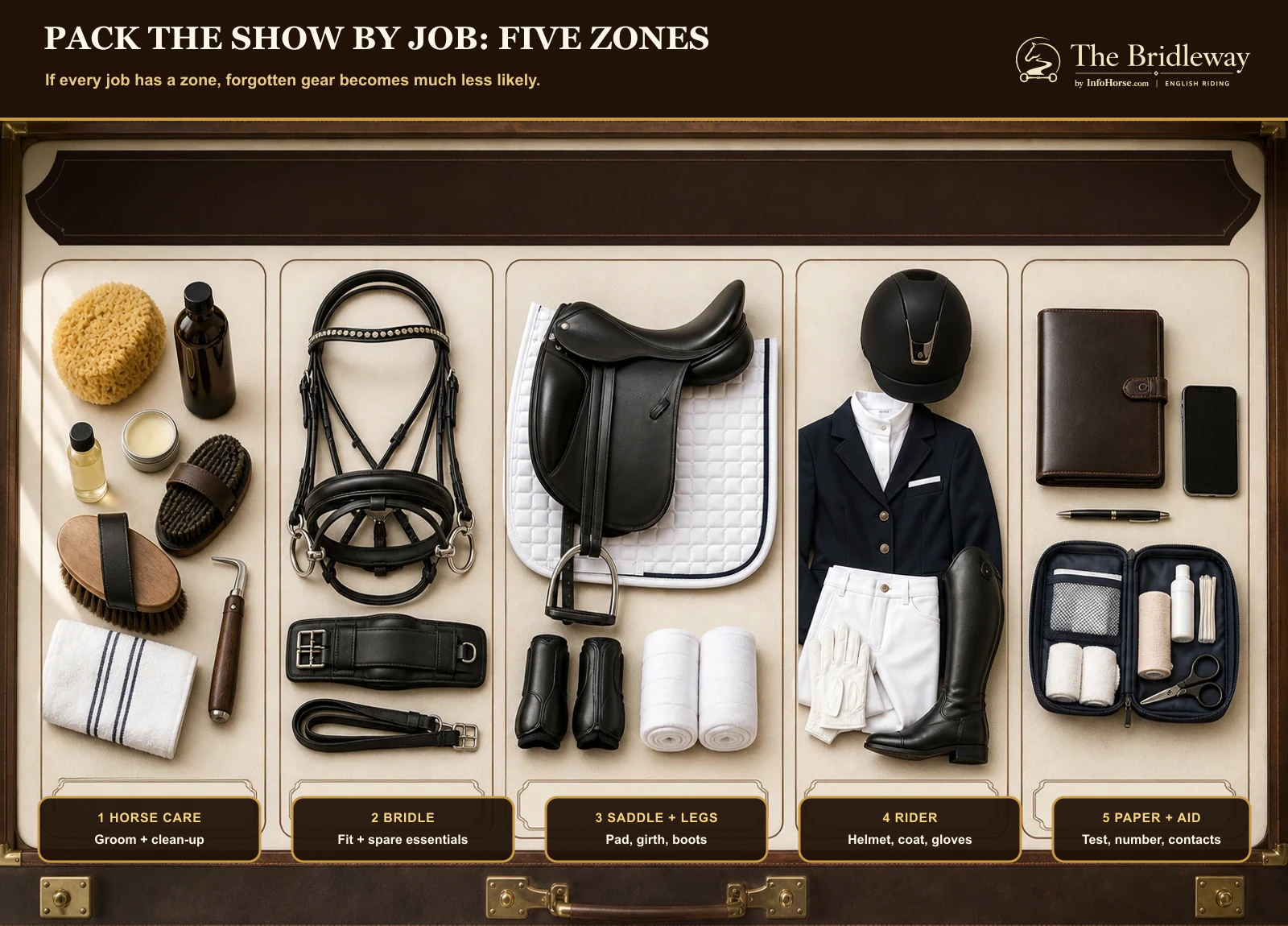
Use containers or zones that answer a job. A single heap called “show stuff” forces somebody to unload the trailer to find one safety pin.
| Zone | Core contents | Final check |
|---|---|---|
| Show office | Confirmation, IDs, memberships, health records, payment proof, emergency contacts | Accepted original/digital format and phone battery |
| Horse | Normal feed and forage, water setup, halter and lead, grooming, manure tools, weather layers | Nothing new; quantities plus delay margin |
| Tack | Legal bridle/bit, saddle, girth, pad, stirrups, approved extras, cleaning cloth | Leather, stitching, fasteners, fit, rule compliance |
| Rider | Helmet, boots, breeches, shirt, coat, gloves, belt, rain and temperature layers | All tried mounted; backup essentials packed |
| Aftercare | Cooler/sheet as weather requires, towels, water, basic first aid, leg-care routine if normally used | Know when abnormal recovery needs help |
| Test | Current printed test, ride time, venue map, warm-up card, caller copy, pens | Same test and edition for rider and caller |
Load the items needed first where they can be reached first. Put paperwork in the vehicle, not beneath a hay net. Charge phones, but print the ride time and test; rural showgrounds have a sense of humor about reception.
Assign the human jobs
A helper is only helpful when the role is clear. Before leaving, name the jobs:
- Driver and horse lead: owns safe transport, unloading decision, and horse supervision.
- Office runner: checks in, handles documents, collects number, confirms time and ring.
- Clock keeper: gives calm time calls and knows which items can be shortened if delayed.
- Trainer: owns the mounted warm-up decisions where present.
- Caller: holds the correct test and knows whether calling is permitted.
- Aftercare person: can walk, loosen equipment, provide water, or find help while the rider dismounts.
- Camera person: films from an allowed, useful position without distracting horse or officials.
One person can hold several jobs. What matters is that nobody assumes somebody else checked in while everybody photographs the braids.
Arrival: 90 minutes is a planning example, not a commandment
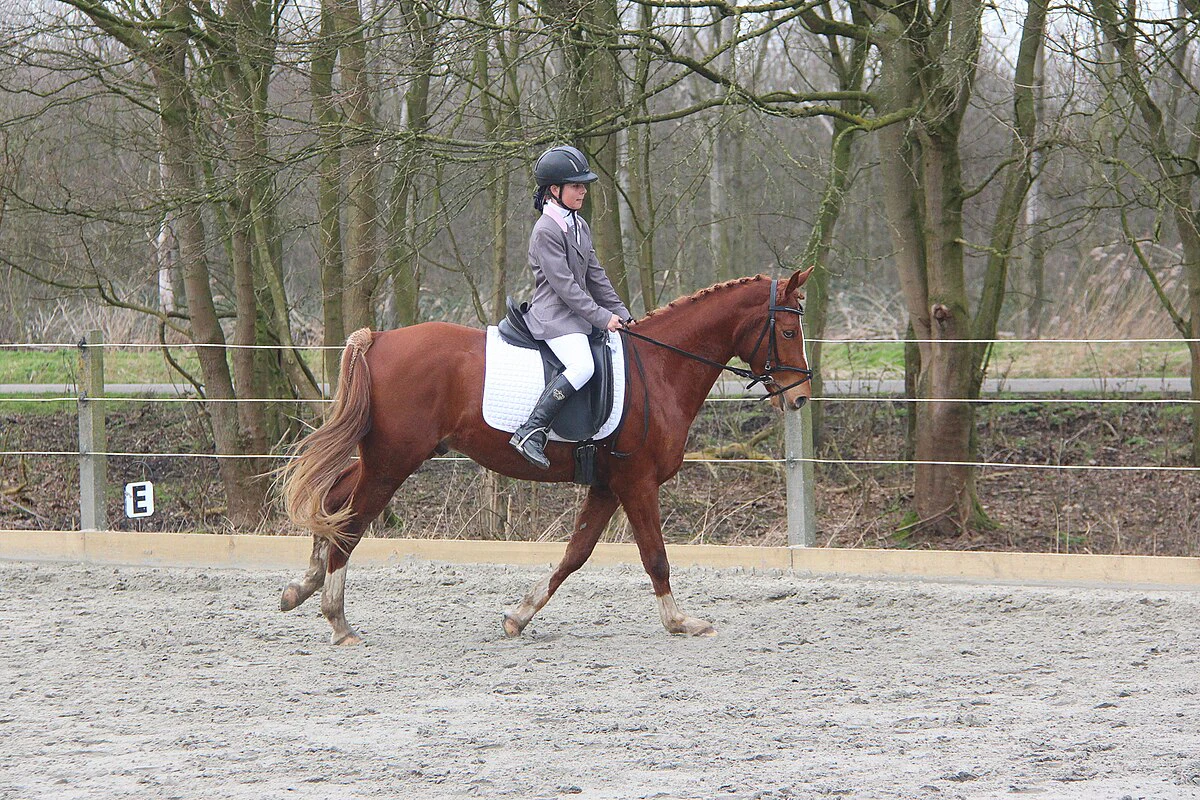
For many first shows, arriving around 90 minutes before the ride gives a workable buffer. A large recognized show, stabling, long parking route, document inspection, or horse who needs more acclimation may require earlier. A local venue five minutes from home may not. Follow organizer instructions and protect the horse from a needlessly long day.
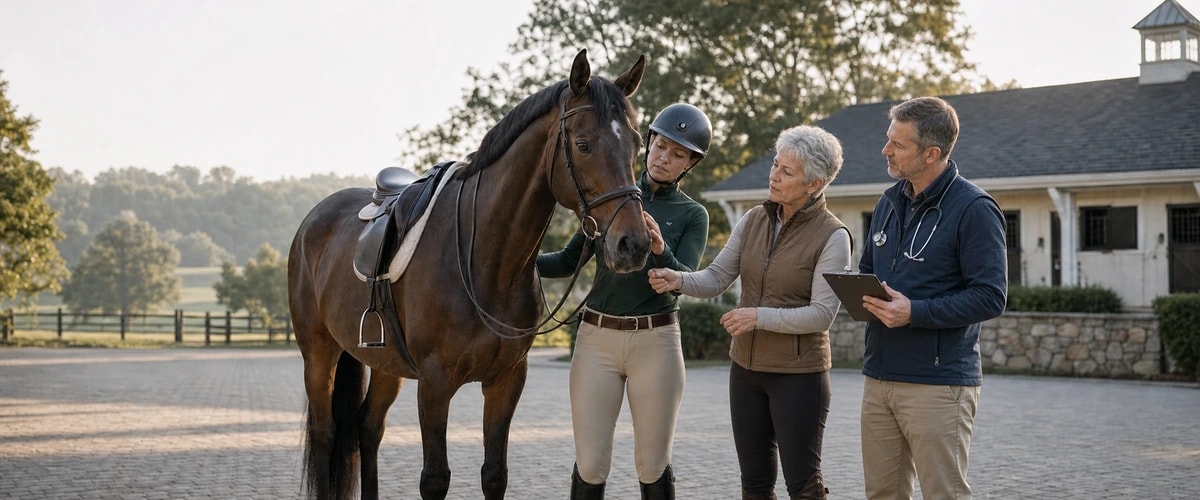
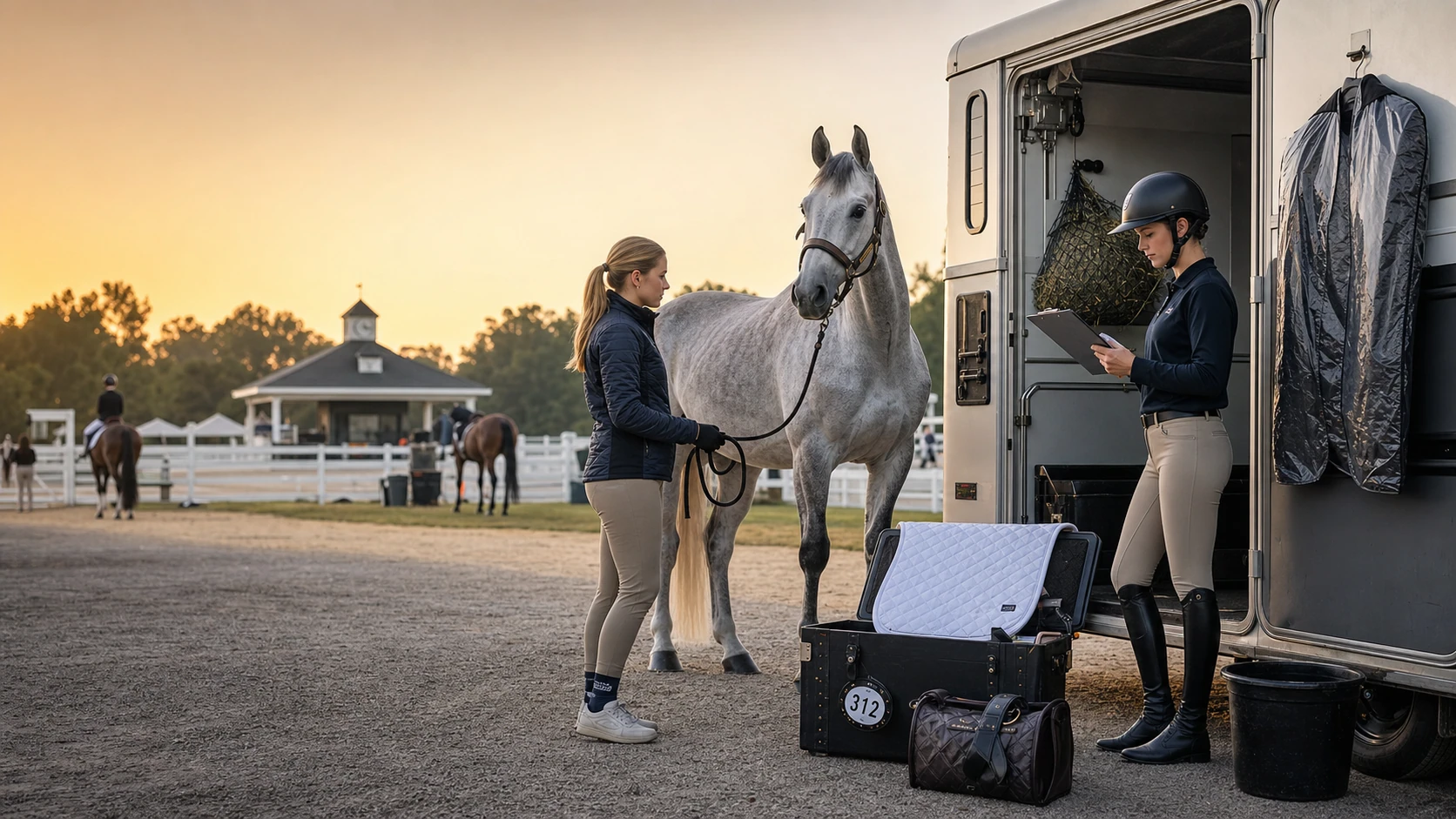
Park where directed. Before unloading, look for traffic, footing, dogs, loose equipment, and the safest horse area. Keep the horse supervised. Assess travel: breathing, sweat, demeanor, soundness, gut sounds if that is part of your normal trained check, and whether the horse wants water or forage according to its routine.
The office runner takes the paperwork and asks three factual questions: Is my ride time unchanged? Which ring and warm-up? Where and when do I report? They return with the number and information, not a tour of every vendor tent.
Current USEF number reminder: 2026 rule materials require the assigned number to be visible on the horse or rider while the horse is being exercised, including ridden work and hand-walking. Check the exact rule and show instruction in force; do not wait for the steward to solve it.
60 minutes out: tack and protect the walk
Begin from the timeline you built at home. Groom with enough care to check the horse, not so much frantic polishing that the horse becomes a moving coat rack for rider nerves. Tack deliberately. Confirm bridle, bit, noseband, pad, girth, stirrups, number, legal boots or wraps for the warm-up, and whether any item must be removed before the test.
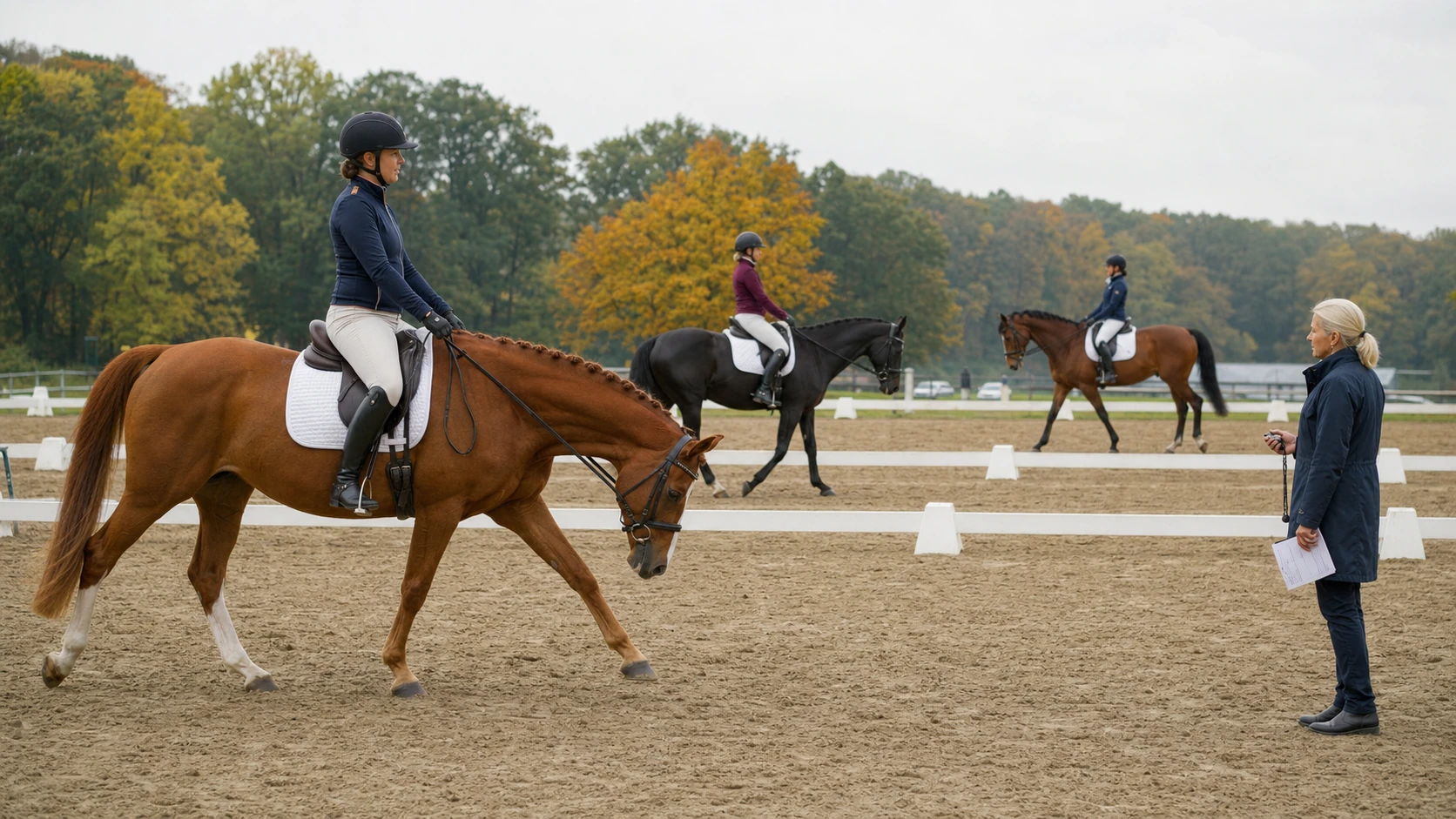
Mount with the planned assistance. Walk. The warm-up clock is not merely “working minutes.” A horse needs time to observe the place and bring the body into work. Use a simple adaptive check: identify whether today’s horse is tense, dull, stiff, or settled, apply the smallest useful solution, confirm the test buttons, and finish with horse left.
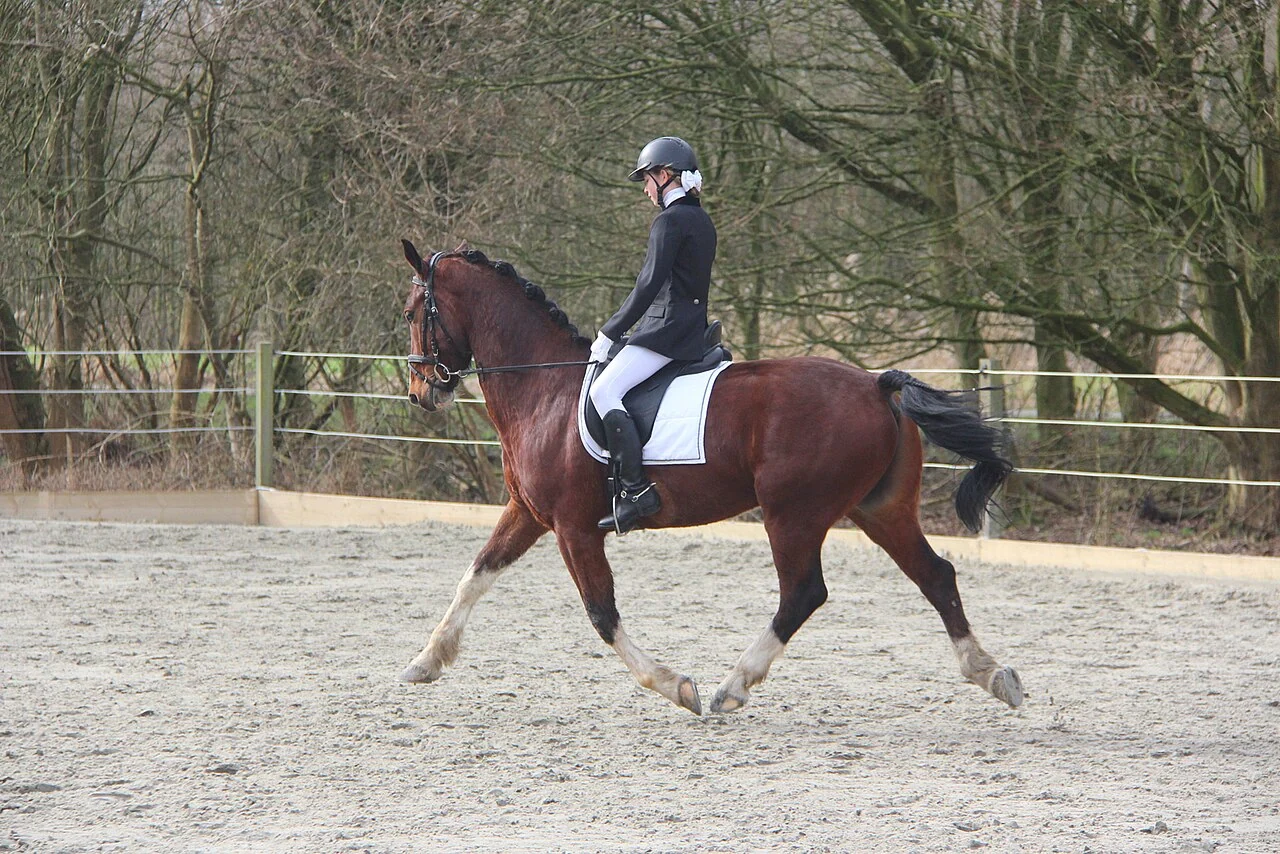
15 minutes out: report before you feel finished
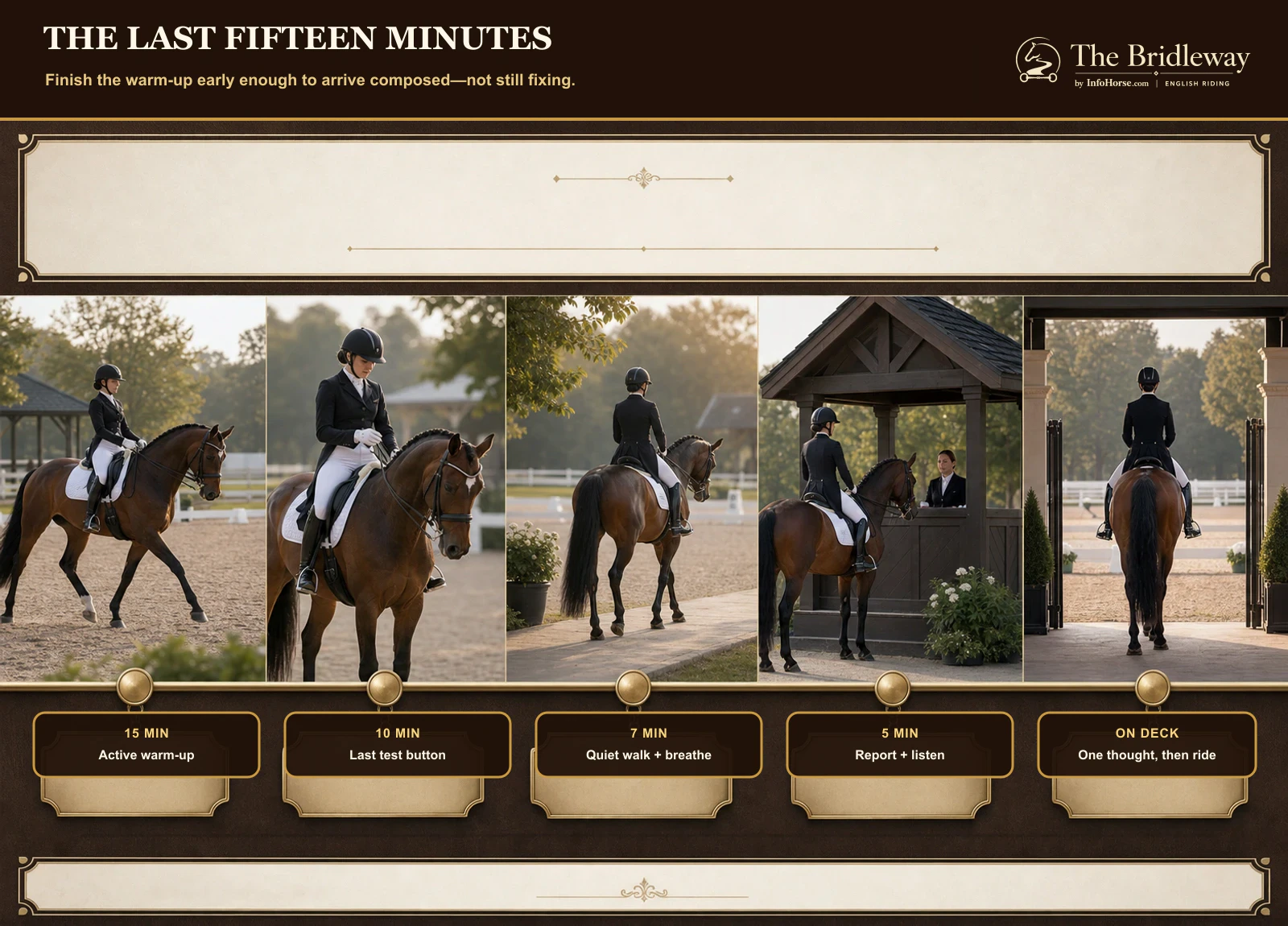
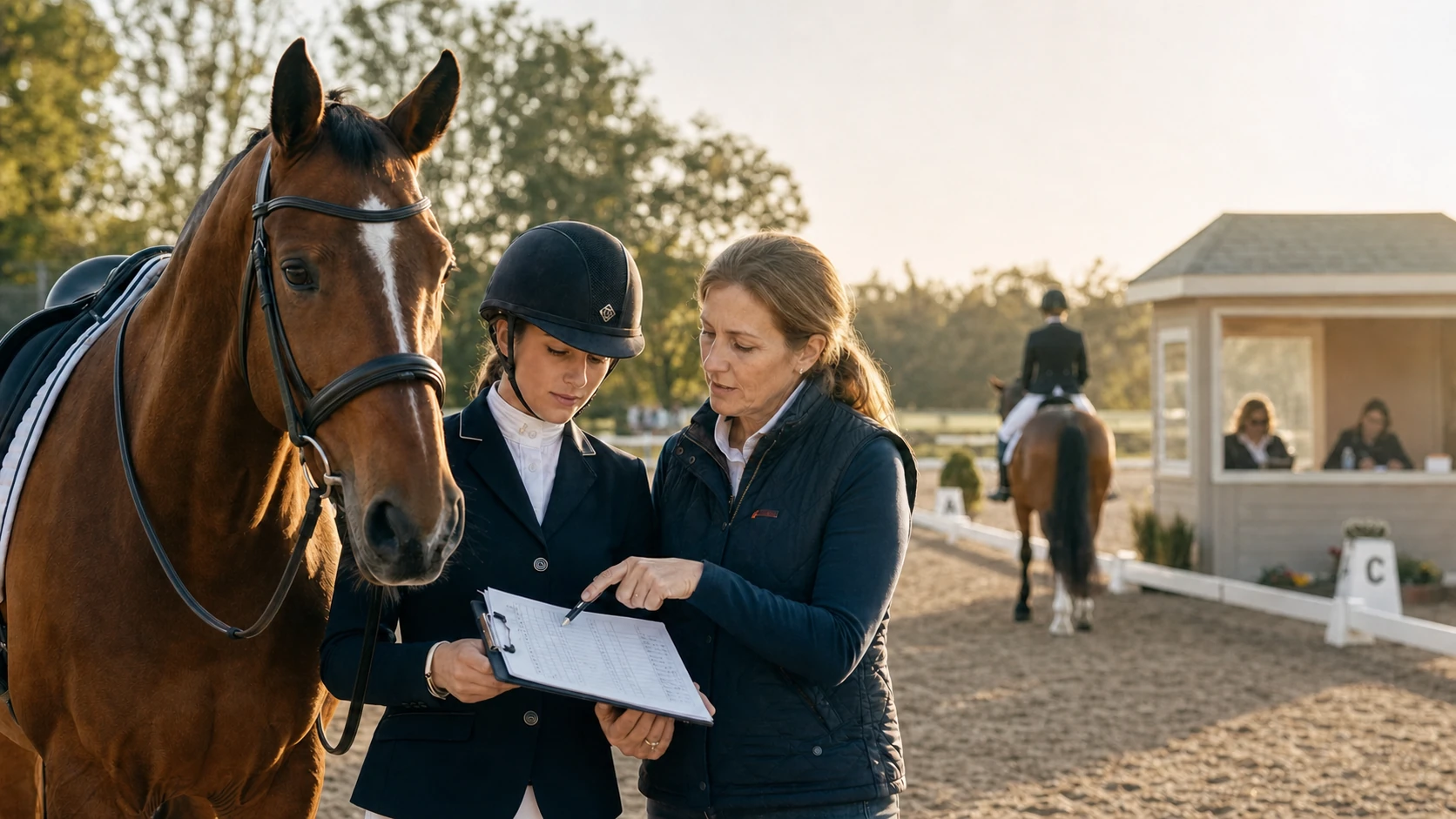
Know which combinations ride before you and where the steward wants you. Report at the requested time. A steward manages traffic and order; they are not responsible for finding a missing caller, attaching your number, or teaching the test.
Use the final minutes to confirm the entry gait and one or two important responses. Remove equipment that is not legal in the test before reaching the point where removal creates a scramble. Check the girth according to your normal safe routine. Let the horse walk and breathe. Let the rider do the same.
First-show panic
One more canter, one more movement, ask five people whether the coat is right, arrive late at the gate.
First-show plan
Report on time, confirm the two buttons, remove warm-up gear, walk, breathe, listen.
Riding around the arena and hearing the signal
Follow the steward’s and judge’s instructions about entering the competition area or riding around the outside. Different venues use different physical layouts. Take the permitted opportunity to show the horse the judge’s end, letters, flowers, and boards without turning it into a confrontation.
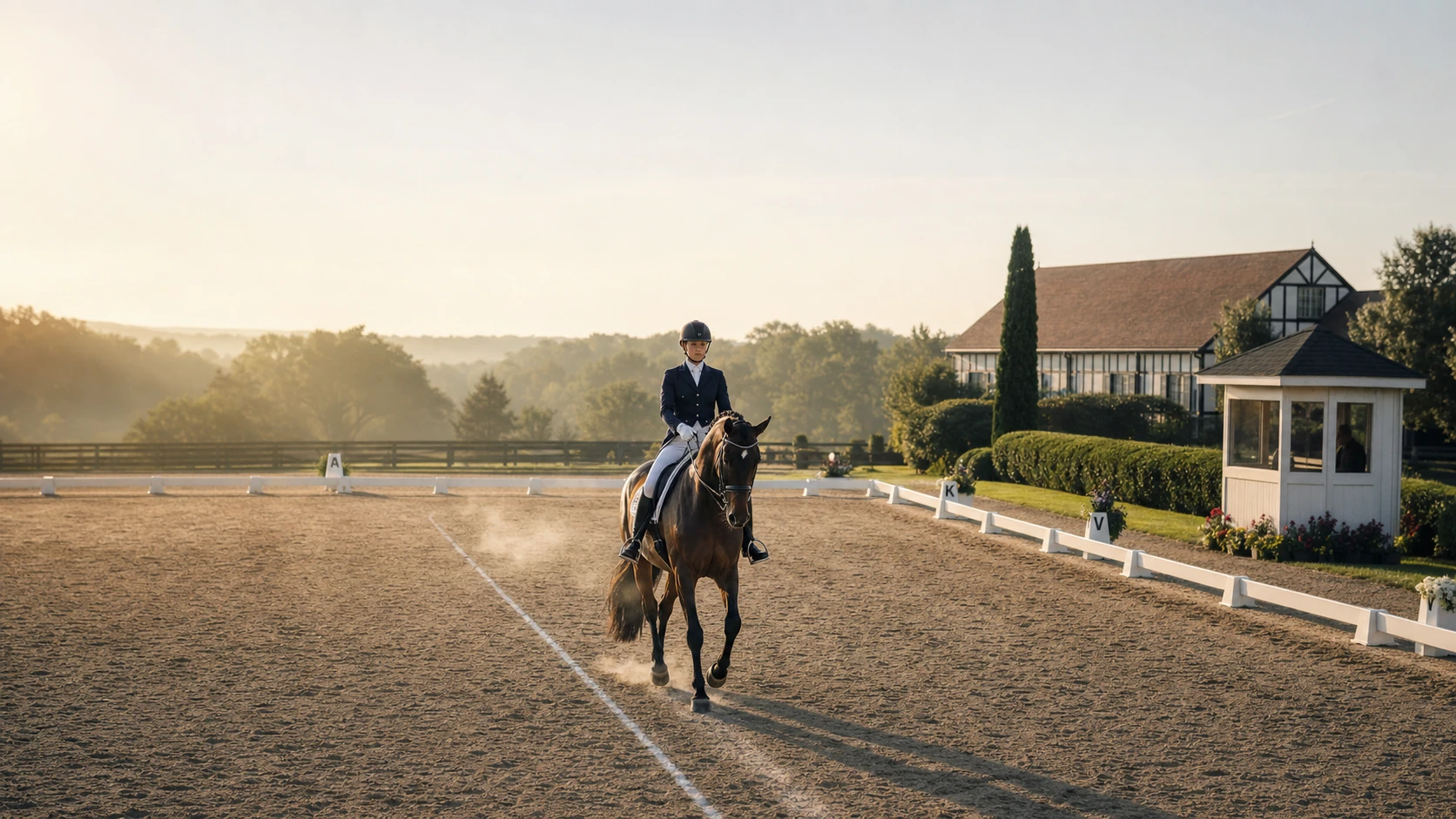
When the judge signals, finish the safe line you are on, establish the entry gait, and enter promptly at A. Do not make a panic turn through another rider or spend the available time circling while you renegotiate the entire warm-up.
Timing rules deserve special care because the 2026 USEF language and an approved change effective December 1, 2026 use specific thresholds and applications. The current framework addresses entry after the signal and elimination beyond the applicable limit. Other federations differ. Read the exact provision in force on your competition date; do not rely on a meme saying “you always have 45 seconds.”
The caller: backup, not remote control
Under current USEF national rules, many tests may be called, with important exceptions for specified finals, championships, FEI tests, freestyles, young-horse tests, and other memory-required classes. Verify the class. British Dressage and local organizations have their own rules.
Learn the test even when a caller is allowed. The caller should deliver the movement once in a steady voice with enough time for preparation, using the current copy. They do not coach, add commentary, or repair geometry. Rehearse so “circle at B” does not arrive while you are already passing E.
If memory leaves, keep the horse safe and listen for the judge. Under the 2026 USEF national framework, the first error costs two points, the second four, and the third eliminates the pair. One error is not permission to abandon the next six movements. Breathe, resume as directed, and ride forward.
Inside the test: ride one sentence at a time
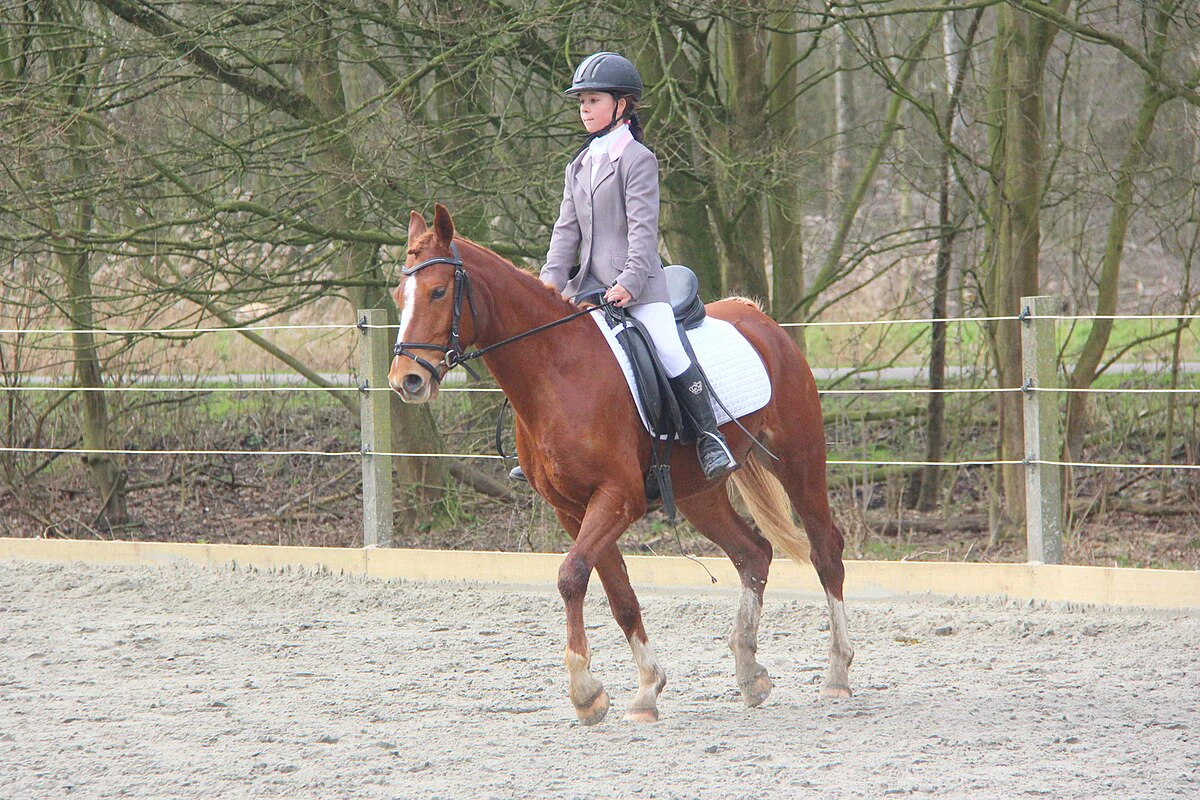
Enter. Look through C. Ride the halt and salute required by the test. Then reduce the ride to the current movement and the preparation for the next. Do not conduct a score calculation in your head after a crooked circle. The judge has already moved on; you should too.
Use three mental cues:
- Line: Where are the shoulders going?
- Rhythm: Is the gait still recognizable and regular?
- Preparation: What must happen before the next letter?
Current USEF rules also treat repeated use of the voice or clicking in the test as a serious fault with a deduction from the movement. That is organization-specific rule language; verify your federation. Practice the quiet version at home rather than discovering in the ring that every transition has acquired a soundtrack.
Safety and welfare outrank completion.
If the horse becomes lame, distressed, out of control, or markedly unwell, withdraw or stop and seek the appropriate official or veterinary help. Finishing a test is never worth concealing a horse-care concern.
After the final salute: the horse goes first
Leave as directed. Praise the horse. Begin the cool-out appropriate to exertion, weather, and the horse’s normal care. Loosen or remove equipment when and where safe. Walk until breathing and temperature are recovering. Offer water according to the horse’s established management. Untack, check for rubs or injury, and monitor recovery.
If the horse remains unusually hot, breathless, painful, dull, uncoordinated, or slow to recover, involve the appropriate veterinarian or official. The score sheet does not expire while you care for the horse.
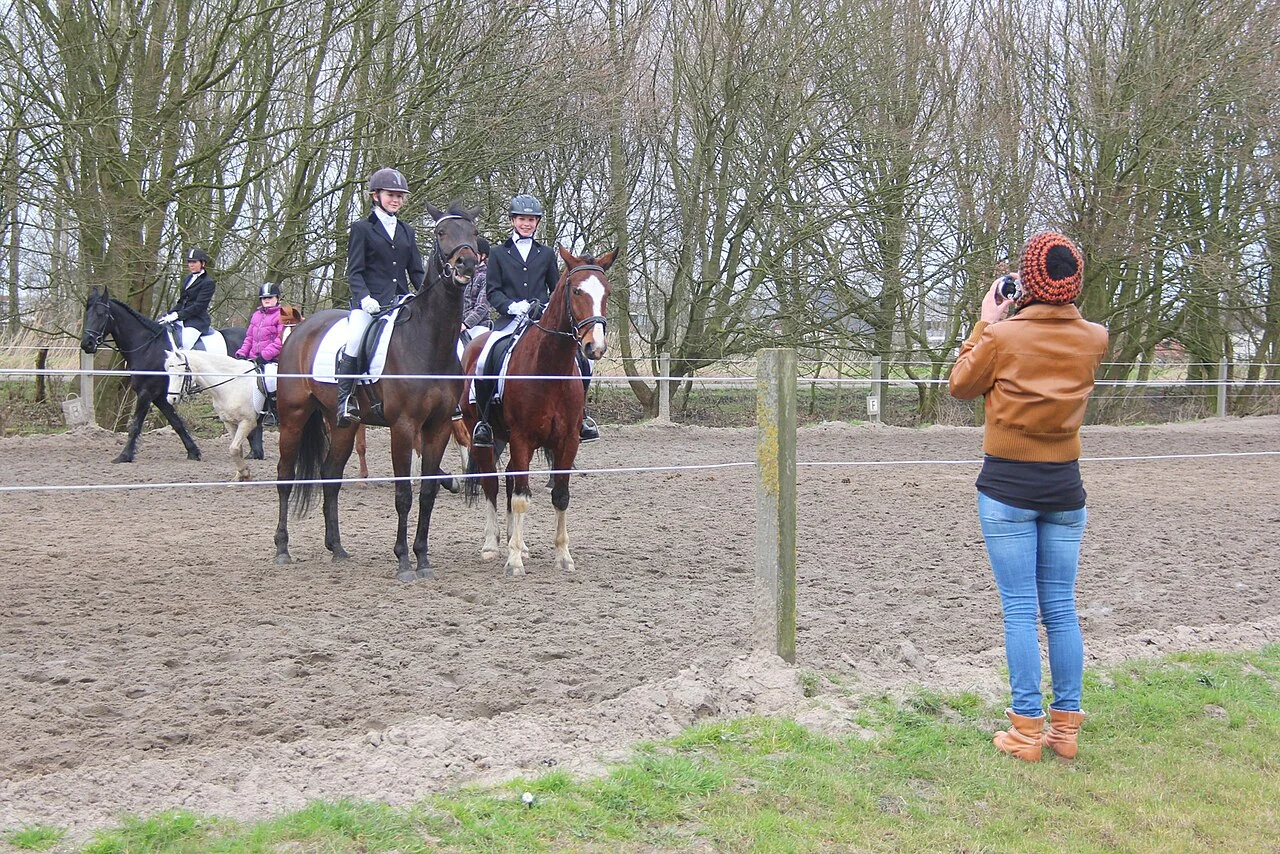
Collect the sheet without collecting a crisis
When results are available, collect the official test sheet through the show’s process. Check the horse and rider identifiers, marks, comments, coefficients, penalties, and total. If something appears clerically wrong, ask the show office calmly and promptly. Do not approach the judge during the class.
A full score-sheet review belongs after the horse is settled and the immediate emotion has cooled. On show day, keep the first debrief short:
- Three things the pair did well.
- One pattern that deserves a lesson.
- One logistical change for next time.
- One horse-care observation.
Do not compare your first page with somebody else’s fiftieth season. A successful first show can include a modest percentage, a caller, an error, rain, a forgotten belt, and a horse who walks back to the trailer more confident than it arrived.
The failure plans that save the day
| Problem | First response | What not to sacrifice |
|---|---|---|
| Ride time moves earlier | Confirm officially; shorten nonessential grooming and shopping | Horse check, legal tack, walk, safe warm-up |
| Horse arrives tense | Create space, use simple familiar work, ask trainer/steward for help | Safety and confidence |
| Paperwork question | Office runner presents organized records and asks the secretary | Truthfulness and compliance |
| Caller is absent | Confirm rule, use rehearsed memory, or make a calm class decision | Do not use an unprepared stranger as a coach |
| Equipment breaks | Use only a checked, legal, correctly fitted backup | Do not improvise unsafe tack |
| Horse feels wrong | Stop, assess, and obtain appropriate help | Welfare always outranks the entry fee |
Bob’s conclusion: calm is a schedule you can follow
You do not need to know everybody, own the most expensive coat, or feel fearless. You need the right test, legal equipment, organized paperwork, a cared-for horse, a backward timeline, and one person who knows what happens next.
Read the rules. Pack by job. Assign the helpers. Arrive with time to think. Warm up the horse you have. Report when asked. Enter after the signal. Ride the current movement. Finish the horse’s day before evaluating your own.
That is the first-show advantage nobody can buy at the vendor row: fewer surprises, more attention available for the horse, and a day you can learn from even when the centerline is not quite as straight as it looked in the kitchen.
Continue the Bridleway dressage show series:
Research and rules note: Procedures were checked against the current USEF dressage rules and equipment hub, the 2026 USEF Dressage Division chapter, published 2026 dressage rule changes, and the 2026 British Dressage rules hub. First-show forum discussions were used to identify practical unknowns, not as rule authority. Requirements vary; the rulebook and prize list in force for your show control.
Visual note: The hero is an original Bridleway AI-assisted editorial illustration, not documentary photography. The educational infographics use AI-assisted visual foundations with human-set wording and Bridleway branding; they are not documentary photographs. Documentary photographs are licence-verified and credited at the image.