

Hydro-TherapyCan Make a Difference to Your Horse!
By Linda Keene
Cold water therapy helps an injured horse because cooling the damaged area encourages blood flow, controls swelling, and reduces the pain-producing by-products of inflammation in sore joints, muscles, and tendons. Gentle, large-droplet pulsating hydro-therapy works better than a narrow conventional water stream, which can adversely stimulate tissue and cause more pain and inflammation. On open wounds that aren’t bandaged, the pulsing action also aerates the tissue and encourages even granulation as the wound repairs—though overdoing hydrotherapy can water-log tissues, and very deep wounds call for balanced saline solutions.
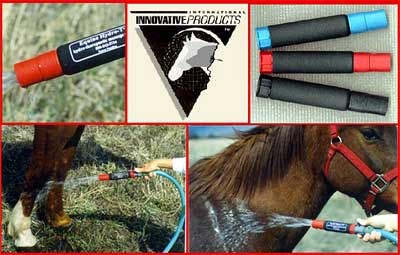
The Equine Hydro-T was designed by a Veterinarian to enhance the recommendation of cold water therapy for any type of equine injury.
The Hydro-T provides large droplet pulsating hydro-therapy for sore joints, muscles and tendons . In wound therapy conventional water streams, which tend to be narrow, can adversely stimulate tissue by causing pain and inflammation, rather than cooling or calming the damaged areas. Applying cold temperatures can encourage blood flow to damaged areas, which is important in controlling swelling.
Tendons and ligaments can undergo thermal injuries with extensive work, especially if covered with rundown wraps or support boots. This increased temperature can destroy or weaken sensitive structures or tissues. Swelling occurs when small blood vessels rupture, leaking blood and fluid into the tissues. As inflammatory cells head to the area to begin the repair process, they release chemical mediators in order to recruit other inflammatory cells.
The cycle must be broken as quickly as possible. Cooling the area and reducing pain can decrease the formation of these by-products of the inflammatory process. The gentle pulsation of the Hydro-T can stimulate blood flow and help "normalize" the area.
In open wounds, aeration of the tissue can improve the repair process. The nozzle's even pulsating encourages this aeration and, therefore, encourages even granulation tissue over the wound. It is possible to water log tissues with "over doing" hydrotherapy. Balanced saline solutions are needed if the wounds or lacerations are very deep. Bandaging is required if the wound is sutured or is exposing important structures like tendons or joints. Hydrotherapy is very important for those wounds that are not being covered.