

From sudden lameness and colic to everyday injuries and aging horses, understanding pain relief can help you make better decisions when your horse needs you most.
Horses are big, powerful animals, and yet sometimes surprisingly fragile. One day they're running across the pasture, jumping fences, or giving us a beautiful ride. The next day, something isn't quite right. They're walking differently, standing strangely, refusing their feed, or simply not acting like the horse we know.
Every experienced horse owner understands that sinking feeling when something is wrong.
Sometimes it's a relatively minor problem that responds to rest and appropriate care. Other times, what initially appears to be a small problem can become a serious emergency.
The challenge is knowing the difference.
Veterinarians should always be our first resource when we suspect a serious injury or illness. But horse owners are usually the first people to notice trouble, and knowing what to look for, what medications actually do, and how to respond while waiting for professional help can make a tremendous difference.
This article began with a simple observation. A horse had suffered a minor injury and was lame for a short time. During the conversation, the owner kept confusing two commonly used equine pain medications: Bute and Banamine.
That started me thinking. How many horse owners have these medications in their barn but aren't entirely sure when one might be appropriate, how they differ, or what precautions come with using them?
And what about the many other ways we can help our horses when they're hurting?
Let's start with something every horse owner should understand.
How Do You Know When Your Horse Is In Pain?
Horses don't always make pain obvious. As prey animals, they can be remarkably good at hiding discomfort, particularly in its early stages.
A horse doesn't have to be obviously limping, rolling on the ground, or refusing to move to be hurting. Sometimes the earliest warning is a subtle change in attitude, movement, or routine.
One of the most valuable things a horse owner can develop is an understanding of what's normal for their individual horse.
Behavioral Signs Of Pain
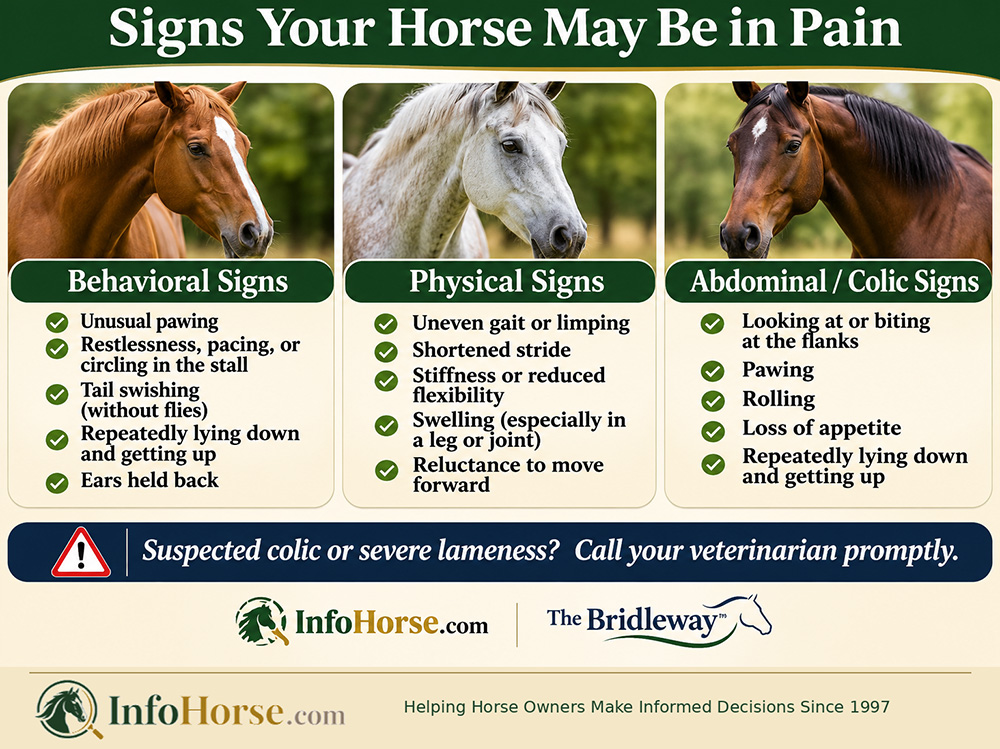
Changes in behavior may be among the first indications that something is wrong. Watch for:
-
Unusual pawing, stomping, or repeated shifting of position
-
Tail swishing when flies or insects aren't bothering the horse
-
Restlessness, pacing, or repeatedly circling the stall
-
Repeatedly lying down and getting back up
-
Changes in facial expression, including tightened muscles around the eyes or muzzle
-
Ears held back more frequently than normal
-
Unusual grunting, groaning, or teeth grinding
-
Becoming withdrawn, unusually quiet, anxious, or irritable
-
Reluctance to be groomed, handled, saddled, or touched
Not every behavior indicates pain. Horses paw for attention, swish their tails at insects, and sometimes lie down simply because they're comfortable. What matters is whether the behavior is unusual for that horse or occurs alongside other concerning signs.
Physical Signs Of Pain
When discomfort involves muscles, joints, tendons, ligaments, or hooves, signs may include:
-
Limping or an uneven gait
-
Head bobbing while walking or trotting
-
Shortened strides or stiffness
-
Swelling or unusual heat in a leg
-
Repeated weight shifting or reluctance to bear weight
-
Resistance to moving forward
-
Difficulty turning or backing up
-
Bucking, resistance under saddle, or changes in performance
-
Moving less than normal, especially when loose in the pasture
-
Tight, tense muscles or sensitivity when touched
A horse that normally walks eagerly to the gate but suddenly doesn't want to move deserves a closer look.
Signs Of Abdominal Pain Or Colic
Abdominal discomfort is especially concerning because colic can range from relatively mild intestinal upset to a life-threatening emergency.
Possible signs include:
-
Pawing or repeatedly looking at the flanks
-
Kicking or biting at the belly
-
Stretching out as though trying to urinate
-
Repeatedly lying down and getting up
-
Rolling or attempting to roll
-
Refusing feed or showing reduced appetite
-
Passing less manure than usual
-
Sweating, increased breathing, or obvious distress
-
Standing unusually still or appearing depressed
Some horses with serious abdominal problems are surprisingly quiet. Don't assume that a horse without dramatic rolling or thrashing cannot have colic.
Suspected colic warrants a prompt call to your veterinarian.
Severe or persistent pain is an emergency.
Other Warning Signs
Pain can also show up as changes in eating, drinking, breathing, or overall attitude. A horse with a painful eye may squint, tear excessively, or avoid bright light. Dental discomfort may cause dropping feed or difficulty chewing. Hoof pain may make turning uncomfortable, and a horse with laminitis may stand with its front feet extended or resist walking.
The lesson is simple: When your horse behaves differently, pay attention.
Bute vs. Banamine: What's The Difference?
These are probably two of the most familiar names in horse barns across America.
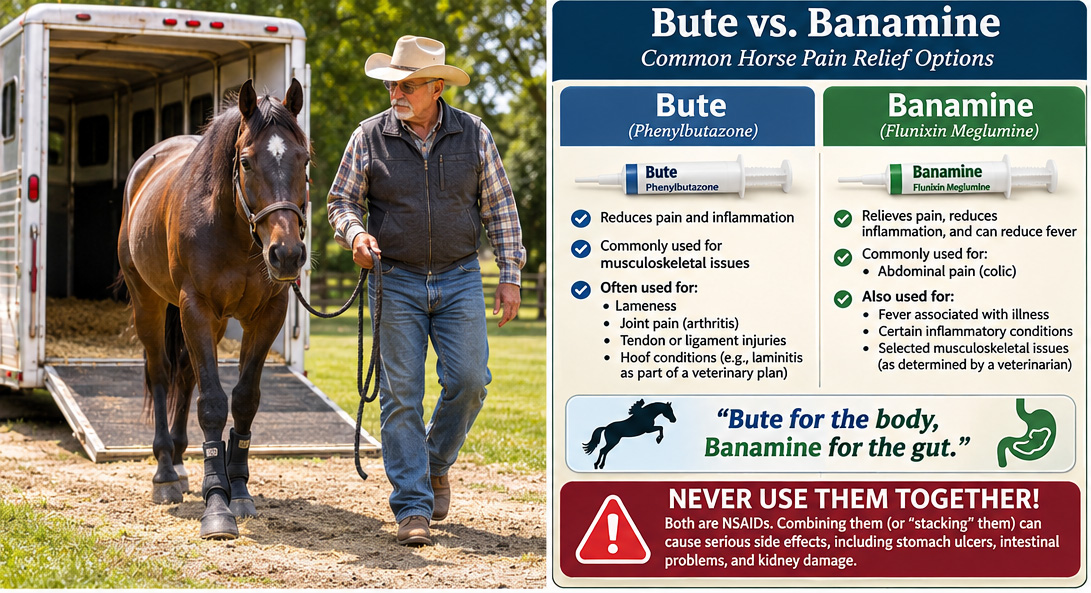
Both medications belong to a class of drugs called nonsteroidal anti-inflammatory drugs, commonly known as NSAIDs.
They help reduce inflammation, relieve pain, and, in some circumstances, reduce fever. Neither is a cure for the underlying condition causing the pain.
While both have some overlapping uses, veterinarians commonly favor them for different situations.
What Is Bute And When Is It Used?
Bute is the common name for phenylbutazone.
It is frequently prescribed for musculoskeletal pain: discomfort involving bones, joints, muscles, tendons, ligaments, and hooves.
Veterinarians may prescribe Bute for conditions such as:
-
Lameness associated with inflammation
-
Joint pain and certain arthritic conditions
-
Some tendon or ligament injuries
-
Painful hoof conditions, including laminitis as part of a veterinary treatment plan
-
Other injuries involving the horse's musculoskeletal system
For example, imagine returning from a horse show where your horse has spent the weekend jumping, running barrels, or performing demanding maneuvers.
Back at the barn, you notice a slight unevenness in the horse's walk.
Maybe the horse overworked a muscle. Perhaps there's a hoof bruise, a developing abscess, or an injury involving a tendon or ligament.
Bute may be one medication your veterinarian considers, but first you need to understand why the horse is lame.
A horse that appears more comfortable after receiving pain medication is not necessarily healed. If a ligament is damaged or a tendon has been strained, allowing the horse to resume work simply because the pain has decreased could make the injury worse.
Rest, careful examination, and appropriate veterinary diagnosis matter just as much as pain relief.
What Is Banamine And When Is It Used?
Banamine is a brand name for flunixin meglumine.
Although it can also relieve musculoskeletal pain, it is particularly well known for treating abdominal or visceral pain, such as the discomfort associated with colic.
Veterinarians may use flunixin for:
-
Abdominal pain associated with colic
-
Fever associated with certain illnesses
-
Some inflammatory conditions
-
Musculoskeletal pain in selected circumstances
-
Other conditions where its anti-inflammatory properties are useful
If your horse begins showing signs of colic, Banamine may be part of your veterinarian's treatment plan.
But here's the important part.
Banamine does not cure colic.
Colic is a general term for abdominal pain, not a single disease. Its causes can include gas accumulation, intestinal impaction, displacement, twisting of the intestine, and other problems.
Banamine may make the horse more comfortable while the veterinarian evaluates or treats the underlying problem.
However, a horse with a serious intestinal problem can temporarily appear better after pain medication while the dangerous condition continues.
That is why calling the veterinarian before administering medication for suspected colic is so important.
And if the horse becomes painful again after receiving medication, don't simply give another dose. Contact your veterinarian immediately.
An Easy Way To Remember: Bute For Bones, Banamine For Belly
There's an old barn saying:
"Bute for bones. Banamine for belly."
It's a useful memory aid, but not an absolute medical rule.
Bute is commonly selected for musculoskeletal pain, while Banamine is frequently used for abdominal pain.
Both drugs affect inflammation and pain throughout the body, and veterinarians sometimes choose one over the other for reasons that aren't obvious to horse owners.
The saying helps us remember the general difference. It doesn't replace a proper diagnosis or an individualized medication plan.
Can You Give Bute And Banamine Together?
No. Never combine Bute and Banamine on your own.
Both medications are NSAIDs. Giving them together, or too close together without veterinary direction, increases the risk of serious side effects, including:
-
Stomach and intestinal ulceration
-
Potentially severe inflammation of the large intestine
-
Kidney damage, particularly in dehydrated horses
-
Loss of appetite, diarrhea, and other signs of drug toxicity
This is sometimes called stacking NSAIDs.
Giving a horse more anti-inflammatory medication doesn't necessarily mean better or safer pain relief.
The same caution applies to combining Bute or Banamine with other NSAIDs, including Equioxx or certain topical anti-inflammatory medications.
If your horse has already received one medication, tell your veterinarian exactly what was given, how much, and when before administering anything else.
How Long Do Bute And Banamine Last?
The duration of pain relief varies with the medication, dose, route of administration, and individual horse.
Some veterinary treatment plans use dosing intervals of approximately 12 hours, while others use 24-hour intervals or different schedules.
There is no safe universal rule that both medications should be repeated every 12 hours.
Follow the specific prescription for your horse, and never repeat a dose early because the horse appears uncomfortable.
If the medication isn't controlling the pain, your veterinarian needs to know.
Are There Risks With These Medications?
Yes. Even medications routinely used in horse barns can cause serious complications.
Particular caution is necessary with horses that are dehydrated, aren't eating normally, have kidney disease, have gastrointestinal problems, or are already receiving other medications.
One additional warning concerns injectable Banamine. Intramuscular injections of flunixin in horses have been associated with a potentially fatal muscle infection called clostridial myositis.
Horse owners should not give injectable Banamine into a muscle. Use only the route and formulation specifically directed by the veterinarian.
Oral pastes are available for both medications and may be appropriate to keep on hand when prescribed for your horse.
Always discuss proper storage, administration, and dosing with your veterinarian. Prescription drugs should not be used simply because they are already in the barn.
What Other Pain Relief Medications Are Available For Horses?
Bute and Banamine are not the only options.
Veterinarians have several other medications available, and the appropriate choice depends on the cause of pain, severity, treatment duration, and the horse's overall health.
Equioxx (Firocoxib)
Equioxx is another NSAID, commonly prescribed for pain and inflammation associated with osteoarthritis in horses.
It is sometimes useful when a horse requires ongoing management of joint discomfort.
Although it acts somewhat differently from Bute, Equioxx still carries potential side effects and must not be casually combined with other NSAIDs.
For older horses with arthritis, a veterinarian may consider Equioxx as part of a broader long-term comfort plan.
Topical Anti-Inflammatory Treatments
Certain veterinary topical medications, such as diclofenac cream, may be prescribed for localized joint inflammation.
Topical treatment doesn't automatically mean risk-free treatment. Some medications can still be absorbed into the body and may interact with other anti-inflammatory drugs.
These products should be used according to veterinary instructions rather than combined with Bute or Banamine without guidance.
Other Prescription Pain Medications
For more serious injuries, surgical procedures, or severe pain, veterinarians may use medications such as sedatives, opioids, or other specialized pain-relief drugs.
These treatments require careful professional judgment and aren't appropriate for casual use by horse owners.
Fortunately, many minor problems also benefit from simpler supportive measures.
What Can Horse Owners Do For Pain Relief Without Medication?
Sometimes the best thing we can do is stop, examine the situation, and avoid making it worse.
Medication isn't always the first or only answer.
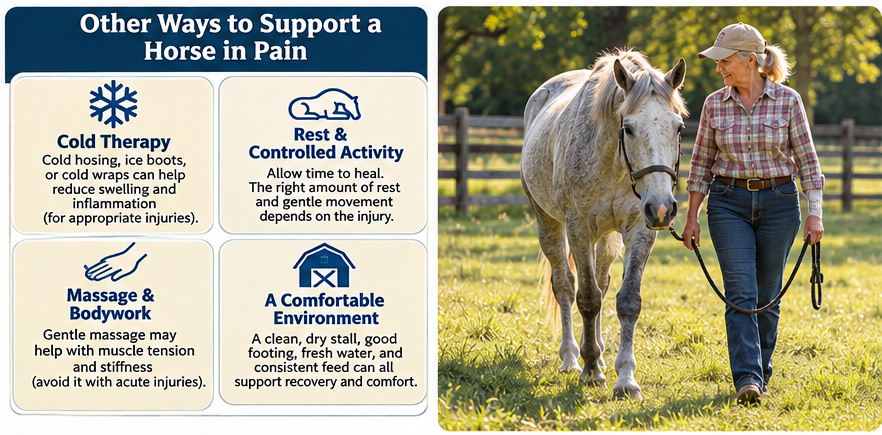
Cold Water, Ice And Cold Wraps
Cold therapy can be useful for certain acute injuries involving swelling, heat, or inflammation.
Cold hosing, appropriately fitted ice boots, and cold wraps may help reduce swelling and provide comfort following some injuries.
For a horse returning from demanding exercise, carefully checking and cooling the legs may also be part of a sensible post-work routine.
However, cold therapy should not delay veterinary attention for an injured horse, and it isn't appropriate for every condition.
With suspected laminitis, prompt veterinary care and appropriately applied continuous hoof cooling can be especially important.
Rest And Controlled Movement
Rest is one of the simplest and most important parts of treating many injuries.
That doesn't always mean complete stall confinement. Different injuries require different approaches, and prolonged confinement can create its own problems.
A horse with a suspected tendon injury may require restricted movement, while another horse recovering from a different condition may benefit from carefully controlled walking.
The important point is to avoid exercising a painful horse until the cause is understood.
Supportive Bandages And Hoof Protection
Properly applied wraps, protective boots, and supportive hoof devices can sometimes improve comfort or protect an injured area.
But poorly applied bandages can cause pressure injuries or restrict circulation. Hoof boots must fit correctly, and corrective support for painful feet should be selected with professional guidance.
Learning basic bandaging skills before an emergency is worthwhile.
Massage And Gentle Bodywork
For some horses with ordinary muscle tension or stiffness, gentle massage may provide comfort.
It should not be used over a suspected fracture, acute tendon or ligament injury, unexplained swelling, or another potentially serious condition.
Forceful manipulation of an injured horse can do far more harm than good.
Providing A Comfortable Environment
Never underestimate the value of a dry, clean stall, comfortable footing, accessible fresh water, familiar forage, and a quiet place to rest.
For an uncomfortable horse, small things can make a difference.
And for older horses especially, thoughtful daily management may be just as important as medication.
Why Do Horses Seem To Have Problems After Horse Shows?
Anyone who travels with horses knows that competitions can introduce additional risks.
Think about what changes when a horse leaves home.
The routine is different. The horse may be transported for hours, exercised harder than usual, exposed to unfamiliar surroundings, or offered different hay and water.
After a long weekend of showing, a horse may return home tired, dehydrated, stiff, or simply not acting like itself.
Exercise And Leg Injuries
Jumping, barrel racing, dressage, eventing, and even long trail rides can place considerable demands on the musculoskeletal system.
Inspecting legs and hooves after work is a sensible habit.
Look for swelling, heat, sensitivity, changes in gait, or unusual reluctance to move.
But remember that not every post-show lameness is caused by overwork. A hoof abscess, stone bruise, or unrelated injury may be responsible.
A horse with significant or persistent lameness needs veterinary attention, even if no injury is immediately visible.
Changes In Drinking Water
Some horses are reluctant to drink unfamiliar water.
Others may consume less water when traveling or during cold weather.
Inadequate water intake can contribute to dehydration and increase the risk of certain types of colic, particularly when combined with reduced movement or changes in feeding.
Offering familiar water when practical, keeping water clean and accessible, and monitoring drinking habits are valuable precautions.
In winter, providing water at a comfortable temperature may encourage horses to drink more readily.
Changes In Feed And Forage
Sudden changes in hay, grain, or feeding schedules can upset a horse's digestive system.
A well-meaning helper giving extra grain or treats may not realize the potential consequences.
Horses generally do best with consistent forage, gradual dietary changes, and adequate water.
Stress, travel, medication use, and dietary changes may also contribute to gastrointestinal problems.
When Should You Be Concerned?
A horse that is simply tired after a demanding day may recover normally with rest.
But a horse that refuses feed, shows signs of abdominal pain, becomes unusually quiet, develops a fever, or has abnormal breathing deserves closer attention.
Don't automatically blame exhaustion or the excitement of competition.
When Should You Call The Veterinarian Immediately?
There's a difference between giving a horse sensible first aid and trying to treat a serious condition without knowing what you're dealing with.
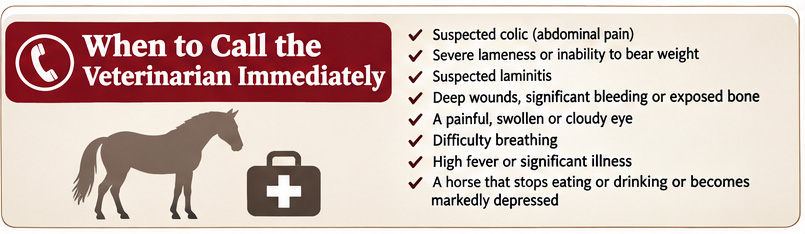
Other situations that require urgent veterinary advice include:
-
Severe lameness or inability to bear weight
-
Suspected laminitis, especially sudden pain in multiple feet
-
Deep wounds, punctures near joints, significant bleeding, or exposed bone
-
A painful, swollen, cloudy, or closed eye
-
Difficulty breathing
-
Severe swelling, suspected fractures, or inability to stand
-
Repeated rolling, severe abdominal pain, or persistent signs of colic
-
High fever or fever accompanied by significant illness
-
A horse that stops eating or drinking or becomes markedly depressed
If a horse may have a serious injury, minimize unnecessary movement until the veterinarian advises you.
When you call, be prepared to describe what changed, when it started, whether the horse is eating and passing manure normally, and whether any medication has already been given.
It is always better to make the call early than to discover later that you waited too long.
What Should Every Horse Owner Keep In An Equine First Aid Kit?
My experience has been that horse emergencies have a remarkable habit of happening on weekends, holidays, or just when getting a veterinarian to the property is particularly difficult.
That makes preparation important.
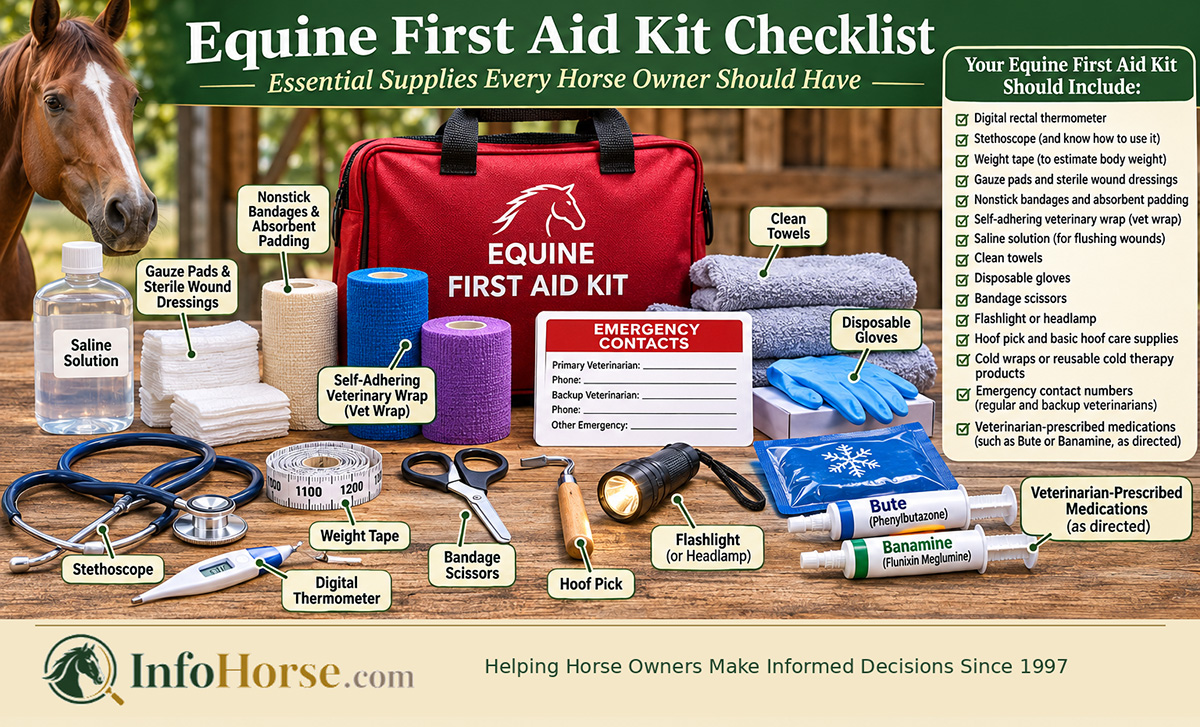
Every barn should have a properly organized first aid kit, and every horse trailer should carry a smaller version for emergencies away from home.
Essential Barn First Aid Supplies
-
Digital rectal thermometer
-
Stethoscope and knowledge of how to use it
-
Weight tape for estimating body weight
-
Clean gauze pads and sterile wound dressings
-
Nonstick bandages and absorbent padding
-
Self-adhering veterinary wrap and appropriate bandaging tape
-
Saline solution for gently flushing wounds
-
Clean towels and disposable gloves
-
Bandage scissors
-
Flashlight or headlamp
-
Hoof pick and basic hoof protection supplies
-
Cold wraps or reusable cold therapy products
-
Emergency contact numbers for your regular and backup veterinarians
-
Written instructions for any prescription emergency medications
Keep your first aid kit clean, organized, and easy to reach.
Check supplies regularly and replace anything that is expired, damaged, or missing.
Should You Keep Bute And Banamine In Your Barn?
Many horse owners keep veterinarian-prescribed Bute or Banamine available for emergencies.
This can be practical when the veterinarian has examined the horse, knows its medical history, and has provided instructions about when a particular medication is appropriate.
However, the fact that a medication is in your barn doesn't mean it should be given whenever a horse appears uncomfortable.
Ideally, ask your veterinarian to help you create a simple written emergency medication plan for each horse.
The plan should explain when to call, what information to collect, which medications may be appropriate under veterinary direction, and how to avoid accidental double dosing.
Store medications according to their individual labels.
Some require refrigeration, while others require controlled room temperature and protection from excessive heat, freezing, or moisture. Don't assume all equine medications belong in the barn refrigerator.
Keep prescriptions clearly labeled, secured, and separate from ordinary grooming supplies.
Don't Forget The Horse Trailer
A smaller travel kit should contain the essentials for recognizing a problem, safely handling minor wounds, and protecting an injured horse until professional assistance is available.
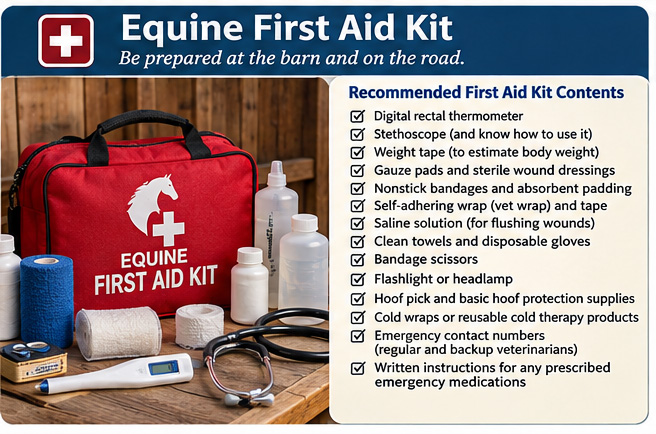
Include the contact information for emergency veterinarians near your destination.
If you compete, remember that pain-relief medications may be regulated under show rules, and medication administration can affect competition eligibility.
Knowing these rules before leaving home can prevent problems later.
Caring For Older Horses: Comfort Becomes Part Of Everyday Management
One of the rewards of owning horses for many years is getting to know them so well.
We recognize the little habits, the way they move, the way they greet us, and the way they tell us something is wrong without making much of a fuss.
As horses age, some develop arthritis, chronic stiffness, dental problems, hoof discomfort, or other conditions that require ongoing attention.
Pain management for an older horse isn't simply a matter of providing medication.
It may involve:
-
Regular veterinary evaluations
-
Appropriate dental and hoof care
-
Maintaining a healthy body weight
-
Comfortable footing and adequate bedding
-
Thoughtful exercise and turnout
-
Suitable nutrition and consistent access to water
-
Medication when prescribed and appropriately monitored
-
Paying attention to changes in behavior and mobility
Some horses need help staying comfortable for months or years. Others may simply need a little more consideration as the seasons change.
The objective should always be a comfortable horse with a good quality of life.
An older horse that can move comfortably, eat well, enjoy turnout, and interact normally with its companions may still have many good years ahead.
The Most Important Pain Relief Tool Is Knowledge
Most of the time, we are going to be our horse's first responder.
We're the ones who notice a slightly shortened stride, a missed meal, an unusual expression, or the horse standing quietly in the corner when it would normally be looking for attention.
We don't need to become veterinarians. But we should understand enough to recognize potential trouble, provide sensible first aid, and know when professional help is needed.
Bute and Banamine are valuable medications, but they're not interchangeable, they're not without risks, and they don't replace finding out why a horse is hurting.
Sometimes what appears to be a minor problem really is minor.
Other times, the smallest change in our horse's behavior is the first warning of something much more serious.
Knowing the difference, and knowing when to ask for help, is one of the responsibilities we accept when we bring a horse into our lives.
At InfoHorse.com, our purpose has always been "Helping Horse Owners Make Informed Decisions."
That simple philosophy inspired this article.
I hope it gives you a better understanding of the options available, encourages you to prepare before an emergency, and helps you make thoughtful decisions when your horse needs you most.
Thank you for visiting InfoHorse.com, and take good care of those horses.
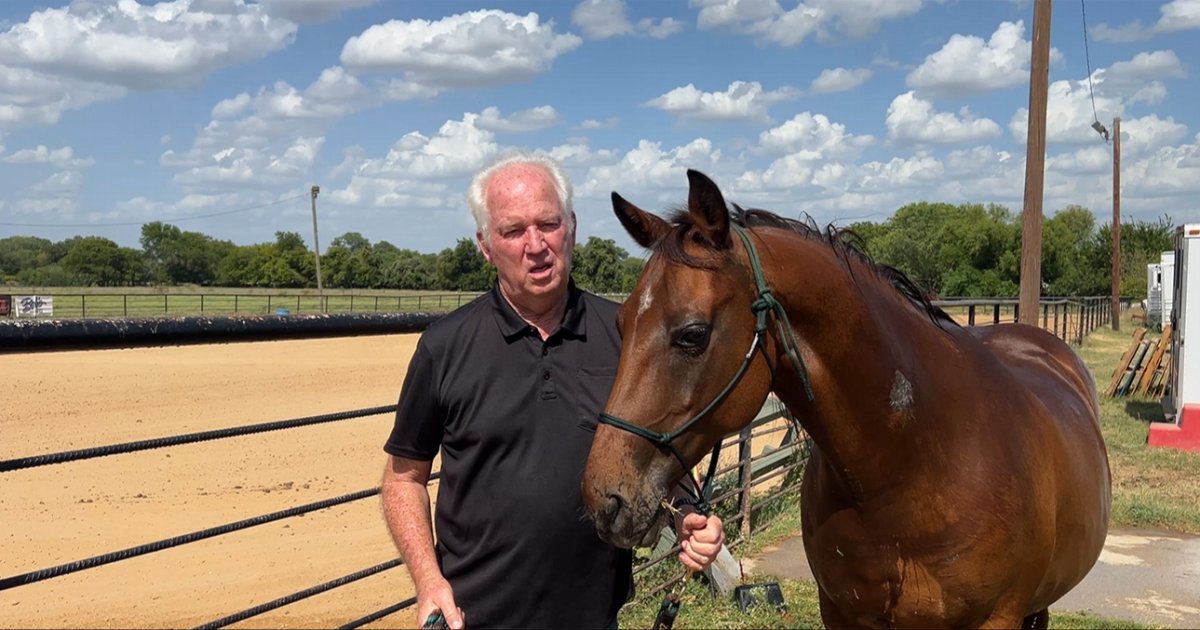
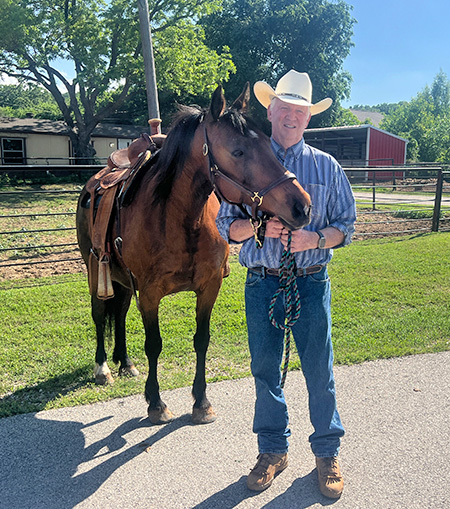
Bob Pruitt and his Morgan horse, Zoey
InfoHorse.com — Helping Horse Owners Make Informed Decisions Since 1997
Editor's Note: This article provides general educational information for horse owners and is not a substitute for veterinary diagnosis or treatment. All prescription medications should be used according to veterinary instructions. Never combine or change pain medications without consulting your veterinarian.