



The Horse Is Not Perfect—But Is He Perfect for You?
What a Pre-Purchase Examination Really Tells a Horse Buyer
By Bob Pruitt
I am 70 years old now, and I do not look at buying a horse the same way I did when I was 30.
When I was younger, I was willing to start my own horses. I had more time, more confidence in my ability to ride through problems and probably a greater willingness to take chances. I might have looked for a younger horse with fewer miles, fewer physical imperfections and more potential for the future.
Today, I may be willing to accept a few manageable imperfections in exchange for something I value even more: experience, dependability, training and a horse that already understands his job.
That does not mean I want to ignore a veterinary examination. Quite the opposite. At this point in my life, I want the veterinarian to help me understand exactly what I may be accepting.
But I do not expect the veterinarian to make the final decision for me.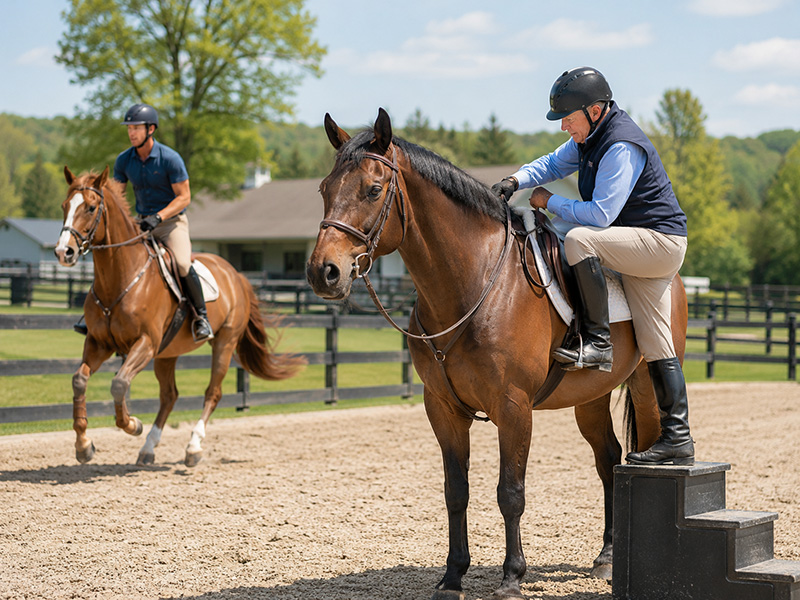
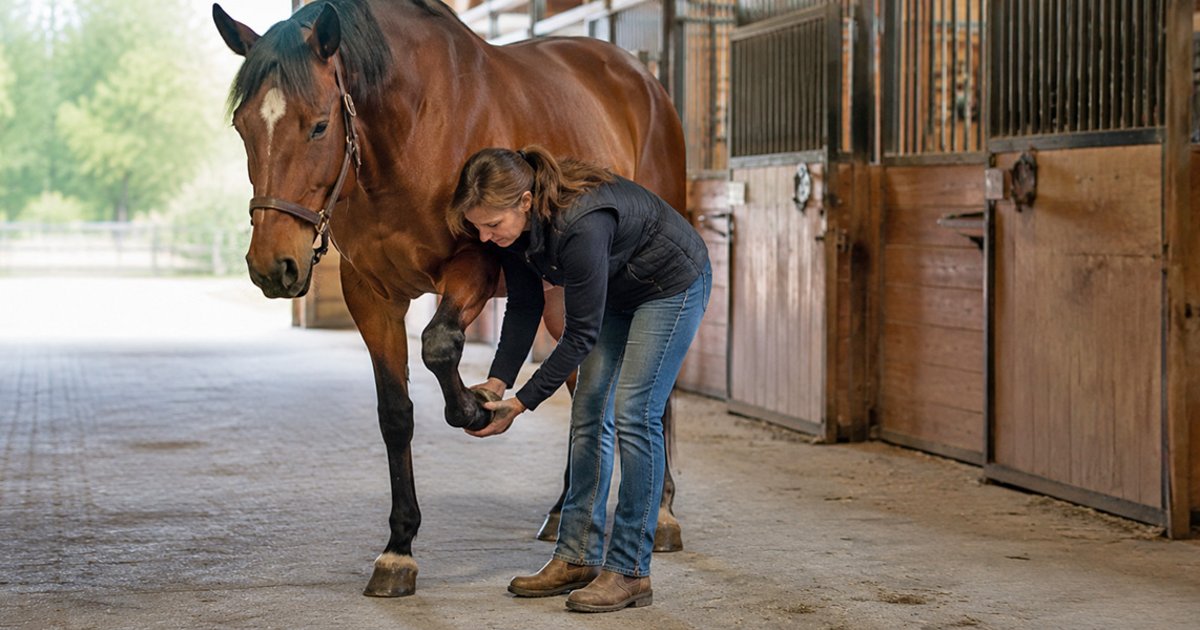
That distinction is important because a pre-purchase examination is not supposed to produce a simple “pass” or “fail.” It is an evaluation of the horse’s health and soundness on that particular day, considered in relation to what the buyer plans to do with the horse. The American Association of Equine Practitioners places the final responsibility on the buyer to determine whether the horse is suitable for the intended use. Cornell University’s College of Veterinary Medicine similarly describes the examination as an assessment of risk rather than a guarantee of the horse’s future health.
That means the real question is not:
“Is this horse perfect?”
The real question is:
“Can this horse comfortably and safely do what I need him to do, and am I willing and able to accept what the examination tells me?”
A Pre-Purchase Examination Is Information, Not a Verdict
Many horse buyers still talk about a horse “passing” or “failing” the vet.
That language can create the wrong impression.
A horse may have an old injury, mild arthritic changes, an imperfect flexion response, corrective shoeing or a radiographic finding that deserves discussion. None of those things automatically means the horse is unusable or should not be purchased.
At the same time, a horse can appear sound on the day of the examination and still be a poor choice for a particular buyer.
The examination is a snapshot. It tells you what the veterinarian observes and discovers at that time. It cannot promise that the horse will never become lame, develop arthritis, suffer an injury or require additional care.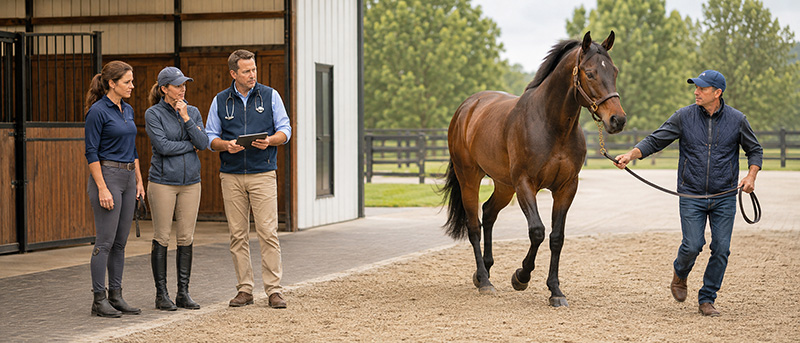
Cornell describes the pre-purchase examination as a single-day assessment and notes that buyers sometimes purchase horses with known risks because of factors such as the horse’s experience or proven performance. A buyer may also decide against a horse despite an apparently favorable examination.
That is because veterinary findings are only one part of the decision.
Temperament matters. Training matters. Rider ability matters. Intended use matters. Safety matters. Cost matters. The buyer’s stage of life matters.
The whole horse matters.
Veterinary Medicine Still Requires Judgment
Over the years, I have seen veterinarians approach examinations differently.
Some veterinarians have spent decades working hands-on with horses. They may place great value on watching the whole horse, feeling the legs, observing how the horse moves and drawing upon many years of practical experience.
Other veterinarians may make greater use of digital imaging, standardized movement assessments, detailed range-of-motion testing and newer diagnostic technology.
I do not believe the answer is to choose experience over technology or technology over experience. The strongest examination may use both.
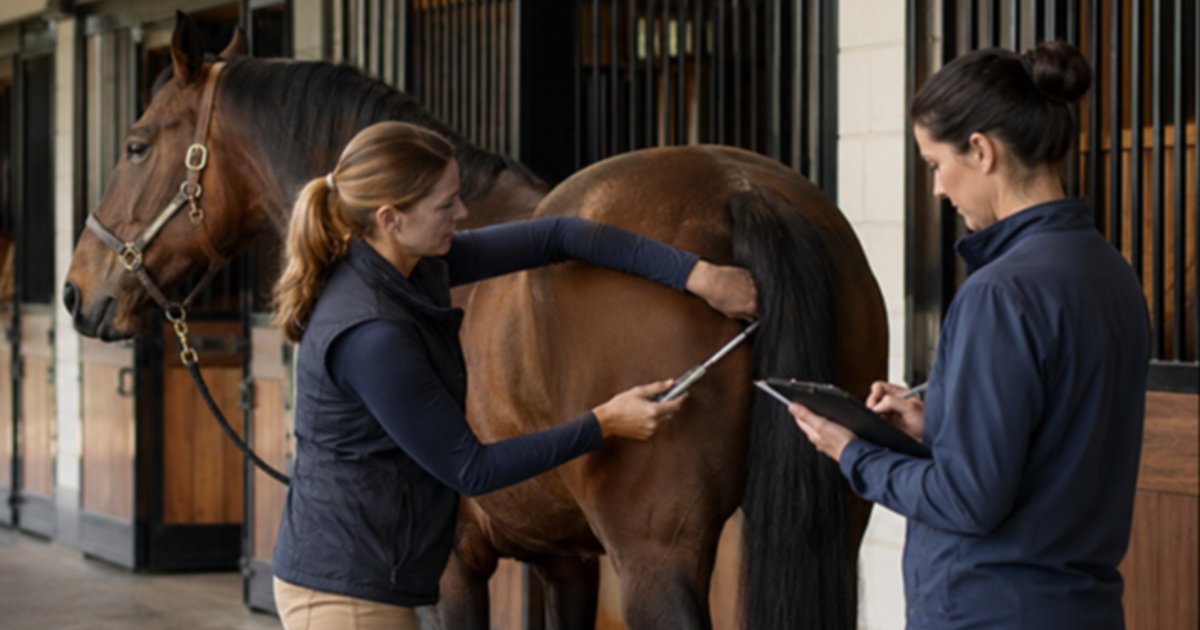
A good set of digital radiographs can reveal something that cannot be seen from the outside. A careful hands-on examination may notice something that does not show up clearly on a screen. Watching the horse walk, trot, turn, back and work under saddle can provide information that is different from what is found while the horse is standing in an examination area.
Even after all the testing is complete, however, there may still be a judgment call.
What does a mild abnormality mean?
Will it ever cause a problem?
Could it remain unchanged for years?
Is it important for this horse’s proposed work?
Would another veterinarian interpret the risk differently?
Competent veterinarians can occasionally place different levels of concern on the same finding. That does not necessarily mean one is right and the other is wrong. It may mean the finding exists within an uncertain area where professional experience and judgment are still required.
That is one reason buyers should ask the veterinarian to explain findings in ordinary language rather than simply reporting that an image is “clean” or “not clean.”
The Intended Job Changes the Meaning of the Examination
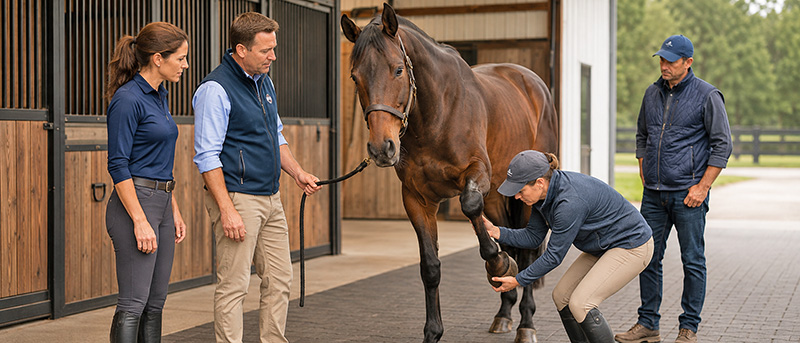
A horse is not purchased in a vacuum. He is purchased for a purpose.
The physical expectations placed upon an upper-level jumper are very different from those placed upon a horse that will walk quietly down a trail twice a week. A lesson horse carrying beginners may face different demands than a horse used for breeding, endurance riding, ranch work or occasional pleasure riding.
The examination should therefore be tailored to the intended use. AAEP advises buyers and veterinarians to communicate about the horse’s purpose and determine what should be included in the examination.
A particular finding may be a serious concern for a young horse expected to withstand years of intensive competition. That same finding might be acceptable in an older, experienced horse intended for light riding.
This does not mean we lower the standard until we hear the answer we want.
It means we ask a more intelligent question:
What is the likely significance of this finding for the work I honestly intend to do?
Not the work I dream about doing someday.
Not the work the seller says the horse could do.
The work the horse will actually be asked to do after I take him home.
The Right Horse at 70 May Not Be the Right Horse at 30
I am not the rider today that I was 40 years ago, and I do not think there is anything wrong with admitting that.
At 30, I might have been more interested in athletic potential. I might have accepted a horse that was green, reactive or difficult because I believed I could train through those problems.
At 70, I am much more interested in whether the horse is dependable.
Does he stand quietly?
Does he load into a trailer?
Can I handle him safely on the ground?
Is he sensible when something unexpected happens?
Does he already understand the job I want him to do?
Will I enjoy him, or will every ride become another training project?
An older horse may have some stiffness. He may have an old scar. He may require thoughtful shoeing, a longer warm-up or occasional veterinary management. Older horses also have a greater likelihood of conditions such as arthritis, dental disease and certain hormonal problems, which should be evaluated rather than dismissed as “just old age.”
But an older horse may also possess something that cannot be seen on an X-ray: experience.
He may have already seen traffic, dogs, tractors, showgrounds, trail obstacles and nervous riders. He may know when to stop, when to wait and when not to panic. He may forgive a rider’s imperfect balance and provide confidence that a physically cleaner but inexperienced horse cannot offer.
There is no radiograph for good judgment.
There is no blood test for kindness.
There is no computer measurement that tells you exactly how much confidence a dependable horse can give an older rider, a returning rider or a frightened beginner.
That does not make physical problems unimportant. It means they should be weighed alongside the qualities that make the horse suitable.
Sometimes an older horse with manageable issues really is the perfect horse for an older person.
What Does “Needs Maintenance” Actually Mean?
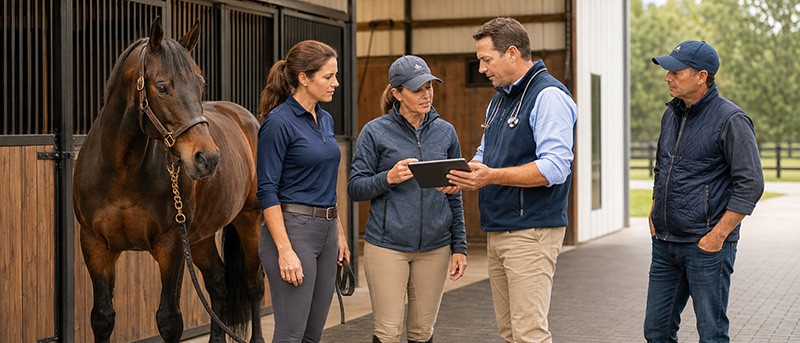
One of the most common phrases in horse sales is:
“He just needs a little maintenance.”
That statement is too vague to be useful.
Maintenance might mean:
- Special or corrective shoeing
- Joint medication
- Daily medication
- Regular injections
- A controlled exercise program
- A longer warm-up
- Limited jumping
- Periodic diagnostic imaging
- Weight management
- Restrictions on footing or workload
Those are not all the same thing.
Before buying, ask the veterinarian to explain what may reasonably be required. Ask how often treatment may be needed, what it may cost and what could happen if the horse does not receive it.
Also ask whether “maintenance” is treating a known medical condition or simply supporting an older working horse.
A buyer should understand the difference between keeping a horse comfortable and repeatedly masking a condition that makes the intended work inappropriate.
The buyer must then be honest about money.
Can I afford this care after paying the purchase price?
Will I still be able to afford it if the horse’s needs increase?
Am I comfortable giving injections or medications?
Do I have access to the right veterinarian and farrier?
Would I still want this horse if he eventually had to move into lighter work?
There is no universally correct answer. There is only an informed answer.
Experience Helps—but It Does Not Replace the Veterinarian
An experienced horse owner may hear veterinary findings differently from someone buying a first horse.
When the veterinarian says that a horse showed a mild response to flexion, has an old injury or has changes that may become significant later, an experienced buyer may be better able to place those words in context.
That buyer may have owned horses with similar findings. He may understand the demands of the intended activity. He may know what careful management actually involves.
Experience matters.
But experience should not become an excuse to ignore evidence.
We have probably all known an experienced horseman who said, “That would not bother me,” and turned out to be right.
We have also known experienced people who wanted the horse badly enough to explain away every warning sign.
Good judgment requires us to recognize the difference.
The veterinarian’s job is to examine the horse, report the findings and explain their possible medical significance. The buyer’s experience helps determine whether the known risks are reasonable.
Neither one should cancel out the other.
Inexperienced Buyers Need Someone They Can Trust
A first-time buyer may not know what questions to ask or how to interpret what is being said.
That person should have help.
A good instructor, trainer or experienced horseperson can help determine whether the horse’s training, temperament, size, strength and experience match the buyer. Cornell notes that trainers and agents may help identify mismatches between a horse and a potential buyer.
However, the adviser must be chosen carefully.
Ideally, this should be someone whose judgment has been trusted by several people the buyer knows and respects. The person should understand the buyer’s riding ability, goals and limitations.
They should also be independent enough to tell the buyer to walk away.
A person who receives a commission only when the horse sells may still be honest and helpful, but the financial relationship should be disclosed and understood. The same principle applies when selecting the examining veterinarian. AAEP’s ethical guidance emphasizes that veterinarians performing pre-purchase examinations must remain impartial and avoid conflicts of interest.
The trusted horseperson should not diagnose the horse or overrule the veterinarian.
Their role is to help turn the medical information into practical questions:
Will this horse suit the buyer?
Can the buyer ride and handle him?
Are the maintenance requirements realistic?
Does the horse’s experience compensate for some manageable physical limitations?
Is the purchase price reasonable considering the findings?
Is the buyer accepting a calculated risk—or simply hoping the problem disappears?
Ask for the Horse’s History
The examination begins with the horse standing in front of the veterinarian, but the decision should also consider what happened before that day.
Ask about:
- Previous injuries
- Surgery
- Episodes of lameness
- Joint injections
- Current and recent medications
- Special shoeing
- Changes in workload
- Recent time off
- Previous diagnostic images
- Behavioral changes
- Why the horse is being sold
AAEP supports disclosure of known surgery, disease, injury and congenital defects that are not readily apparent to the buyer.
Buyers should save the original advertisement, written messages, videos and any statements made about the horse’s health, training and intended suitability.
Whenever possible, obtain veterinary and farrier records with the seller’s authorization.
A horse that looks comfortable after three quiet weeks may present differently after returning to regular work. That does not automatically indicate dishonesty, but it demonstrates why the horse’s recent workload is relevant.
The more complete the history, the better the veterinarian and buyer can understand the horse standing in front of them.
Should You Use the Seller’s Veterinarian?
Whenever practical, the examining veterinarian should work for the buyer and approach the examination independently.
In some areas, especially rural communities, the veterinarian may know both parties or may have previously treated the horse. That does not automatically make the veterinarian unsuitable, but any relationship or potential conflict should be disclosed.
The buyer should ask:
Have you treated this horse before?
Do you regularly work for the seller?
Is there anything about the relationship that could affect your independence?
Would you be comfortable releasing the written report and diagnostic images to my regular veterinarian?
Impartiality is especially important because the veterinarian is not merely performing tests. The veterinarian is also interpreting their significance for the buyer.
When Should a Buyer Walk Away?
Some findings should cause serious concern, especially when they are inconsistent with the horse’s intended use, likely to require care the buyer cannot provide or associated with an unacceptable level of risk.
A buyer may also walk away because:
- The seller will not provide relevant history
- The horse cannot be evaluated performing the intended job
- Requested records are unavailable or contradictory
- The horse appears to have been medicated without a satisfactory explanation
- The maintenance costs exceed the buyer’s budget
- The veterinarian cannot complete important parts of the examination
- The horse’s temperament does not match the buyer
- The buyer simply does not feel comfortable with the amount of uncertainty
Walking away does not necessarily mean the horse is bad.
It may only mean that he is not the right horse for that buyer.
When Might an Imperfect Horse Still Be the Right Choice?
A horse with a known, stable and manageable issue may still be a sensible purchase when:
- He can comfortably perform the intended work
- The buyer understands the condition
- The likely costs are affordable
- The horse has valuable experience and training
- His temperament makes him especially safe or suitable
- The price reflects the findings
- The buyer accepts the possibility that his workload may eventually need to decrease
- The veterinarian believes the intended use is reasonable
That decision should not be made out of pity, pressure or emotion alone.
But it does not have to be made out of fear either.
No horse comes with a guarantee. A young horse with clean radiographs may be injured next month. An older horse with a known imperfection may remain comfortable and useful for years.
The purpose of the examination is not to eliminate every possible risk. That is impossible.
Its purpose is to help you identify and understand the risks before you take responsibility for the horse.
The Final Decision Belongs to the Buyer
A good pre-purchase examination gives the buyer more than a collection of test results.
It gives the buyer an opportunity to make an informed decision.
The veterinarian contributes medical knowledge, diagnostic tools and professional judgment.
An experienced trainer or trusted horseperson may contribute practical knowledge about temperament, training and suitability.
The buyer must bring honesty.
Honesty about riding ability.
Honesty about finances.
Honesty about goals.
Honesty about age and physical limitations.
Honesty about how much risk and maintenance the buyer is prepared to accept.
At 70, I may willingly choose a horse with a few manageable imperfections because he offers experience, dependability and a sense of safety that matters more to me now than unlimited athletic potential.
That does not mean I am ignoring the veterinarian.
It means I am using the veterinarian’s information to make the decision that is right for me.
The horse may not be perfect.
But with good veterinary information, experienced advice and honest judgment, he may still be perfect for you.
Important Note
This article provides general educational information and is not a substitute for an examination or advice from a qualified equine veterinarian. Every horse, buyer and intended use is different. Buyers should discuss the scope and findings of a pre-purchase examination directly with the veterinarian performing it.