
A sore hoof can stop a horse in its tracks, and the first thing a hurting foot needs is relief. SoftRide builds therapeutic comfort boots around a deep gel orthotic that cushions the sole, supports the hoof wall and lets a horse stand and move with far less pain. Owners reach for SoftRide when a horse is fighting laminitis or founder, draining a stubborn abscess, nursing a bruised sole, recovering from hard work, or simply hauling long miles down the road. Whatever the reason a foot needs help, the boots give it a soft, supportive place to land.
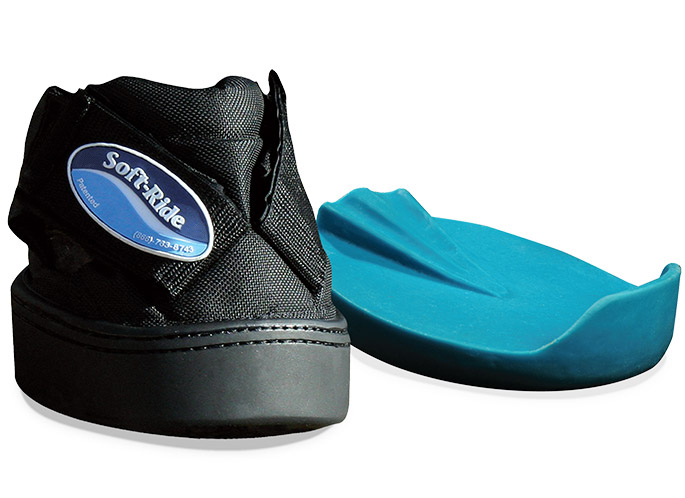
What sets SoftRide apart is the orthotic itself. The molded gel insert reaches into the natural contours of the foot and supports the frog, so the hoof loads in a centered, even pattern instead of pounding on the wall and heels. That cushioning isolates concussive impact from the leg and skeletal system, eases strain on the coffin bone and navicular region, and encourages the cyclical loading and unloading that keeps blood moving through the foot. The gel conforms to shod and unshod hooves alike, compressing under the horse's weight to spread pressure where the foot can best bear it.
Laminitis and founder leave the sensitive structures inside the hoof inflamed and the horse reluctant to put weight down. SoftRide boots answer that with raised frog support and a forgiving gel cushion that takes load off damaged laminae and redistributes it toward the back of the foot. Because the orthotics are removable and come in a range of densities, the boots can be dialed in for a horse in an acute crisis and then adjusted as the foot improves.
Many owners keep their horses booted continuously through the long months of recovery, pairing the boots with regular farrier trims, radiograph-guided care and deep, supportive footing. The result is a horse that can rest in comfort while the hoof does the slow work of healing.
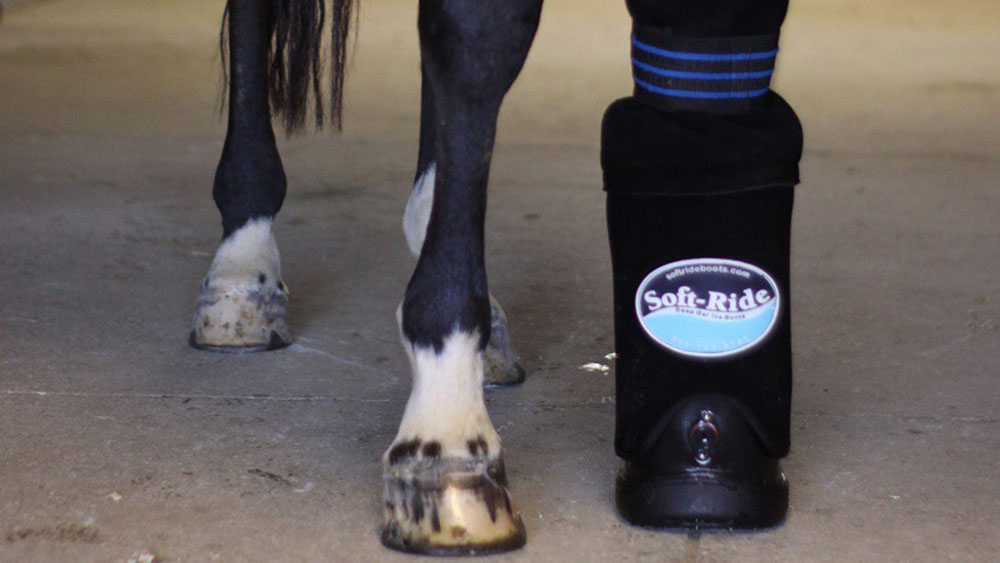
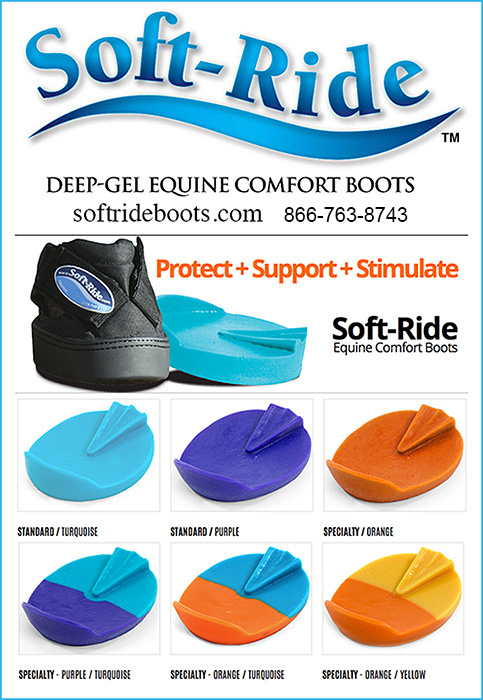
SoftRide built a whole comfort system around the foot. The flagship comfort boots wrap a rugged outer shell over the deep gel orthotic, with vented openings along the sides for airflow, and they fit best snug with an eighth of an inch or less showing around the edge. Standard turquoise orthotics come with most boots, firmer purple orthotics ship with the largest sizes, and a family of specialty gels in several densities lets you match the insert to a horse's weight or a practitioner's recommendation.
Beyond the comfort boots, the Ice Spa line turns the same idea toward cold therapy for hooves, legs and knees after competition or injury, while the SoftRider center-loading shoe places the load over the middle of the hoof to ease breakover and protect aging performance horses. Sizing runs across a wide range, so most horses can be fitted from the ground up.
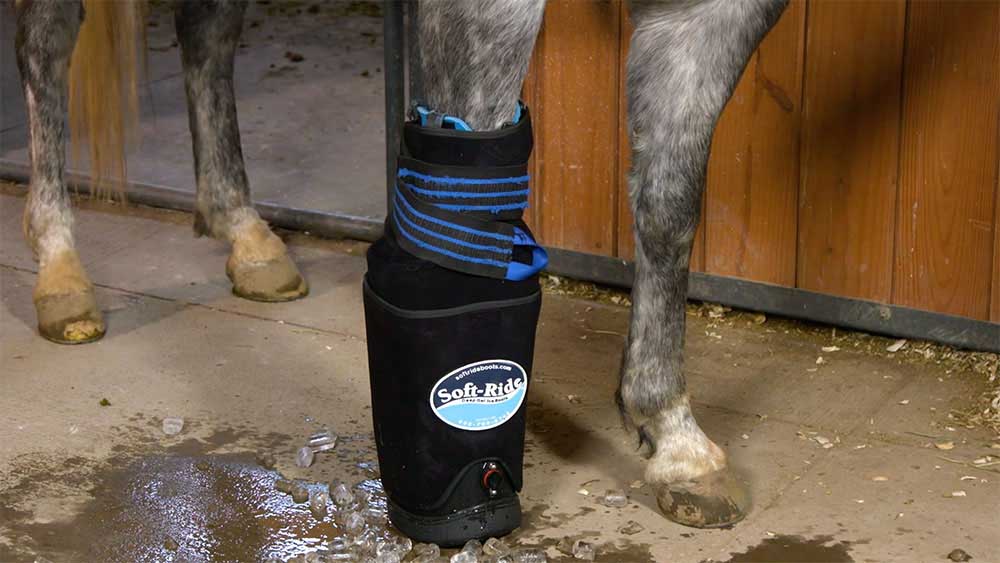
It is a therapeutic hoof boot built around a deep, molded gel orthotic inside a rugged outer shell. The gel cushions the sole and supports the frog and hoof wall, giving sore, healing or hard-working feet a soft, supportive place to stand and move.
The orthotic reaches into the contours of the foot and supports the frog so the hoof loads in a centered, even pattern. That cushioning isolates concussion from the leg, eases strain on the coffin bone and navicular region, and encourages the loading and unloading cycle that helps move blood through the hoof.
Owners and practitioners use them for laminitis and founder, abscesses, sole bruising and navicular-related soreness, as well as for general comfort during recovery, stabling and long-distance transport. They suit both shod and unshod horses.
Yes. Many horses are kept booted continuously through a recovery period, often for months at a time, alongside regular farrier care and supportive footing. The vented shell allows airflow, and the boots should be cleaned regularly since debris can enter through the side openings.
The boot should fit snugly, ideally with an eighth of an inch or less showing around the outside of the hoof. A boot that is too small can tear under hoof pressure, while one that is too large can spin or fold under the foot, so accurate measuring is important.
Yes. Most boots come with standard turquoise orthotics, the largest sizes use a firmer purple orthotic, and SoftRide also offers specialty orthotics in several densities. The right density depends on factors such as the horse's weight or a veterinarian's or farrier's recommendation.
The comfort boots are the everyday therapeutic boots with gel orthotics. Ice Spa boots are designed for cold therapy of the hoof, lower leg and knee after work or injury. The SoftRider is a center-loading accommodative shoe that places load on the middle of the hoof to improve breakover and support aging or sore performance horses.
SoftRide is widely used in both veterinary and performance settings, from laminitis and lameness cases to top cutting, roping and competition barns where comfort during stabling and hauling matters. Always work with your own veterinarian or farrier to build the right plan for an individual horse.
About this listing: Product and service details on this page, including any results described, are provided by SoftRide. InfoHorse.com verifies the business behind every listing — for decisions about your horse's health, talk with your veterinarian.
Explore more from the InfoHorse.com directory






Explore expert guides on topics related to your business
By Bob Pruitt
By InfoHorse Editorial Team
By Bob Pruitt
By Bob Pruitt
By Ann Pruitt
By Bob Pruitt